RedKalion
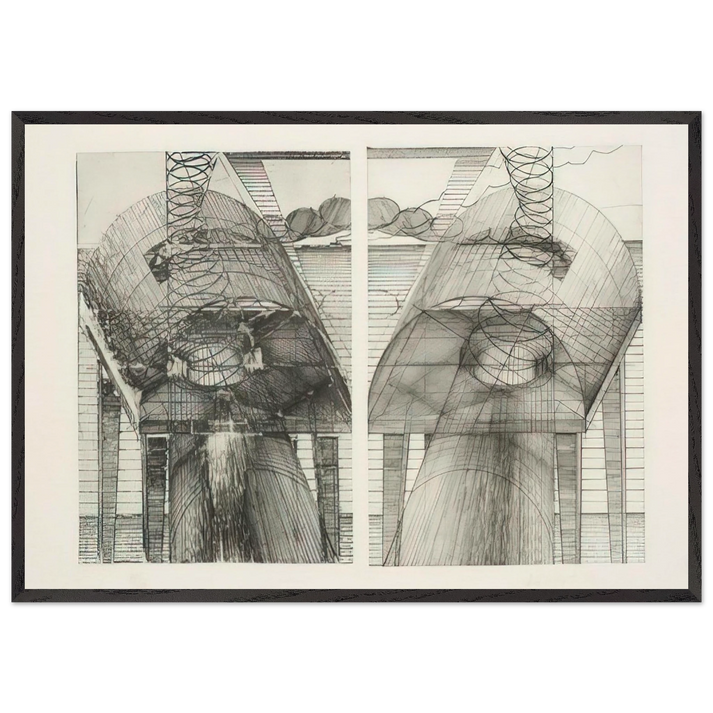
By the Sea - 1971 - Dieter Roth 70x100 cm / 28x40 inches Framed Art Print – Black Wooden Frame
By the Sea - 1971 - Dieter Roth 70x100 cm / 28x40 inches Framed Art Print – Black Wooden Frame
Couldn't load pickup availability
A Masterpiece of Experimental Serenity: "By the Sea" (1971) by Dieter Roth
Immerse yourself in the evocative landscapes of the 1970s with this exceptional reproduction of Dieter Roth’s "By the Sea" (1971). As a central figure in the Fluxus movement and a pioneer of experimental printmaking, Roth’s work often explored the intersection of organic decay and structured form. In this piece, the artist captures a coastal atmosphere through a lens of sophisticated abstraction, offering a timeless aesthetic that bridges the gap between mid-century modernism and contemporary minimalism.
At RedKalion, we curate museum-quality reproductions that honor the artist's original vision. This 70x100 cm (28x40 inches) framed art print is rendered on 250 gsm (110 lb) archival museum-quality paper. The natural white, uncoated, matte finish ensures that the subtle tonal shifts and textures of Roth’s work are preserved without distracting glares, providing an authentic viewing experience that mirrors an original lithograph.
Physical Excellence & Sustainability:
- Premium Framing: Encased in a robust 20mm (0.79") thick black wooden frame crafted from sustainably sourced oak and ash.
- Archival Longevity: Printed on FSC-certified materials, ensuring your fine art investment is as environmentally responsible as it is beautiful.
- Shatterproof Protection: Each print is protected by high-grade shatterproof plexiglass, maintaining clarity while safeguarding the artwork from the elements.
- Ready to Hang: Delivered with a professional hanging kit, allowing you to elevate your interior space immediately upon arrival.
Whether you are a seasoned collector of 20th-century avant-garde art or seeking a statement piece for a modern gallery wall, this Dieter Roth print offers an enduring sense of calm and intellectual depth. RedKalion remains the definitive choice for those who demand archival-grade masterpieces that endure for generations.

Discover Unlimited Art Possibilities
At RedKalion, you can find virtually any artwork from any artist, available in a wide range of sizes to perfectly match your space.
If you didn’t find what you’re looking for, contact us at support@redkalion.com . We will source any artwork and produce it in any size and format you need, including art prints, posters, canvas, framed pieces, framed canvas, and more.
For dedicated art enthusiasts, we also offer handcrafted replicas of any artwork, carefully painted by highly skilled artists using traditional techniques.
For custom requests, contact us at support@redkalion.com .
What is the paper quality of this Dieter Roth print?
The artwork is printed on 250 gsm (110 lb) natural white, archival-grade paper. This heavy-weight, matte, and uncoated paper is chosen for its museum-quality finish and exceptional color reproduction, ensuring the longevity of your fine art print.
Is the black wooden frame sustainably sourced?
Yes. All RedKalion frames are crafted from responsibly sourced oak and ash wood. We utilize FSC-certified materials or equivalent sustainable standards to ensure that your home decor supports global forest conservation efforts.
How is the artwork protected during shipping and display?
Your print is shielded by shatterproof plexiglass, which provides a clear view while preventing damage. For shipping, we use specialized protective packaging to ensure your 70x100 cm framed print arrives in pristine, gallery-ready condition.
What makes RedKalion's reproductions museum-quality?
We combine archival-grade, acid-free paper with premium wood framing and advanced printing techniques. This meticulous process ensures that every reproduction maintains the depth, texture, and historical integrity of the original artwork for decades.
Does the frame come ready to hang?
Absolutely. Every framed art print includes a high-quality hanging kit. The 20mm thick frame is designed for a professional, flush-to-wall appearance, allowing you to display your new Dieter Roth masterpiece immediately.
What characterizes Dieter Roth's style in 'By the Sea'?
Roth’s 1971 work is characterized by experimental textures and a semi-abstract approach to coastal imagery. This piece reflects his fascination with the passage of time and the fluid boundaries between nature and graphic design.
Why was 1971 a significant year for Dieter Roth?
By 1971, Dieter Roth was at the height of his graphic exploration, refining his techniques in screenprinting and lithography. This era marked his transition into more atmospheric, contemplative subjects while maintaining his signature avant-garde edge.