RedKalion
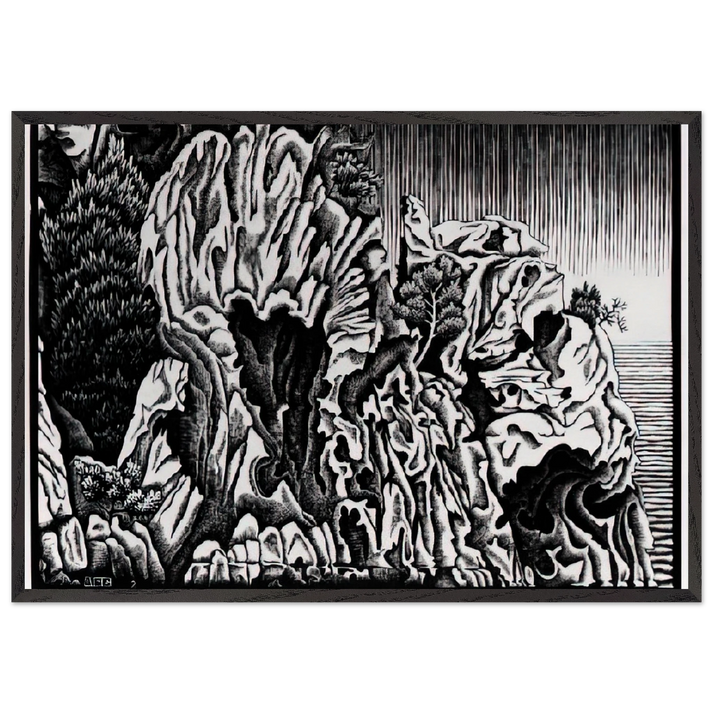
CALANCHE OF PIANA CORSICA FEBRUARY 1934 1934 - MC Escher 70x100 cm / 28x40 inches Framed Art Print – Black Wooden Frame | Maurits Cornelis Escher Prints
CALANCHE OF PIANA CORSICA FEBRUARY 1934 1934 - MC Escher 70x100 cm / 28x40 inches Framed Art Print – Black Wooden Frame | Maurits Cornelis Escher Prints
Couldn't load pickup availability
Elevate Your Space with MC Escher’s Mediterranean Vision
Immerse yourself in the rugged, limestone cliffs of the Mediterranean with this museum-quality reproduction of Maurits Cornelis Escher’s Calanche of Piana, Corsica (February 1934). Long before his famous mathematical impossible constructions, Escher was captivated by the organic patterns of nature. This piece captures his early fascination with complex geometries found in the natural world, rendered with his signature precision and atmospheric depth.
Artistic Significance and Historical Context
In 1934, Maurits Cornelis Escher traveled through Corsica, creating a series of drawings and prints that would later define his mastery of light and shadow. The Calanche of Piana series illustrates his transition from simple observation to a structured, rhythmic interpretation of landscape. At RedKalion, we preserve this legacy by utilizing advanced printing techniques that highlight every delicate line and stark contrast of the original lithographic style.
Archival Quality and Premium Craftsmanship
This 70x100 cm (28x40 inches) framed art print is curated to meet the highest gallery standards. We utilize 250 gsm (110 lb), archival museum-quality paper. The paper is natural white, uncoated, and matte, ensuring that the visual depth of Escher's work remains free from glare. To enhance the presence of the artwork, we house it in a 20mm (0.79") thick black frame crafted from responsibly sourced oak and ash wood, providing a more substantial and sophisticated profile than standard frames.
- Shatterproof Protection: Each print is shielded by premium, transparent plexiglass for lasting durability.
- Sustainability: We use FSC-certified materials, supporting responsible forestry practices.
- Ready to Hang: Your archival masterpiece arrives with a professional hanging kit included for effortless installation.
Indulge in a piece of art history that endures. RedKalion ensures that every MC Escher fine art print is more than just a reproduction; it is a timeless addition to your curated collection.

Discover Unlimited Art Possibilities
At RedKalion, you can find virtually any artwork from any artist, available in a wide range of sizes to perfectly match your space.
If you didn’t find what you’re looking for, contact us at support@redkalion.com . We will source any artwork and produce it in any size and format you need, including art prints, posters, canvas, framed pieces, framed canvas, and more.
For dedicated art enthusiasts, we also offer handcrafted replicas of any artwork, carefully painted by highly skilled artists using traditional techniques.
For custom requests, contact us at support@redkalion.com .
What defines the quality of this MC Escher fine art print?
We use 250 gsm (110 lb) archival museum-quality paper with a natural white, matte finish. This ensures the print remains vibrant and resists yellowing over time, capturing the intricate details characteristic of Maurits Cornelis Escher prints.
How is the frame constructed for this 70x100 cm piece?
The print is housed in a 20mm thick frame made from responsibly sourced oak or ash wood. This frame is sturdier and wider than standard industry frames, offering a premium, gallery-style aesthetic for your wall.
Is the artwork protected from environmental damage?
Yes, each print is protected by shatterproof, transparent plexiglass. This provides the clarity of glass with superior durability, ensuring your Escher reproduction remains safe from dust and physical impact.
How will my order be shipped and is it ready for display?
Your framed art print is shipped in secure, protective packaging. It arrives ready-to-hang with all necessary hardware included, allowing you to elevate your interior design immediately upon delivery.
Is the paper used for these reproductions sustainable?
RedKalion is committed to environmental responsibility. We use FSC-certified paper or equivalent sustainable materials, ensuring that your fine art print supports the preservation of global forests.
Why is the 1934 Corsica series significant in Escher's career?
The 1934 Corsica trip marked a pivotal moment where Escher began focusing on the repetitive, geometric textures of natural rock formations, which eventually evolved into his famous tessellations and impossible architectures.
What technique did Maurits Cornelis Escher use for the original Calanche of Piana?
The original work was created as a lithograph. Escher utilized the stone-based printing process to achieve the rich tonal gradations and sharp contrasts found in the rugged Corsican landscape.