

RedKalion
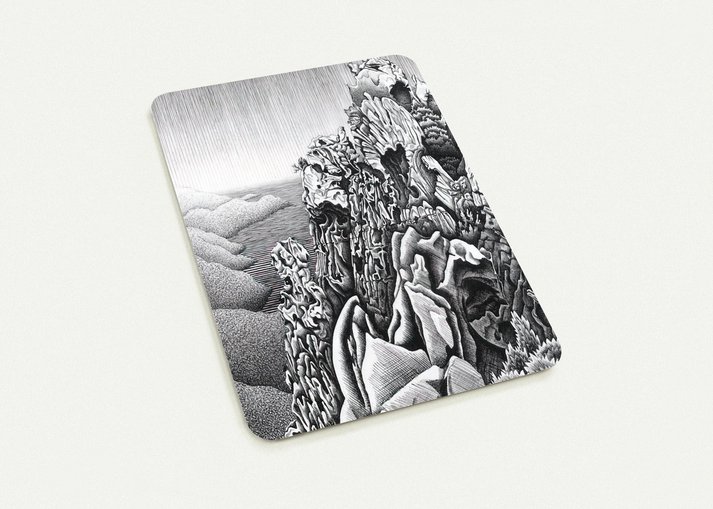
CALANQUES DE PIANA By MC Escher Pack of 10 Post Cards | MC Escher Post Cards | A6 (10.5 x 14.8 cm) - 4.1 x 5.8 inches
CALANQUES DE PIANA By MC Escher Pack of 10 Post Cards | MC Escher Post Cards | A6 (10.5 x 14.8 cm) - 4.1 x 5.8 inches
Couldn't load pickup availability
Elevate Your Correspondence with M.C. Escher’s Calanques de Piana
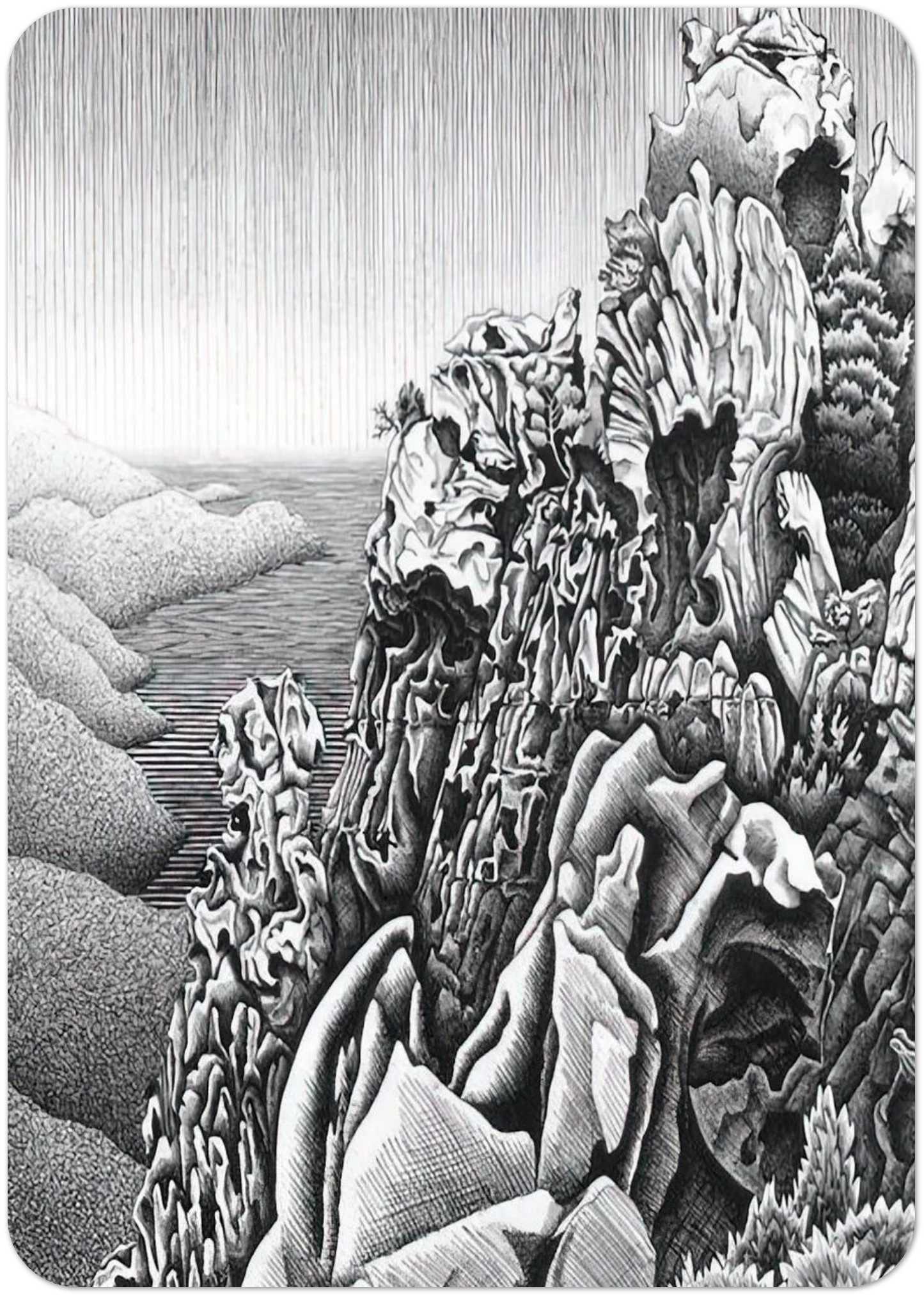
Experience the mesmerizing interplay of light, shadow, and geological precision with this exclusive pack of 10 postcards featuring Calanques de Piana by the legendary graphic artist M.C. Escher. Captured during Escher’s travels to Corsica in the mid-1930s, this work represents a pivotal era in his career where the raw beauty of the natural world began to fuse with his burgeoning fascination for structural complexity and mathematical rhythm.
The Artistry of M.C. Escher: A Corsican Perspective
Before his world-renowned impossible constructions and tessellations, Escher was deeply moved by the dramatic landscapes of the Mediterranean. In Calanques de Piana, he translates the rugged, sun-scorched granite cliffs of Corsica into a masterful study of depth and contrast. His lithographic technique allows for a startling level of detail, transforming static rock into a dynamic, rhythmic composition that foreshadows his later masterpieces of spatial illusion.
Museum-Quality Reproductions by RedKalion
At RedKalion, we believe fine art should be felt as much as it is seen. These postcards are not mere souvenirs; they are archival-grade reproductions designed for the discerning collector. Utilizing 12-color fine art printing technology, we achieve a color vibrancy and depth of shadow that far exceeds standard inkjet methods. Every line of Escher's intricate work is rendered with surgical precision on 200 gsm (80 lb) FSC-certified paper, ensuring a tactile, premium feel.
- Paper Finish: A refined, smooth matte finish for glare-free appreciation of the artwork.
- Sustainability: Printed on demand using environmentally conscious, FSC-certified materials.
- Durability: 0.26 mm (10.3 mils) thickness provides a sturdy, premium weight perfect for framing or sending.
- Format: Standard A6 size (10.5 x 14.8 cm), making these cards versatile for personal notes or small-scale decor.
By choosing RedKalion, you are investing in a piece of art history produced with the utmost respect for the artist's original vision. These archival masterpieces are crafted to endure, allowing you to share a moment of Escher’s genius with friends or curate a mini-gallery within your own home.


Discover Unlimited Art Possibilities
At RedKalion, you can find virtually any artwork from any artist, available in a wide range of sizes to perfectly match your space.
If you didn’t find what you’re looking for, contact us at support@redkalion.com . We will source any artwork and produce it in any size and format you need, including art prints, posters, canvas, framed pieces, framed canvas, and more.
For dedicated art enthusiasts, we also offer handcrafted replicas of any artwork, carefully painted by highly skilled artists using traditional techniques.
For custom requests, contact us at support@redkalion.com .
What exactly is included in this purchase?
You will receive a pack of 10 premium postcards featuring M.C. Escher’s 'Calanques de Piana'. Each card is A6 size (10.5 x 14.8 cm) and printed on museum-quality paper.
What are the technical specifications of the paper used?
We use 200 gsm (80 lb) FSC-certified paper with a thickness of 0.26 mm (10.3 mils). It features a smooth matte finish that prevents glare and highlights fine details.
How does 12-color printing differ from standard printing?
Our 12-color fine art printing uses a wider spectrum of pigments than standard 4-color processes, resulting in superior color accuracy, smoother gradients, and deeper blacks for archival-quality results.
Is the packaging and production environmentally friendly?
Yes. All postcards are printed on demand to reduce waste and utilize FSC-certified paper from responsibly managed forests, ensuring a sustainable path from our gallery to your home.
Can these postcards be framed for display?
Absolutely. Due to the high-weight 200 gsm paper and archival 12-color inks, these cards are perfect for small frames, providing a sophisticated aesthetic for any office or living space.
When did M.C. Escher create the Calanques de Piana landscape?
Escher created this work around 1935 following his travels through Corsica. It is a prime example of his 'Italian' and Mediterranean landscape period before moving toward psychological and mathematical themes.
What makes the Calanques de Piana piece significant in Escher’s career?
This work showcases Escher’s unique ability to find geometric order in nature. His treatment of the Corsican cliffs reveals his early obsession with structure and the meticulous lithographic detail that defined his mastery.