
RedKalion
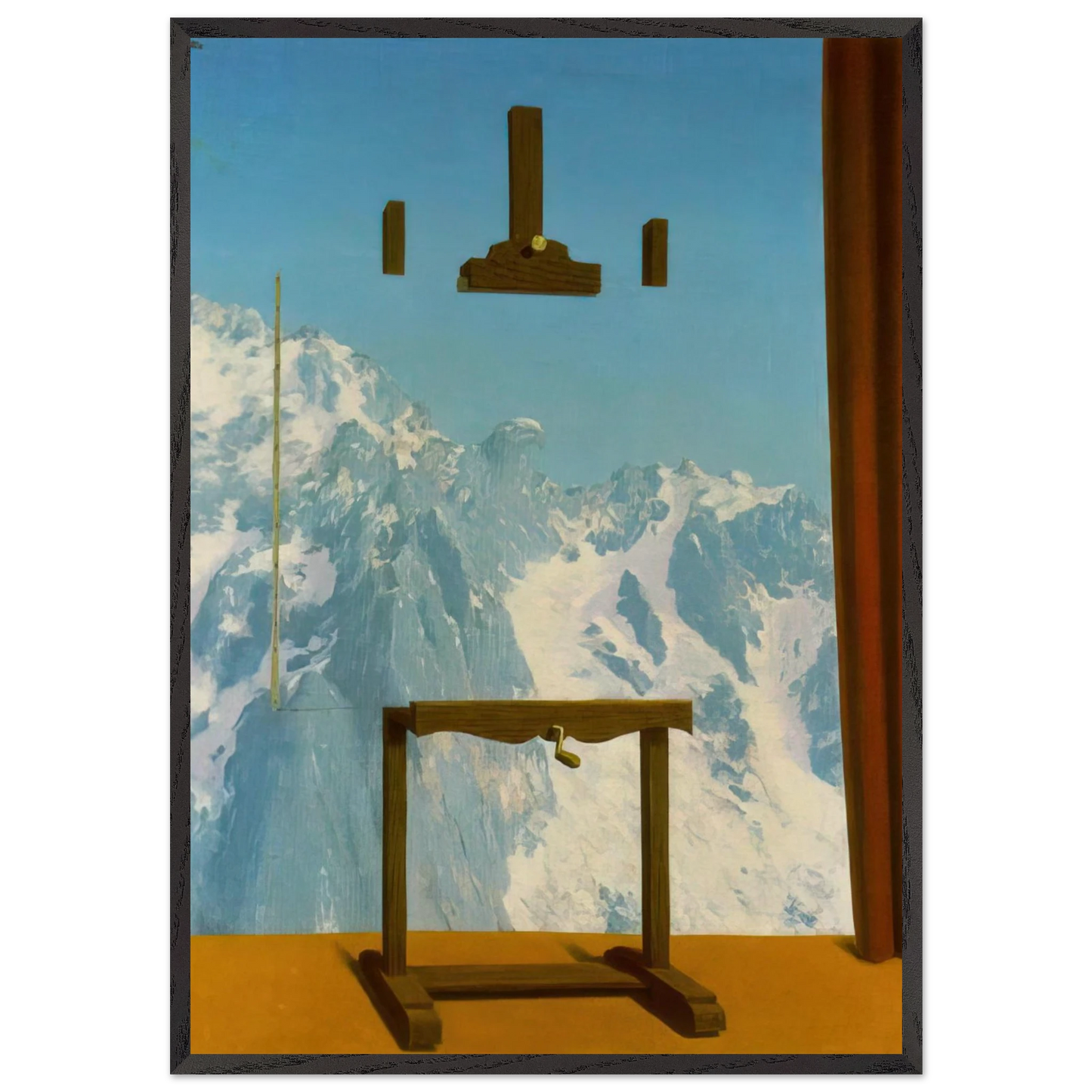
CALL OF PEAKS 1943 - Rene Magritte 70x100 cm / 28x40 inches Framed Art Print – Black Wooden Frame
CALL OF PEAKS 1943 - Rene Magritte 70x100 cm / 28x40 inches Framed Art Print – Black Wooden Frame
Couldn't load pickup availability
The Poetic Vision of René Magritte: Call of Peaks (1943)
In 1943, during a period of profound artistic evolution, René Magritte created Call of Peaks (L'Appel des cimes), a breathtaking exploration of the boundaries between the animate and the inanimate. This surrealist masterpiece features his iconic metamorphosis, where the rugged majesty of a mountain range seamlessly transforms into the powerful silhouette of an eagle. At RedKalion, we offer this museum-quality reproduction, capturing the subtle tonal shifts and the dreamlike atmosphere that Magritte intended during his 'Renoir period'—a time when he sought to infuse his work with more light and vibrancy.
This premium 70x100 cm framed art print is more than a decorative piece; it is a historical artifact of Surrealism. To ensure the integrity of the original vision, each print is produced on 250 gsm (110 lb) archival museum-quality paper. This natural white, matte, and uncoated paper is chosen for its longevity and ability to render the depth of Magritte's palette without the distraction of glare. The FSC-certified paper ensures your investment in fine art also supports global sustainability.
Exquisite Framing and Presentation
To complement the intellectual weight of Magritte's work, we house each print in a sophisticated 20mm (0.79") thick black frame crafted from responsibly sourced oak and ash. Unlike standard commercial frames, our professional-grade molding provides a substantial, gallery-ready presence on your wall. Protecting the artwork is a layer of shatterproof, transparent plexiglass, which offers superior clarity and safety compared to traditional glass.
- Archival Grade: 250 gsm matte paper ensures your print resists yellowing and degradation over time.
- Premium Construction: Frames are 20mm wide and thick, providing a sturdier profile than the classic 14mm frame.
- Ready to Elevate: Every order arrives with a pre-installed hanging kit, allowing you to transform your space immediately.
- Sustainable Luxury: We utilize FSC-certified wood and paper to meet the highest environmental standards.
Elevate your interior with an archival masterpiece that endures. RedKalion's commitment to craftsmanship ensures that Call of Peaks remains a centerpiece of conversation and contemplation for generations to come.
Discover Unlimited Art Possibilities
At RedKalion, you can find virtually any artwork from any artist, available in a wide range of sizes to perfectly match your space.
If you didn’t find what you’re looking for, contact us at support@redkalion.com . We will source any artwork and produce it in any size and format you need, including art prints, posters, canvas, framed pieces, framed canvas, and more.
For dedicated art enthusiasts, we also offer handcrafted replicas of any artwork, carefully painted by highly skilled artists using traditional techniques.
For custom requests, contact us at support@redkalion.com .
What materials are used for the frame of this Magritte print?
The frame is crafted from responsibly sourced, high-quality oak and ash wood. It features a professional 20mm (0.79") thickness and width, offering a more robust and premium gallery appearance than standard frames.
What makes the paper quality 'museum-grade'?
We use 250 gsm (110 lb) natural white, matte, uncoated paper. This archival paper is specifically designed for fine art, ensuring long-term durability and vibrant color reproduction without yellowing.
Is the artwork ready to hang upon arrival?
Yes. Every framed print from RedKalion includes a dedicated hanging kit. Your artwork is delivered ready to hang directly on your wall, requiring no additional hardware assembly.
How is the print protected from damage?
Each piece is protected by shatterproof, transparent plexiglass. This material provides the clarity of glass while offering superior durability and protection against UV light and physical impact.
Are the materials used in this product sustainable?
Yes, we prioritize environmental responsibility. We use FSC-certified materials or equivalent certifications, ensuring that the wood and paper are sourced from sustainably managed forests.
What is the significance of the mountain-eagle in Call of Peaks?
Magritte uses the 'metamorphosis' motif to challenge our perception of reality. By merging the mountain and the eagle, he creates a poetic mystery that explores the relationship between the earth and the sky.
In what artistic period did Magritte paint Call of Peaks?
Painted in 1943, this work belongs to Magritte's 'Renoir' or 'Sunlit Surrealism' period. During this time, he adopted a more impressionistic brushwork and brighter palette as a response to the darkness of WWII.