RedKalion
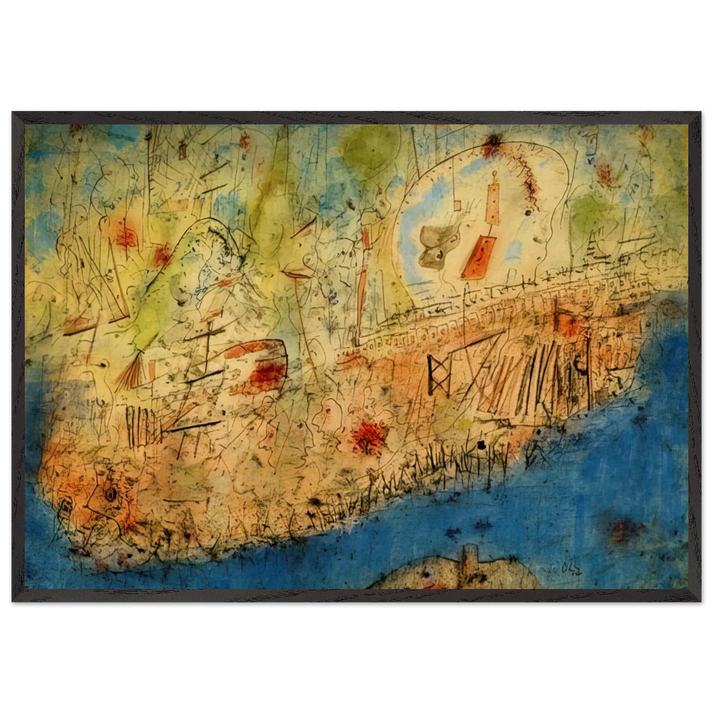
Camp des Milles - 1940 - Wols 70x100 cm / 28x40 inches Framed Art Print – Black Wooden Frame
Camp des Milles - 1940 - Wols 70x100 cm / 28x40 inches Framed Art Print – Black Wooden Frame
Couldn't load pickup availability
Elevate Your Space with a Fragment of Art History: Wols' 1940 Masterpiece
Experience the profound emotional depth and historical weight of Wols’ Camp des Milles (1940). This museum-quality reproduction captures the seminal moment when Alfred Otto Wolfgang Schulze, known simply as Wols, transitioned from surrealist photography to the raw, visceral abstraction of Tachisme. Created during his internment at the Camp des Milles in France, this piece is a hauntingly beautiful testament to the resilience of the human spirit amidst the turbulence of World War II.
Authentic Representation of the Informalist Movement
Wols is celebrated as the father of European Informalism, and this 70x100 cm framed art print preserves the delicate, microscopic detail and spontaneous ink-work that defined his style. The composition reflects the psychological claustrophobia of the camp, rendered through intricate line work and organic forms that seem to pulse with life on the page. By choosing this fine art print, you are bringing a pivotal chapter of modern art history into your home or gallery.
Uncompromising Physical Quality for the Discerning Curator
At RedKalion, we curate our prints to meet the exacting standards of the world's most prestigious institutions. This archival-grade reproduction is printed on 250 gsm (110 lb) natural white, matte, uncoated paper, ensuring an exquisite depth of color without glare. The 20mm (0.79") black frame is crafted from responsibly sourced oak and ash, providing a robust and sophisticated border that is wider and more substantial than standard commercial frames.
- Archival Longevity: Acid-free, FSC-certified paper designed to endure for generations without yellowing.
- Premium Protection: Shatterproof, transparent plexiglass ensures the artwork remains pristine and protected from environmental factors.
- Sustainable Elegance: Responsibly sourced wood frames and eco-friendly printing processes.
- Effortless Installation: Arrives ready-to-hang with a high-quality hanging kit included.
Transform your interior with an archival masterpiece that speaks of historical significance and artistic mastery. This Wols framed print is more than a decoration; it is an enduring investment in aesthetic sophistication.

Discover Unlimited Art Possibilities
At RedKalion, you can find virtually any artwork from any artist, available in a wide range of sizes to perfectly match your space.
If you didn’t find what you’re looking for, contact us at support@redkalion.com . We will source any artwork and produce it in any size and format you need, including art prints, posters, canvas, framed pieces, framed canvas, and more.
For dedicated art enthusiasts, we also offer handcrafted replicas of any artwork, carefully painted by highly skilled artists using traditional techniques.
For custom requests, contact us at support@redkalion.com .
What are the specifications of the paper used for this Wols print?
We use 250 gsm (110 lb) archival museum-quality paper. It features a matte, uncoated, natural white finish with a thickness of 0.29 mm, ensuring high-fidelity reproduction and longevity for fine art collectors.
Is the frame for 'Camp des Milles' made of real wood?
Yes, the frame is crafted from responsibly sourced, FSC-certified oak and ash wood. It features a black finish and measures 20mm thick and wide, offering a premium look compared to standard 14mm frames.
How is the artwork protected from damage during display?
Each print is shielded by shatterproof, transparent plexiglass. This provides the clarity of glass while ensuring the artwork is protected from impact and dust, making it safe for any environment.
Does the print arrive ready to be displayed?
Absolutely. Every framed art print from RedKalion includes a professional hanging kit. The artwork arrives fully assembled within the frame and is ready to hang directly on your wall.
What is RedKalion’s commitment to sustainability?
We prioritize the environment by using FSC-certified or equivalent sustainably sourced wood and paper. Our production processes are designed to minimize waste and ensure your fine art acquisition is ethically sound.
What is the significance of the 1940 Camp des Milles period for Wols?
The 1940 internment at Camp des Milles was a turning point for Wols. Confined in a brick factory, he shifted from photography to the dense, microscopic watercolors and drawings that pioneered the Tachisme movement.
Why is Wols considered a master of Tachisme?
Wols moved away from premeditated geometric shapes toward spontaneous, gestural 'stains' (taches). His work emphasizes the physicality of the medium, expressing subconscious emotions that deeply influenced post-war European abstraction.