

RedKalion
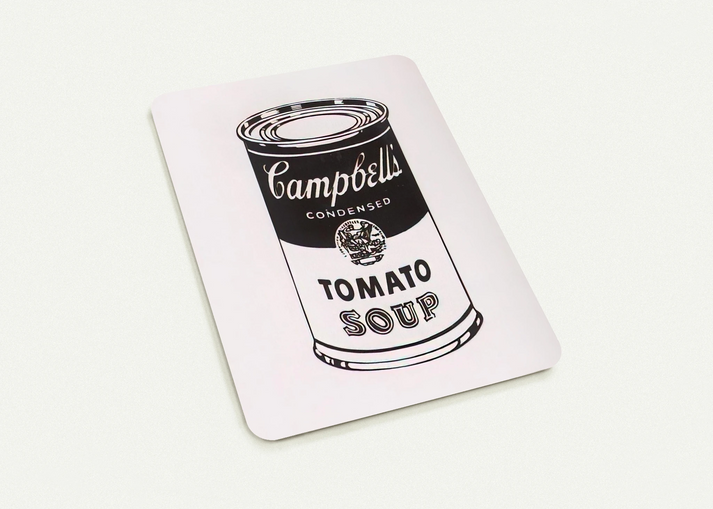
Campbell's Soup Can Tomato -Retrospective Series By Andy Warhol Pack of 10 Post Cards | Andy Warhol Post Cards | A6 (10.5 x 14.8 cm) - 4.1 x 5.8 inches
Campbell's Soup Can Tomato -Retrospective Series By Andy Warhol Pack of 10 Post Cards | Andy Warhol Post Cards | A6 (10.5 x 14.8 cm) - 4.1 x 5.8 inches
Couldn't load pickup availability
Elevate Your Correspondence with Andy Warhol’s Iconic Vision
Experience the intersection of high art and consumer culture with this exclusive set of 10 postcards featuring Campbell's Soup Can Tomato - Retrospective Series by Andy Warhol. This piece captures the essence of the Pop Art movement, transforming a mundane grocery staple into a profound statement on mass production and mid-century Americana. Originally conceived in 1962, Warhol revisited these motifs in his later 'Retrospective' works, emphasizing the enduring legacy of his screen-printing aesthetic.
Museum-Grade Quality in a Miniature Format
At RedKalion, we believe that even the smallest prints deserve the highest level of craftsmanship. These A6 postcards are produced using our proprietary 12-color fine art printing technology. Unlike standard 4-color commercial prints, our process ensures unparalleled color vibrancy and depth, capturing the bold, saturated reds and crisp typography of Warhol’s original vision with absolute precision.
Sophisticated Materials for the Discerning Collector
Each card in this 10-pack set is printed on 200 gsm (80 lb) FSC-certified paper, offering a substantial thickness of 0.26 mm (10.3 mils). The smooth matte finish eliminates glare, providing a tactile, archival quality that feels sophisticated to the touch. Whether used for personal messages or displayed as a curated mini-gallery, these cards represent the pinnacle of fine art reproduction.
- Artist: Andy Warhol
- Subject: Campbell's Soup Can (Tomato) from the Retrospective Series
- Print Technology: 12-color archival inkjet
- Paper: 200 gsm matte, FSC-certified
- Dimensions: A6 (10.5 x 14.8 cm / 4.1 x 5.8 inches)
By choosing RedKalion, you are investing in a sustainably produced, museum-quality reproduction that honors the historical significance of the Pop Art era while providing a modern, archival-grade experience.


Discover Unlimited Art Possibilities
At RedKalion, you can find virtually any artwork from any artist, available in a wide range of sizes to perfectly match your space.
If you didn’t find what you’re looking for, contact us at support@redkalion.com . We will source any artwork and produce it in any size and format you need, including art prints, posters, canvas, framed pieces, framed canvas, and more.
For dedicated art enthusiasts, we also offer handcrafted replicas of any artwork, carefully painted by highly skilled artists using traditional techniques.
For custom requests, contact us at support@redkalion.com .
What makes the print quality of these Warhol postcards unique?
We use 12-color fine art printing technology, which offers superior color depth and accuracy compared to standard 4-color prints. This ensures the iconic red of the Campbell's Soup Can is vibrant and true to Warhol's original palette.
What type of paper and finish is used for this postcard set?
Each card is printed on premium 200 gsm (80 lb) paper with a thickness of 0.26 mm. The smooth matte finish provides a sophisticated, glare-free surface that is perfect for both display and writing.
Is the paper used for these postcards environmentally friendly?
Yes, all our prints, including this Andy Warhol set, are produced on FSC-certified paper, ensuring the materials are sourced from responsibly managed forests that provide environmental, social, and economic benefits.
How are these postcards produced and shipped?
Our postcards are printed on demand to reduce waste. They are carefully packaged to ensure they arrive in pristine condition, ready for framing or mailing as high-end correspondence.
Will the colors on these postcards fade over time?
No, our use of archival-grade inks and 12-color technology ensures long-term color stability. When kept out of direct sunlight, these prints are designed to maintain their vibrancy for decades.
What is the significance of the Retrospective Series in Warhol’s career?
The Retrospective Series saw Warhol revisiting his most famous motifs from the 1960s, such as the soup cans, using his matured screen-printing techniques to reflect on his own legacy and the evolution of Pop Art.
Why did Andy Warhol choose the Campbell’s Soup Can as a subject?
Warhol chose the soup can because it represented the ubiquity and democratic nature of consumer goods—something consumed by both the rich and the poor, making it the perfect symbol for his exploration of mass culture.