

RedKalion
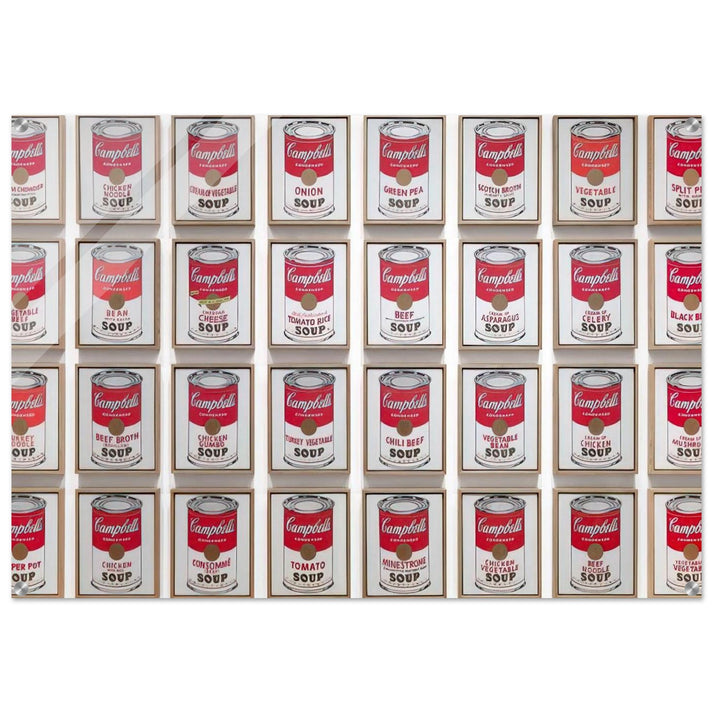
Campbell's Soup Cans - Andy Warhol Acrylic Print - 70x100 cm / 28x40″ inches
Campbell's Soup Cans - Andy Warhol Acrylic Print - 70x100 cm / 28x40″ inches
Couldn't load pickup availability
Elevate Your Space with Andy Warhol's Definitive Pop Art Masterpiece
Experience the intersection of commercial culture and high art with RedKalion’s museum-quality reproduction of Andy Warhol’s Campbell's Soup Cans. Originally debuted in 1962, this iconic series challenged the traditional boundaries of fine art by elevating a common grocery item to the status of a gallery masterpiece. Our premium acrylic print captures the bold, repetitive aesthetic and vibrant pigments that defined the Pop Art movement, offering an archival-grade addition to any modern interior.
The RedKalion Difference: Unparalleled Depth and Clarity
This is not a standard poster; it is a sophisticated fine art print engineered for longevity and visual impact. Utilizing a 4mm (0.15") high-grade acrylic substrate, the artwork achieves a stunning three-dimensional depth and a glass-like finish that enhances color saturation and detail. The sleek, straight-cut corners provide a minimalist, contemporary silhouette that complements Warhol's industrial-inspired vision.
- Material: 4mm (0.15") thick acrylic for a vibrant, durable, and sleek finish.
- Visual Quality: Transparent areas in the design default to a crisp white background, ensuring the soup can labels remain bold and legible.
- Installation Ready: Includes a professional hanging kit with four screws and pre-drilled holes at each corner for a secure, floating presentation.
- Durability: Archival-grade materials designed to resist fading and maintain museum-quality brilliance for decades.
A Legacy of Consumerism and Art History
Andy Warhol famously chose the soup can as a subject because he drank it every day for twenty years. By utilizing semi-mechanized production techniques like silk-screening, Warhol mirrored the mass-production of the items he depicted. At RedKalion, we honor this legacy by curating reproductions that meet the highest standards of the art-collecting world. This 70x100 cm (28x40") acrylic print serves as a powerful statement piece, inviting conversation about the nature of art, commodity, and the American dream.


Discover Unlimited Art Possibilities
At RedKalion, you can find virtually any artwork from any artist, available in a wide range of sizes to perfectly match your space.
If you didn’t find what you’re looking for, contact us at support@redkalion.com . We will source any artwork and produce it in any size and format you need, including art prints, posters, canvas, framed pieces, framed canvas, and more.
For dedicated art enthusiasts, we also offer handcrafted replicas of any artwork, carefully painted by highly skilled artists using traditional techniques.
For custom requests, contact us at support@redkalion.com .
What is the material and thickness of this Warhol acrylic print?
This museum-quality reproduction is crafted on 4mm (0.15") thick acrylic, providing a sleek, durable, and vibrant finish that enhances the depth of the iconic Campbell's Soup Cans imagery.
Is the mounting hardware included with the print?
Yes, each print includes a specialized hanging kit. It features four screws and pre-drilled holes located 14mm (0.55") from the edges for a secure and modern installation.
How are the edges and corners of the acrylic finished?
The print features precision straight-cut corners, offering a clean and modern aesthetic that aligns perfectly with contemporary gallery standards.
How does RedKalion handle transparent elements in the artwork?
To maintain optimal color accuracy and presentation, any transparent backgrounds in the artwork default to white, ensuring Warhol's signature colors pop against the acrylic.
Will the colors in this Andy Warhol print fade over time?
No, we use archival-grade inks and high-quality acrylic that protect against UV damage, ensuring your fine art print remains vibrant and enduring for years to come.
What is the historical significance of Warhol’s Campbell's Soup Cans?
Created in 1962, this work signaled the birth of Pop Art by using mass-produced commercial items to challenge traditional notions of 'high art' and consumer culture.
Why did Andy Warhol choose Campbell's Soup as his subject?
Warhol chose the soup can because it was a ubiquitous, everyday object that represented the democratic nature of American consumerism—a product used by everyone from presidents to the working class.