

RedKalion
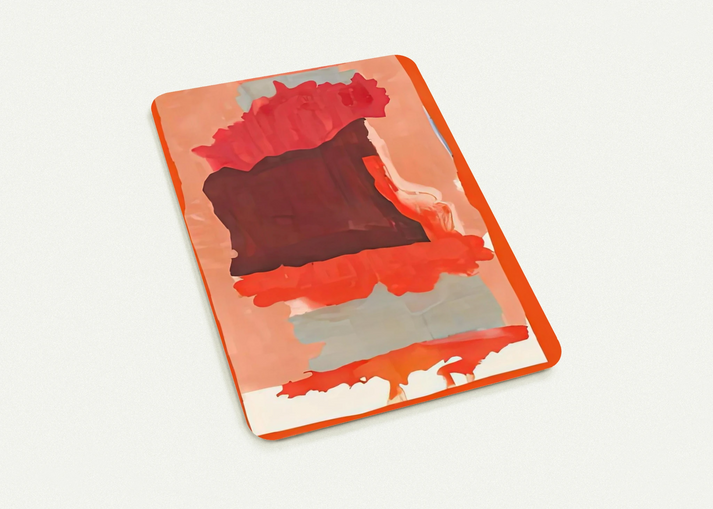
Cape Orange, 1964- By Helen Frankenthaler Pack of 10 Post Cards | Helen Frankenthaler Post Cards | A6 (10.5 x 14.8 cm) - 4.1 x 5.8 inches
Cape Orange, 1964- By Helen Frankenthaler Pack of 10 Post Cards | Helen Frankenthaler Post Cards | A6 (10.5 x 14.8 cm) - 4.1 x 5.8 inches
Couldn't load pickup availability
Elevate Your Correspondence with Helen Frankenthaler’s Cape Orange (1964)
Experience the profound luminosity of the Color Field movement with this exquisite pack of 10 postcards featuring Cape Orange (1964) by the legendary Helen Frankenthaler. As a pioneer of the 'soak-stain' technique, Frankenthaler redefined the possibilities of abstraction, allowing thinned pigment to fuse with the canvas. In this particular work, the vibrant, evocative hues of the Cape Cod landscape are distilled into a monumental expression of pure color and light.
RedKalion brings this museum-quality masterpiece into your hands through our advanced 12-color fine art printing technology. Unlike standard 4-color commercial prints, our process captures the subtle shifts in tone and the ethereal depth that Frankenthaler intended. Each A6 card serves as a miniature archival reproduction, perfect for personal notes or as a curated set for display.
Product Specifications & Artistry
- Premium Color Depth: Reproduced using a 12-color archival ink system for unparalleled vibrancy and accuracy.
- Sophisticated Finish: A smooth matte finish ensures a glare-free viewing experience, highlighting the delicate textures of the original work.
- Substantial Quality: Printed on 200 gsm (80 lb) paper with a thickness of 0.26 mm, providing a tactile, premium feel.
- Eco-Conscious Standards: Every card is printed on FSC-certified paper, aligning artistic beauty with environmental responsibility.
- Size: A6 format (10.5 x 14.8 cm / 4.1 x 5.8 inches), ideal for framing or global postage.
By choosing RedKalion, you are investing in a sophisticated tribute to art history. These postcards are not merely stationery; they are enduring fragments of an era that changed the course of American Modernism.


Discover Unlimited Art Possibilities
At RedKalion, you can find virtually any artwork from any artist, available in a wide range of sizes to perfectly match your space.
If you didn’t find what you’re looking for, contact us at support@redkalion.com . We will source any artwork and produce it in any size and format you need, including art prints, posters, canvas, framed pieces, framed canvas, and more.
For dedicated art enthusiasts, we also offer handcrafted replicas of any artwork, carefully painted by highly skilled artists using traditional techniques.
For custom requests, contact us at support@redkalion.com .
What makes the Cape Orange (1964) reproduction unique?
RedKalion uses a 12-color fine art printing process, which offers significantly more depth and color accuracy than standard inkjet prints, ensuring the Helen Frankenthaler palette is perfectly preserved.
What is the quality of the paper used for these postcards?
We use archival-grade 200 gsm (80 lb) paper with a thickness of 0.26 mm. It features a smooth matte finish for a premium, glare-free aesthetic.
How does RedKalion ensure color accuracy?
Our 12-color printing technology utilizes a wider gamut of pigments, allowing us to replicate the exact nuances of Frankenthaler's original 1964 color field masterpiece.
What are the shipping and production timelines?
Each pack of 10 postcards is printed on demand to ensure the highest quality and minimize waste. Orders are typically processed and ready for shipment within 2-4 business days.
Is the paper environmentally sustainable?
Yes, all our postcards are printed on FSC-certified paper, ensuring that your appreciation for art supports responsible forest management.
Who was Helen Frankenthaler?
Helen Frankenthaler was a major American abstract expressionist painter whose 'soak-stain' technique was pivotal in the transition to Color Field painting in the mid-20th century.
What is the significance of the 'soak-stain' technique in this piece?
The technique involved thinning oil paint with turpentine, allowing it to soak directly into the raw canvas, creating the luminous, watercolor-like washes seen in Cape Orange.