RedKalion
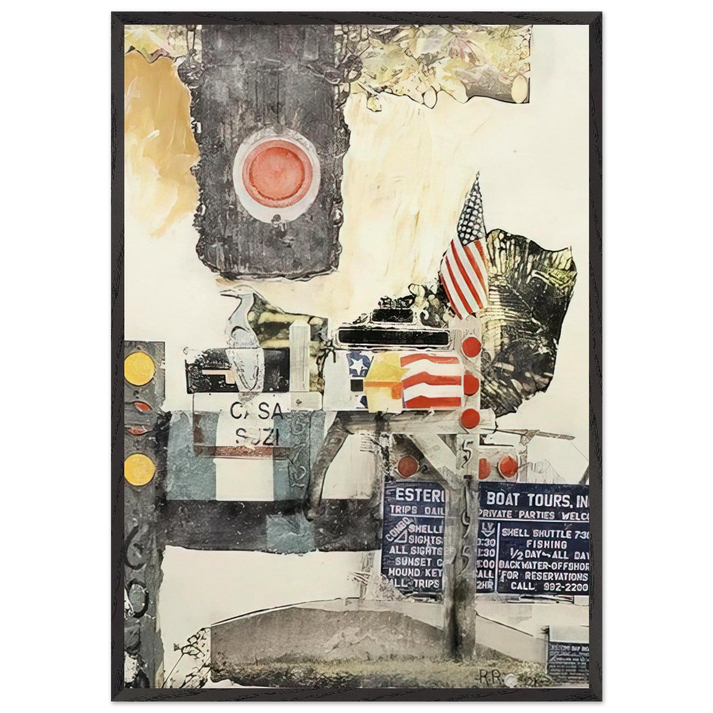
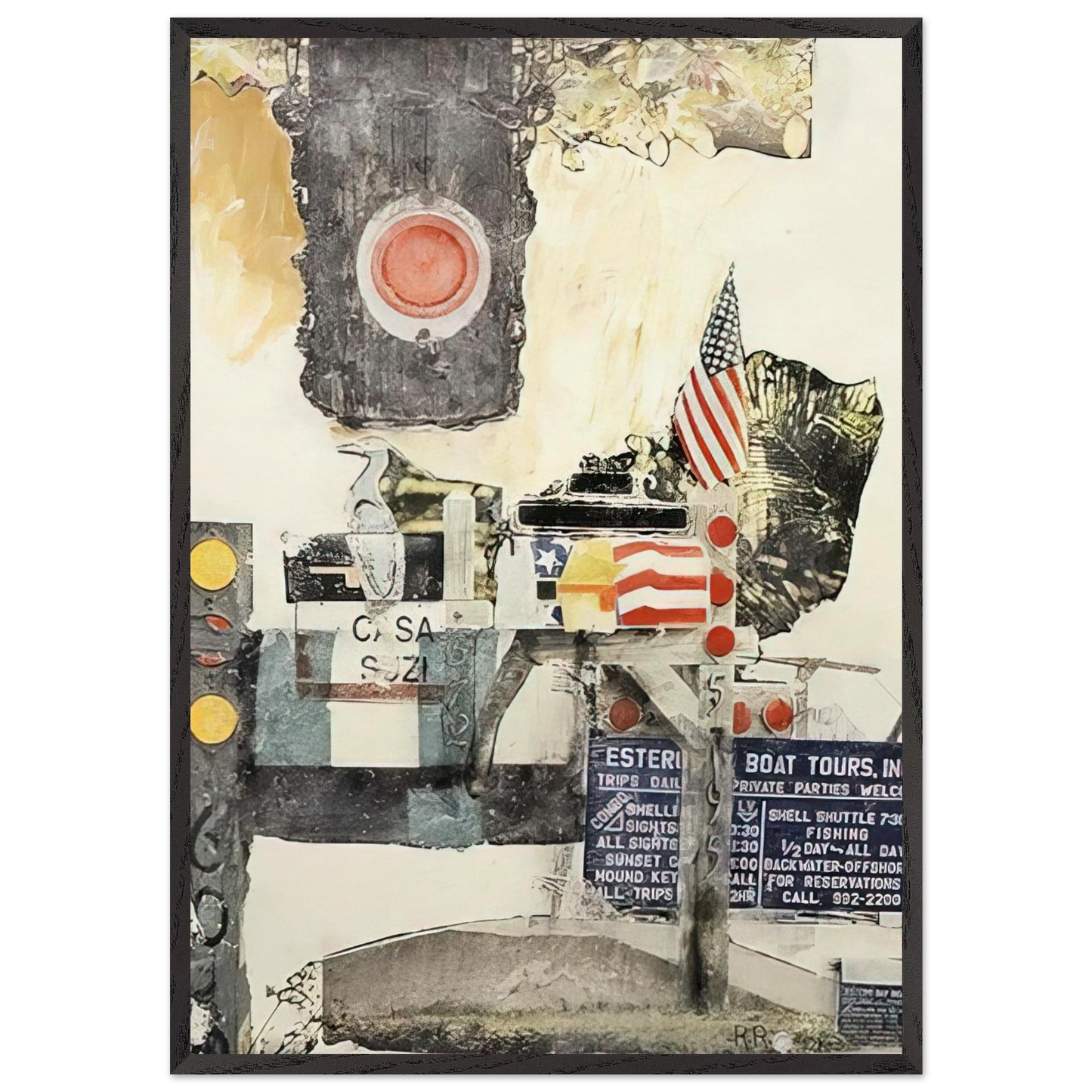
CAPTIVA CODA 2002 - Robert Rauschenberg 70x100 cm / 28x40 inches Framed Art Print – Black Wooden Frame
CAPTIVA CODA 2002 - Robert Rauschenberg 70x100 cm / 28x40 inches Framed Art Print – Black Wooden Frame
Couldn't load pickup availability
Elevate Your Space with Robert Rauschenberg’s CAPTIVA CODA 2002
Experience the late-career brilliance of a modern master with this museum-quality reproduction of Robert Rauschenberg’s Captiva Coda 2002. Created during his evocative 'Scenarios' period, this piece exemplifies Rauschenberg's transition toward digital transfer processes and water-based pigments, capturing a dreamlike montage of found imagery and personal photography. As an elite addition to any collection, this 70x100 cm (28x40 inches) framed art print brings the sophisticated complexity of American Post-Modernism into your home or office.
Masterful Artistic Technique and Historical Context
Robert Rauschenberg, a titan of the 20th-century art world, spent his final decades on Captiva Island, Florida. Captiva Coda reflects this environment, blending the artist's signature 'combine' philosophy with a cleaner, more ethereal aesthetic. Our reproduction honors his legacy by utilizing state-of-the-art printing methods that replicate the nuanced textures and soft gradients of the original digital transfers. RedKalion ensures every detail—from the subtle color shifts to the bold structural elements—is preserved with absolute fidelity.
Premium RedKalion Craftsmanship
RedKalion is dedicated to providing archival-grade masterpieces that stand the test of time. This framed print is not merely a poster; it is a meticulously curated art object. Features include:
- Archival Paper: Printed on 250 gsm (110 lb) natural white, museum-quality paper with a matte, uncoated finish to eliminate glare.
- Substantial Framing: A 20mm (0.79") thick and wide black wooden frame, crafted from responsibly sourced oak and ash, providing a profile that is sturdier and more luxurious than industry standards.
- Shatterproof Protection: High-grade plexiglass ensures the artwork remains pristine and protected while maintaining crystal-clear visibility.
- Sustainability: All materials are FSC-certified or equivalent, supporting global reforestation and ethical sourcing.
- Ready to Exhibit: Your artwork arrives with a pre-installed hanging kit, allowing for immediate transformation of your interior space.
By choosing a RedKalion reproduction, you are investing in an archival piece that captures the spirit of the neo-Dadaist movement while enjoying the longevity of modern, high-spec materials.
Discover Unlimited Art Possibilities
At RedKalion, you can find virtually any artwork from any artist, available in a wide range of sizes to perfectly match your space.
If you didn’t find what you’re looking for, contact us at support@redkalion.com . We will source any artwork and produce it in any size and format you need, including art prints, posters, canvas, framed pieces, framed canvas, and more.
For dedicated art enthusiasts, we also offer handcrafted replicas of any artwork, carefully painted by highly skilled artists using traditional techniques.
For custom requests, contact us at support@redkalion.com .
What makes the RedKalion CAPTIVA CODA 2002 print museum-quality?
We use 250 gsm archival-grade, natural white paper with a matte finish. Combined with our 20mm thick premium oak and ash frames, these materials meet the rigorous standards expected by galleries and fine art collectors worldwide.
What are the specific dimensions of the frame?
The black wooden frame features a 20mm (0.79") width and thickness. This profile is wider than the standard 14mm frames, offering a more authoritative and premium presence on your wall.
Is the Captiva Coda 2002 framed art print ready to hang?
Yes. Every RedKalion framed print includes a professional hanging kit. Your artwork arrives fully assembled and ready to hang directly upon delivery.
How is the artwork protected from environmental damage?
The print is shielded by shatterproof plexiglass, which provides a safe, clear barrier against dust and physical damage. The archival, acid-free paper prevents yellowing or degradation over time.
Is the framing material environmentally sustainable?
Absolutely. We use FSC-certified oak and ash wood, ensuring that the frames for our Robert Rauschenberg reproductions are sourced from responsibly managed forests.
What inspired Robert Rauschenberg's Captiva Coda series?
Inspired by his life on Captiva Island, Rauschenberg used his 'Scenarios' technique—transferring digital photographs onto paper using water—to explore themes of memory, nature, and urban intersection in a poetic, non-linear narrative.
Where does this piece fit in Rauschenberg's career?
Captiva Coda 2002 belongs to his late period. After decades of 'Combines', he shifted toward digital processes that allowed for a painterly quality without heavy oils, reflecting a more reflective and serene stage of his artistry.