

RedKalion
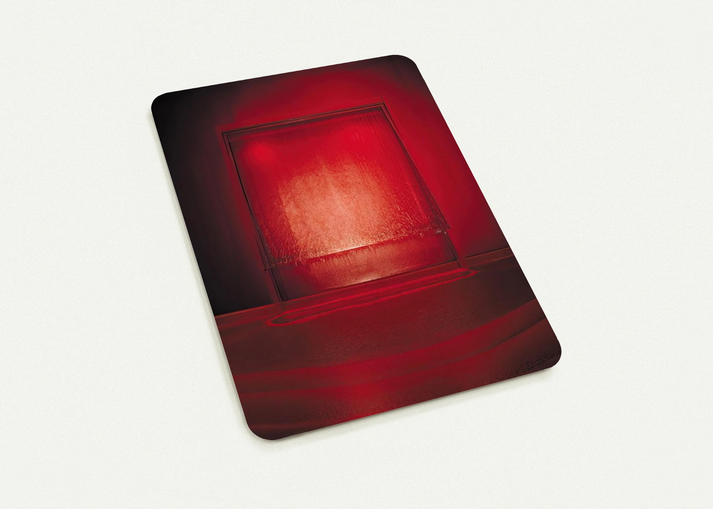
Carandirú - 2002 By Lygia Pape Pack of 10 Post Cards | Lygia Pape Post Cards | A6 (10.5 x 14.8 cm) - 4.1 x 5.8 inches
Carandirú - 2002 By Lygia Pape Pack of 10 Post Cards | Lygia Pape Post Cards | A6 (10.5 x 14.8 cm) - 4.1 x 5.8 inches
Couldn't load pickup availability
Elevate Your Correspondence with Lygia Pape's 'Carandirú' (2002)
Experience the profound legacy of Brazilian Neo-Concrete pioneer Lygia Pape with this exclusive pack of 10 museum-quality post cards. 'Carandirú' (2002) represents a powerful late-career synthesis of Pape's exploration into geometric abstraction and social resonance. As a founding member of the Neo-Concrete movement, Pape transitioned art from a passive observation to a sensory and social experience. This specific work captures the delicate balance between structure and emotion, rendered with the precision that RedKalion is known for.
Museum-Quality Reproductions for the Discerning Collector
At RedKalion, we bridge the gap between historical significance and contemporary display. These post cards are not mere stationery; they are archival-grade fine art prints. Utilizing advanced 12-color fine art printing technology, we achieve a depth of color and vibrancy that standard 4-color inkjet processes simply cannot replicate. Every nuance of Pape's original vision is preserved on 200 gsm (80 lb) FSC-certified paper, ensuring both tactile luxury and environmental responsibility.
Technical Excellence and Sophisticated Finish
Each A6 card features a smooth matte finish that eliminates glare, allowing the complex textures and tones of 'Carandirú' to take center stage. With a thickness of 0.26 mm (10.3 mils), these cards possess the substantial weight required for both mailing and framing. Whether you are sending a thoughtful note or creating a curated miniature gallery wall, these prints serve as an enduring testament to the power of 20th-century Brazilian modernism.
- Artist: Lygia Pape (1927–2004)
- Paper Weight: Professional 200 gsm / 80 lb
- Print Technology: Ultra-High Definition 12-color Giclée
- Sustainability: Printed on demand using eco-friendly, FSC-certified materials
- Finish: Elegant, glare-free smooth matte


Discover Unlimited Art Possibilities
At RedKalion, you can find virtually any artwork from any artist, available in a wide range of sizes to perfectly match your space.
If you didn’t find what you’re looking for, contact us at support@redkalion.com . We will source any artwork and produce it in any size and format you need, including art prints, posters, canvas, framed pieces, framed canvas, and more.
For dedicated art enthusiasts, we also offer handcrafted replicas of any artwork, carefully painted by highly skilled artists using traditional techniques.
For custom requests, contact us at support@redkalion.com .
What makes RedKalion’s 12-color printing superior for Lygia Pape prints?
Unlike standard 4-color commercial printing, our 12-color technology uses a wider gamut of archival inks. This ensures the subtle transitions and specific color palettes used by Lygia Pape are reproduced with museum-level accuracy and depth.
What is the texture and weight of the 'Carandirú' post cards?
Each card is printed on 200 gsm (80 lb) paper with a thickness of 0.26 mm. The finish is a smooth, glare-free matte, providing a sophisticated tactile experience and making the cards durable enough for mailing.
Are these fine art post cards eco-friendly?
Yes. RedKalion is committed to sustainability. We use FSC-certified paper from responsibly managed forests and utilize a print-on-demand model to minimize waste and reduce our environmental footprint.
How long will these archival prints last without fading?
Our fine art prints are designed for longevity. By using archival inks and acid-free matte paper, these post cards are resistant to fading and yellowing, maintaining their vibrancy for decades when kept out of direct sunlight.
Do you require a minimum order for these Lygia Pape cards?
No. At RedKalion, we believe fine art should be accessible. We offer these museum-quality post cards with no minimum order requirements, printed specifically for you upon purchase.
Who was Lygia Pape and why is she significant?
Lygia Pape was a key figure in the Brazilian Neo-Concrete movement. Her work moved beyond traditional canvas, integrating art into social and sensory life, making her a fundamental influence on contemporary installation art.
What is the significance of the 'Carandirú' title in this 2002 work?
The title refers to the notorious Carandiru Penitentiary in São Paulo. In this 2002 series, Pape uses her geometric language to evoke themes of containment and social memory, blending abstraction with poignant historical context.