RedKalion
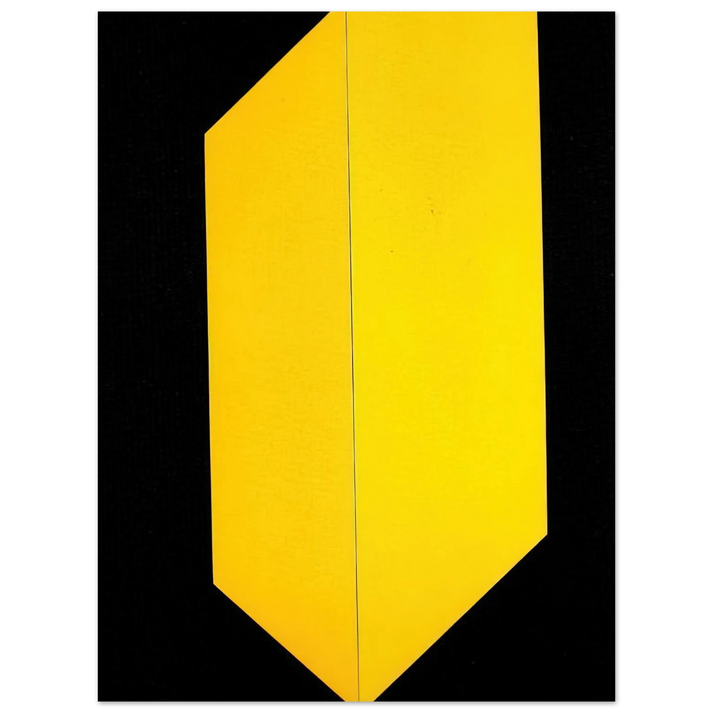
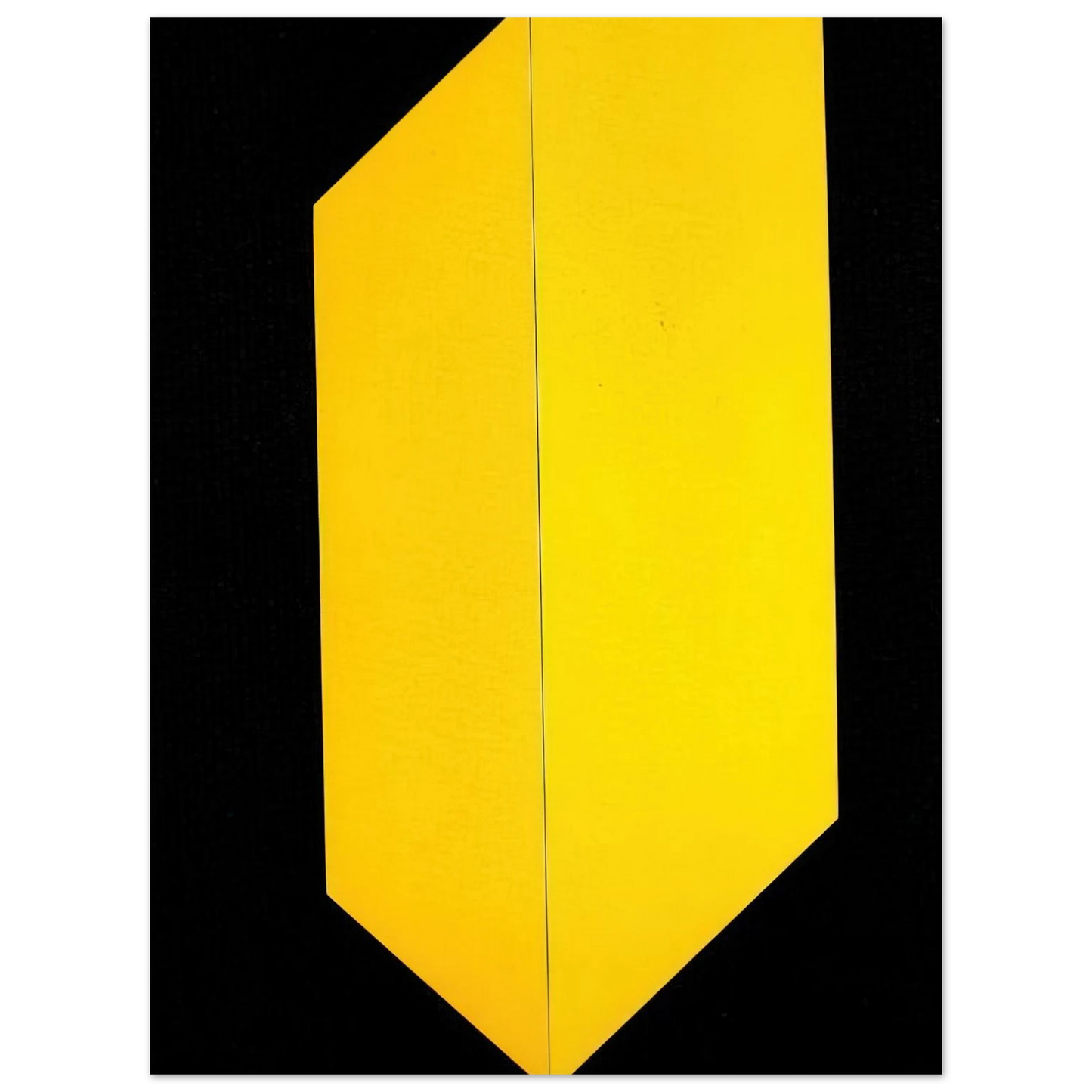
Carmen Herrera - Black and Yellow - 2009 75x100 cm / 30x40inches Fine Art Poster
Carmen Herrera - Black and Yellow - 2009 75x100 cm / 30x40inches Fine Art Poster
Couldn't load pickup availability
The Architectural Precision of Carmen Herrera: Black and Yellow (2009)
Experience the profound simplicity of Carmen Herrera’s 'Black and Yellow' (2009), a definitive masterwork of geometric abstraction. As a pioneer of the Hard-Edge movement, Herrera’s work is characterized by a relentless search for spatial balance and a sophisticated economy of form. In this 2009 composition, she creates a high-tension dialogue between two contrasting planes, challenging the viewer's perception of positive and negative space. At RedKalion, we curate these museum-quality reproductions to ensure that the artist’s vision is preserved with absolute fidelity.
Museum-Quality Execution on Archival Paper
To honor Herrera’s legacy of precision, this fine art print is produced on our Master’s Edition archival paper. This premium, museum-quality medium features a matte, uncoated, natural white (off-white) finish that emphasizes the sharp, clean lines essential to the Hard-Edge style. The luxurious texture of the paper avoids glare, allowing the deep black and vibrant yellow pigments to resonate with clarity in any lighting environment.
Uncompromising Material Excellence
Every RedKalion print is an investment in longevity. Utilizing acid-free paper (pH above 7), our reproductions are designed to resist yellowing and degradation over time. With a substantial weight of 250 gsm (110 lb) and a thickness of 0.29 mm (11.4 mils), the print possesses a physical presence and durability that exceeds standard gallery posters. Furthermore, our commitment to the environment is reflected in our choice of FSC-certified paper, ensuring your aesthetic choice supports sustainable forestry.
A Legacy of Minimalism
Carmen Herrera often remarked that she found 'beauty in the straight line.' This 2009 piece, created when the artist was in her late nineties, serves as a testament to her enduring mastery. By removing the hand of the artist and focusing on the purity of the geometric intersection, Herrera invites a meditative experience. Elevate your interior space with this archival masterpiece—a sophisticated addition to any collection that values the intersection of modern history and timeless design.
Discover Unlimited Art Possibilities
At RedKalion, you can find virtually any artwork from any artist, available in a wide range of sizes to perfectly match your space.
If you didn’t find what you’re looking for, contact us at support@redkalion.com . We will source any artwork and produce it in any size and format you need, including art prints, posters, canvas, framed pieces, framed canvas, and more.
For dedicated art enthusiasts, we also offer handcrafted replicas of any artwork, carefully painted by highly skilled artists using traditional techniques.
For custom requests, contact us at support@redkalion.com .
What are the physical specifications of the paper used for this print?
The artwork is printed on Master's Edition archival paper, which is 250 gsm (110 lb) with a thickness of 0.29 mm. It features a matte, uncoated, natural white finish for a luxurious, glare-free texture.
How is the archival longevity of the print guaranteed?
We use acid-free paper with a pH above 7, which prevents yellowing and brittleness over time. This ensures your museum-quality reproduction remains in pristine condition for decades.
Is the paper used for this Herrera print sustainable?
Yes, all our fine art posters are printed on FSC-certified paper (Forest Stewardship Council), ensuring the materials are sourced from responsibly managed forests that provide environmental and social benefits.
How are orders fulfilled and shipped?
RedKalion operates on a print-on-demand model with no minimum orders. This reduces waste and ensures each piece is freshly printed and handled with care before being shipped directly to you.
Will the colors in 'Black and Yellow' fade over time?
No, we utilize premium archival inks and acid-free museum-quality paper. This combination is designed to maintain color vibrancy and resist fading, preserving the high-contrast aesthetic of Herrera's work.
What was the inspiration behind Carmen Herrera's Black and Yellow (2009)?
This work reflects Herrera's career-long obsession with 'finding the essence.' It uses the 'Hard-Edge' technique to explore the tension where two colors meet, treating color as a sculptural element within a two-dimensional plane.
Why is Carmen Herrera considered a pioneer of Geometric Abstraction?
Herrera developed her minimalist style in the 1940s and 50s, often predating the famous Minimalist movement. Her focus on structural clarity and the 'dichotomy of color' established her as a visionary of modern art.