
RedKalion
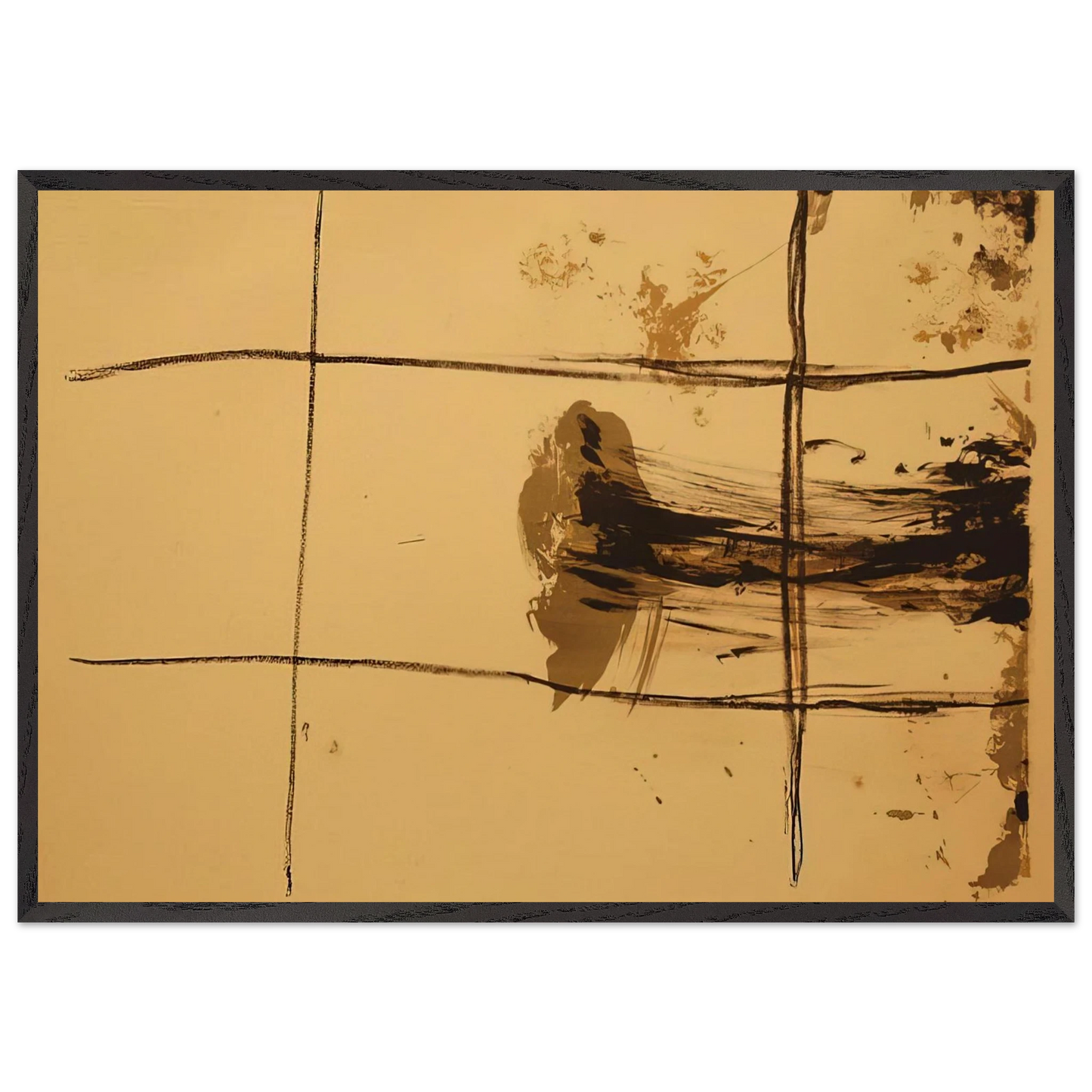
CARR S 1967 - Antoni Tapies 70x100 cm / 28x40 inches Framed Art Print – Black Wooden Frame
CARR S 1967 - Antoni Tapies 70x100 cm / 28x40 inches Framed Art Print – Black Wooden Frame
Couldn't load pickup availability
Elevate Your Space with the Profound Abstraction of Antoni Tàpies
Experience the intellectual depth of CARR S 1967, a seminal work by the Spanish master Antoni Tàpies. This museum-quality reproduction captures the raw, tactile energy and cryptic symbolism that defined Tàpies' contribution to the Informalist movement. Known for his 'matter painting' technique, Tàpies transformed the canvas into a wall of philosophical inquiry, where every gesture and mark invites deep contemplation.
Authentic Artistry Meets Archival Excellence
At RedKalion, we believe world-class art deserves a presentation of equal caliber. This fine art print is meticulously rendered on 250 gsm (110 lb) natural white paper. The archival, matte finishing ensures an uncoated texture that mimics the organic feel of the original lithograph, preventing glare and preserving the integrity of the artist's vision for generations.
The RedKalion Framework: Sustainable Elegance
Your Antoni Tàpies print arrives encased in a premium black wooden frame, crafted from responsibly sourced oak and ash. Measuring 20mm (0.79") in thickness and width, this frame provides a bold, contemporary silhouette that surpasses standard commercial frames. Every piece is protected by shatterproof plexiglass, ensuring your investment remains pristine while maintaining a sophisticated aesthetic.
- Historically Significant: A representation of Tàpies' late-1960s exploration of calligraphic symbols and political subtext.
- Museum-Grade Materials: FSC-certified paper and sustainable wood frames.
- Ready to Exhibit: Each framed print includes a professional-grade hanging kit for effortless installation.
- Uncompromising Quality: Designed for collectors who seek the permanence and texture of a true gallery piece.
Discover Unlimited Art Possibilities
At RedKalion, you can find virtually any artwork from any artist, available in a wide range of sizes to perfectly match your space.
If you didn’t find what you’re looking for, contact us at support@redkalion.com . We will source any artwork and produce it in any size and format you need, including art prints, posters, canvas, framed pieces, framed canvas, and more.
For dedicated art enthusiasts, we also offer handcrafted replicas of any artwork, carefully painted by highly skilled artists using traditional techniques.
For custom requests, contact us at support@redkalion.com .
What are the paper specifications for this Antoni Tàpies print?
We use 250 gsm (110 lb) archival museum-quality paper. It is natural white, matte, and uncoated, offering a thickness of 0.29 mm to ensure the artwork remains flat and vibrant over decades.
What makes the RedKalion frame superior to standard options?
Our frames are 20mm wide and thick, providing a more robust profile than the standard 14mm frames. They are crafted from FSC-certified oak and ash wood and finished with shatterproof plexiglass for durability.
Is the CARR S 1967 print ready to hang upon arrival?
Yes. Your framed Tàpies print arrives fully assembled with a specialized hanging kit included. It is designed to be placed directly on your wall the moment it is delivered.
How does the archival quality ensure longevity?
By utilizing acid-free, 250 gsm paper and UV-resistant materials, our prints are protected against yellowing and fading, meeting the strict standards required for fine art conservation and high-end gallery displays.
What is the significance of the CARR S series in Tàpies' career?
The CARR S 1967 series represents Tàpies' mastery of graphic abstraction. It features his iconic use of 'X' marks and cross-like symbols, reflecting his interest in both spiritual mysticism and the physical reality of the Spanish landscape.
Why was 1967 a pivotal year for Antoni Tàpies?
In 1967, Tàpies was deeply involved in the anti-Franco movement in Spain. His work from this era often contains subtle, coded protests against oppression, disguised within his revolutionary Informalist aesthetic.
How is the artwork protected during shipping?
Every framed print is securely packaged using reinforced materials. The use of shatterproof plexiglass instead of standard glass significantly reduces the risk of damage during transit, ensuring it arrives in perfect condition.