RedKalion
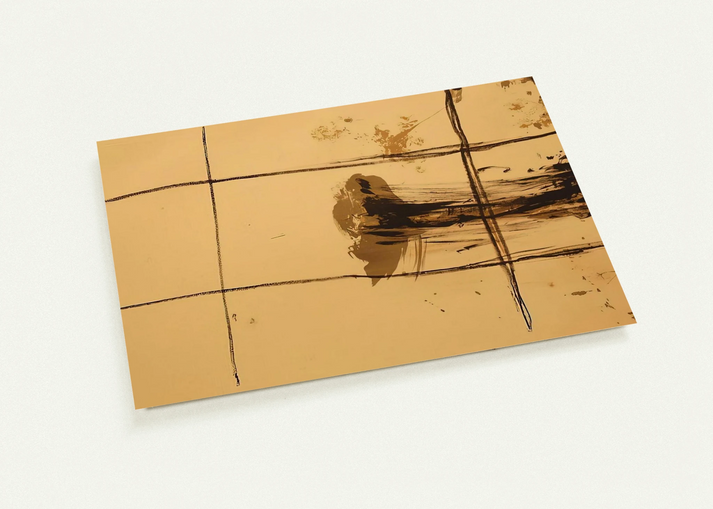
CARR S 1967 By Antoni Tapies Pack of 10 Post Cards | Antoni Tapies Post Cards | A6 (10.5 x 14.8 cm) - 4.1 x 5.8 inches
CARR S 1967 By Antoni Tapies Pack of 10 Post Cards | Antoni Tapies Post Cards | A6 (10.5 x 14.8 cm) - 4.1 x 5.8 inches
Couldn't load pickup availability
Elevate Your Correspondence with Antoni Tàpies' CARR S 1967
Experience the profound materiality of Catalan master Antoni Tàpies through this curated pack of 10 fine art postcards. CARR S 1967 is a quintessential representation of Tàpies' contribution to Informalism and Matter Painting. This work showcases his signature use of cryptic symbols and a tactile, earth-bound aesthetic that transformed 20th-century modern art. By choosing this museum-quality reproduction, you are sharing more than a message; you are sharing a piece of art history.
Unrivaled Museum-Quality Printing
At RedKalion, we believe that even the smallest format deserves the highest standard of craftsmanship. These postcards are produced using 12-color fine art printing technology. Unlike standard 4-color inkjet processes, our method captures the subtle tonal variations and gritty textures inherent in Tàpies' original 1967 composition, ensuring each print possesses stunning depth and color accuracy.
Premium Archival Materials
Each postcard is printed on 200 gsm (80 lb) paper with a thickness of 0.26 mm, providing a substantial, professional feel. The smooth matte finish ensures a clean, glare-free display, making these cards equally suitable for archival framing as they are for personal correspondence. To align with our commitment to the environment, every card is printed on FSC-certified, eco-friendly paper.
Technical Specifications
- Format: Pack of 10 flat postcards.
- Dimensions: A6 (10.5 x 14.8 cm / 4.1 x 5.8 inches).
- Finish: Glare-free matte coating for sophisticated presentation.
- Sustainability: Environmentally conscious materials and print-on-demand production.
RedKalion serves as a trusted curator for collectors who demand archival-grade reproductions. Whether displayed in a minimalist frame or sent to a fellow connoisseur, these Antoni Tàpies postcards bring the raw power of the Spanish avant-garde into the palm of your hand.

Discover Unlimited Art Possibilities
At RedKalion, you can find virtually any artwork from any artist, available in a wide range of sizes to perfectly match your space.
If you didn’t find what you’re looking for, contact us at support@redkalion.com . We will source any artwork and produce it in any size and format you need, including art prints, posters, canvas, framed pieces, framed canvas, and more.
For dedicated art enthusiasts, we also offer handcrafted replicas of any artwork, carefully painted by highly skilled artists using traditional techniques.
For custom requests, contact us at support@redkalion.com .
What printing technology is used for these Antoni Tàpies postcards?
We use advanced 12-color fine art printing technology, which offers superior color vibrancy and tonal depth compared to standard 4-color printing, ensuring a museum-quality reproduction.
What is the weight and finish of the paper?
The postcards are printed on 200 gsm (80 lb) paper with a smooth matte finish, providing a glare-free, premium tactile experience and a thickness of 0.26 mm.
Are these postcards environmentally friendly?
Yes, all our prints use FSC-certified paper from sustainably managed forests, and our print-on-demand process reduces waste by eliminating overstock.
Can these A6 cards be framed for home decor?
Absolutely. The archival-grade quality and matte finish make these 4.1 x 5.8 inch cards perfect for small frames or gallery wall arrangements.
How are the orders processed and shipped?
Every order is printed on demand with no minimums, ensuring high quality control, and is packaged securely to prevent any damage during transit.
What does 'CARR S 1967' represent in Tàpies' career?
This 1967 work highlights Tàpies' transition into complex symbolism and material exploration, reflecting the social and philosophical tensions of the era through Informalism.
Why is Antoni Tàpies considered a pioneer of Matter Painting?
Tàpies integrated non-traditional materials like sand and marble dust, treating the canvas as a physical wall (tápia) to express deep existential themes.