


RedKalion
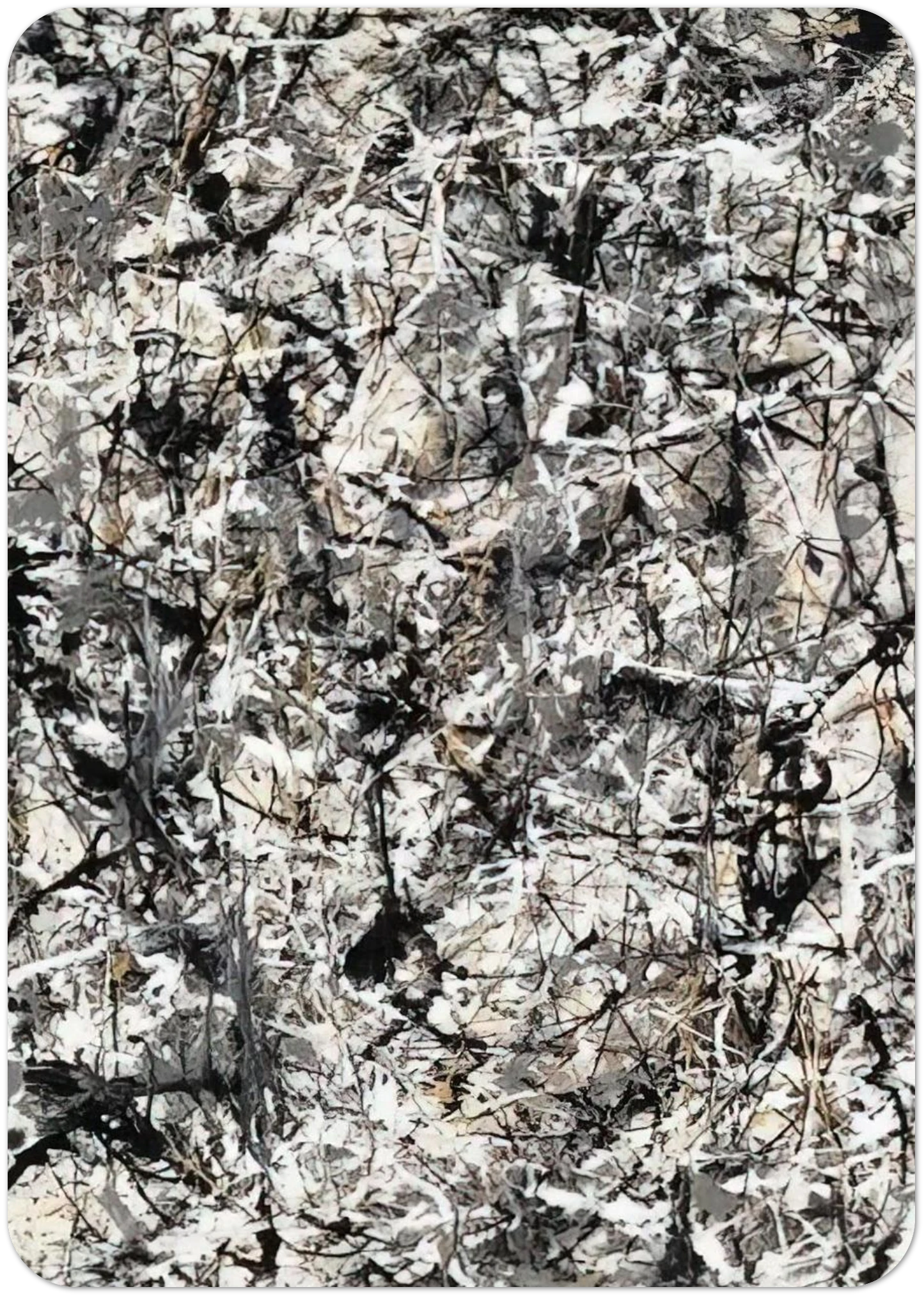
CATHEDRAL 1947 By Jackson Pollock Pack of 10 Post Cards | Jackson Pollock Post Cards | A6 (10.5 x 14.8 cm) - 4.1 x 5.8 inches
CATHEDRAL 1947 By Jackson Pollock Pack of 10 Post Cards | Jackson Pollock Post Cards | A6 (10.5 x 14.8 cm) - 4.1 x 5.8 inches
Couldn't load pickup availability
Jackson Pollock: Cathedral (1947) – A Masterpiece in Motion
Jackson Pollock’s 1947 masterpiece, Cathedral, represents a seismic shift in the history of modern art. Created during the height of his 'drip period,' this work exemplifies the controlled chaos and physical urgency of Abstract Expressionism. RedKalion is proud to offer this museum-quality reproduction in a pack of 10 flat postcards, allowing you to share a piece of art history or curate a miniature gallery within your own home.
Unlike the traditional easel-bound painters of his time, Pollock placed his canvas on the floor, moving around it with rhythmic intensity. In Cathedral, the intricate layering of black, white, and silver paints creates a dense, vertical composition that evokes the soaring architecture suggested by its title. Our reproduction captures every nuanced splatter and textural layer, ensuring the raw energy of Pollock’s technique remains palpable.
Premium Material & Printing Specifications
At RedKalion, we believe that fine art deserves fine materials. These Jackson Pollock postcards are produced using cutting-edge 12-color fine art printing technology. This process far exceeds standard commercial printing, delivering a depth of color and vibrancy that honors the original archival piece.
- Color Accuracy: Advanced 12-color Giclée technology for stunning depth.
- Paper Quality: 200 gsm (80 lb) weight with a thickness of 0.26 mm (10.3 mils).
- Finish: A sophisticated smooth matte finish that eliminates glare and enhances detail.
- Eco-Conscious: Printed on FSC-certified paper, supporting sustainable forest management.
- Format: Convenient A6 size (10.5 x 14.8 cm), perfect for framing or mailing.
Elevate your personal collection with these archival-grade reproductions. Whether used for correspondence or display, these postcards serve as an enduring testament to the power of 20th-century American art.


Discover Unlimited Art Possibilities
At RedKalion, you can find virtually any artwork from any artist, available in a wide range of sizes to perfectly match your space.
If you didn’t find what you’re looking for, contact us at support@redkalion.com . We will source any artwork and produce it in any size and format you need, including art prints, posters, canvas, framed pieces, framed canvas, and more.
For dedicated art enthusiasts, we also offer handcrafted replicas of any artwork, carefully painted by highly skilled artists using traditional techniques.
For custom requests, contact us at support@redkalion.com .
What is the print quality of these Jackson Pollock postcards?
We use 12-color fine art printing technology. This ensures vivid, museum-quality color accuracy and stunning depth that surpasses standard 4-color inkjet reproductions.
What type of paper is used for the Cathedral 1947 postcards?
Each card is printed on 200 gsm (80 lb) FSC-certified paper. It features a smooth matte finish and a professional thickness of 0.26 mm.
Are RedKalion products environmentally friendly?
Yes. All our prints use FSC-certified paper from sustainably managed forests and are printed on demand to reduce waste and carbon footprint.
How long will these archival prints last without fading?
Our 12-color archival-grade inks and premium matte paper are designed for longevity, ensuring your fine art prints remain vibrant for decades when kept out of direct sunlight.
Is there a minimum order requirement for these postcards?
No. These Cathedral 1947 postcard packs are printed on demand with no minimum order requirements, though they are sold in sets of 10.
What makes Cathedral (1947) significant in Jackson Pollock’s career?
Cathedral is a seminal work from Pollock's 'drip period,' showcasing his transition into total abstraction through spontaneous yet controlled gestural painting techniques.
What colors are most prominent in the Cathedral 1947 reproduction?
The piece features a complex interlacing of silver, aluminum, black, and white, creating a dense, vertical energy that mimics the stained-glass luminosity of a cathedral.