RedKalion
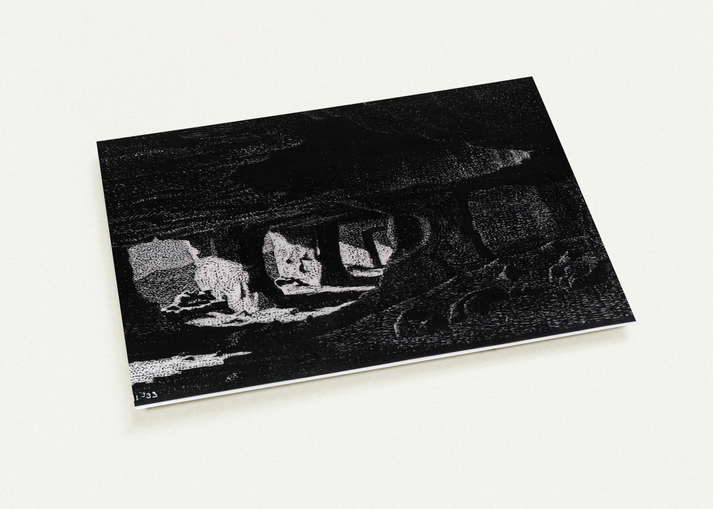
CAVE DWELLINGS NEAR SPERLINGA SICILY By MC Escher Pack of 10 Post Cards | MC Escher Post Cards | A6 (10.5 x 14.8 cm) - 4.1 x 5.8 inches
CAVE DWELLINGS NEAR SPERLINGA SICILY By MC Escher Pack of 10 Post Cards | MC Escher Post Cards | A6 (10.5 x 14.8 cm) - 4.1 x 5.8 inches
Couldn't load pickup availability
An Architectural Enigma: Cave Dwellings Near Sperlinga, Sicily by M.C. Escher
Step into the contemplative world of M.C. Escher with this exquisite set of fine art postcards featuring Cave Dwellings near Sperlinga, Sicily. Before his famous explorations of impossible geometries, Maurits Cornelis Escher was deeply captivated by the rugged landscapes of Italy. This 1933 lithograph captures the ancient, rock-hewn dwellings of Sicily with a precision that hints at his future obsession with structure and perspective. The rhythmic patterns of the sandstone and the stark contrast of light and shadow create a hauntingly beautiful document of human habitation within nature.
Museum-Quality Reproductions for Modern Correspondence
At RedKalion, we believe every piece of art deserves archival-grade treatment, even on a smaller scale. These A6 postcards are produced using our sophisticated 12-color fine art printing technology. Unlike standard 4-color inkjet methods, this process ensures every subtle tonal shift in Escher's work is preserved with stunning depth and accuracy. Printed on 200 gsm (80 lb) FSC-certified paper with a smooth matte finish, these cards offer a glare-free, tactile experience that reflects the quality of a museum gallery.
Sophisticated Details & Archival Integrity
- Exceptional Color Fidelity: Our 12-color process renders the complex grays and blacks of Escher's lithography with unmatched precision.
- Premium Paper Stock: The 200 gsm weight and 0.26 mm thickness provide a sturdy, high-end feel for mailing or framing.
- Elegant Matte Finish: A smooth, non-reflective surface that honors the original medium of the artwork.
- Ethical Craftsmanship: Printed on demand on environmentally conscious, FSC-certified paper, reducing waste and ensuring sustainability.
Whether you are sending a thoughtful note to a fellow art lover or curating a miniature gallery wall, these MC Escher post cards serve as a testament to timeless craftsmanship. Elevate your space or your correspondence with a masterpiece that endures.

Discover Unlimited Art Possibilities
At RedKalion, you can find virtually any artwork from any artist, available in a wide range of sizes to perfectly match your space.
If you didn’t find what you’re looking for, contact us at support@redkalion.com . We will source any artwork and produce it in any size and format you need, including art prints, posters, canvas, framed pieces, framed canvas, and more.
For dedicated art enthusiasts, we also offer handcrafted replicas of any artwork, carefully painted by highly skilled artists using traditional techniques.
For custom requests, contact us at support@redkalion.com .
What printing technology is used for these MC Escher postcards?
We utilize advanced 12-color fine art printing technology. This provides superior color vibrancy and tonal depth compared to standard 4-color printing, ensuring every detail of the Sperlinga landscape is faithfully reproduced.
What is the weight and finish of the paper used?
Each postcard is printed on 200 gsm (80 lb) FSC-certified paper with a thickness of 0.26 mm. The smooth matte finish ensures a clean, glare-free appearance and a premium tactile feel.
Are these fine art postcards eco-friendly?
Yes. We use FSC-certified paper from responsibly managed forests. Additionally, our print-on-demand model minimizes waste by only producing what is ordered, aligning with our commitment to sustainability.
Will the colors fade over time?
Our archival-grade inks and high-quality paper are designed for longevity. These museum-quality reproductions are engineered to resist fading, maintaining their vibrancy and clarity for years when kept away from direct sunlight.
How long does it take for my order to be processed?
Since each pack is printed on demand to ensure peak quality, orders typically process within 2-4 business days before being shipped via our secure logistics partners to ensure safe arrival.
What is the historical context of Escher's Sperlinga lithograph?
Created in 1933, this work belongs to Escher’s Italian period. It reflects his fascination with the 'impossible' textures of natural rock formations and the way man-made structures integrate into the volcanic landscape of Sicily.
Is the Sperlinga piece representative of Escher's later work?
While it is a realistic landscape, you can see the seeds of his later mathematical art. His focus on the repetitive patterns of the cave openings foreshadows his iconic explorations of tessellations and spatial logic.