RedKalion
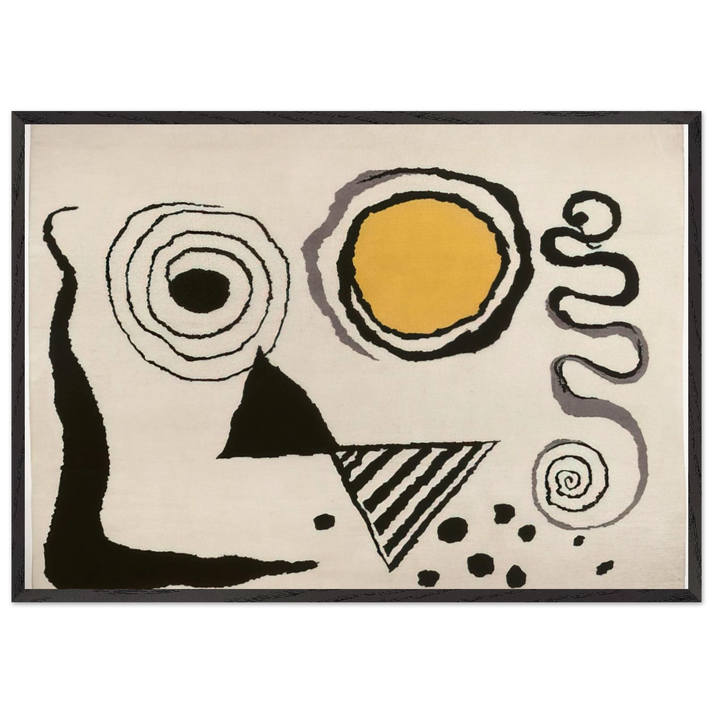
CERCLE JAUNE 1953 - Alexander Calder 70x100 cm / 28x40 inches Framed Art Print – Black Wooden Frame
CERCLE JAUNE 1953 - Alexander Calder 70x100 cm / 28x40 inches Framed Art Print – Black Wooden Frame
Couldn't load pickup availability
Cercle Jaune (1953) by Alexander Calder: A Masterpiece of Mid-Century Abstraction
Immerse your space in the rhythmic balance of Alexander Calder’s Cercle Jaune (1953). This iconic composition exemplifies the artist's mastery of spatial dynamics and primary color theory. As a pioneer of kinetic sculpture, Calder translated the energy of his mobiles into two-dimensional lithographs and prints, utilizing bold geometries and minimalist forms to evoke a sense of perpetual motion. This 70x100 cm (28x40 inches) framed art print serves as a focal point of sophisticated modernism.
Museum-Quality Reproduction for Discerning Collectors
At RedKalion, we curate fine art prints that honor the integrity of the original work. This reproduction is meticulously rendered on 250 gsm (110 lb) natural white archival paper. The matte, uncoated finish eliminates glare, allowing the vibrant "Jaune" to resonate with the depth intended by Calder. Every detail is preserved using museum-grade techniques, ensuring a piece that transcends mere decoration to become a legacy item.
Sophisticated Framing and Sustainable Craftsmanship
- Premium Black Frame: Crafted from responsibly sourced ash and oak, featuring a bold 20mm (0.79") profile for a contemporary, structured look.
- Archival Protection: Shatterproof plexiglass shields the artwork from UV rays and environmental wear.
- Ready to Hang: Each print arrives with a professional hanging kit included, ready to elevate your walls immediately.
- Sustainable Standards: Produced using FSC-certified materials, aligning luxury with environmental responsibility.
Elevate your interior with an archival masterpiece that captures the spirit of 20th-century modernism. Calder’s "Cercle Jaune" is more than a print; it is a testament to the elegance of abstraction, curated by RedKalion to endure for generations.

Discover Unlimited Art Possibilities
At RedKalion, you can find virtually any artwork from any artist, available in a wide range of sizes to perfectly match your space.
If you didn’t find what you’re looking for, contact us at support@redkalion.com . We will source any artwork and produce it in any size and format you need, including art prints, posters, canvas, framed pieces, framed canvas, and more.
For dedicated art enthusiasts, we also offer handcrafted replicas of any artwork, carefully painted by highly skilled artists using traditional techniques.
For custom requests, contact us at support@redkalion.com .
What defines the quality of this Alexander Calder art print?
Our prints use 250 gsm archival museum-quality paper with a matte finish. This ensures color accuracy and prevents yellowing over time, providing a premium feel for this Calder reproduction.
Is the frame included and ready for mounting?
Yes, this Alexander Calder print arrives in a solid ash and oak frame (black finish) with a pre-installed hanging kit for immediate installation in your home or gallery.
How does the archival paper ensure longevity?
The 250 gsm paper is acid-free and natural white, meeting archival standards that ensure the artwork remains vibrant and structurally sound for decades without degradation.
What are the dimensions and frame profile?
This print measures 70x100 cm (28x40 inches). The black wooden frame is 20mm (0.79") thick and wide, offering a more substantial presence than standard thin frames.
How is the artwork protected during shipping and on the wall?
We use shatterproof plexiglass to protect the print from damage and UV exposure. The frame is securely packaged to ensure safe, pristine delivery to your door.
What is the significance of "Cercle Jaune" in Calder's 1953 body of work?
Created in 1953, "Cercle Jaune" reflects Calder's fascination with planetary motion and balance, bridging the gap between his famous mobiles and graphic abstraction.
Why did Calder use primary colors like the yellow in this composition?
Calder used primary colors to create immediate visual impact and clarity, stripping art down to its most essential, joyful, and energetic elements to engage the viewer directly.