RedKalion
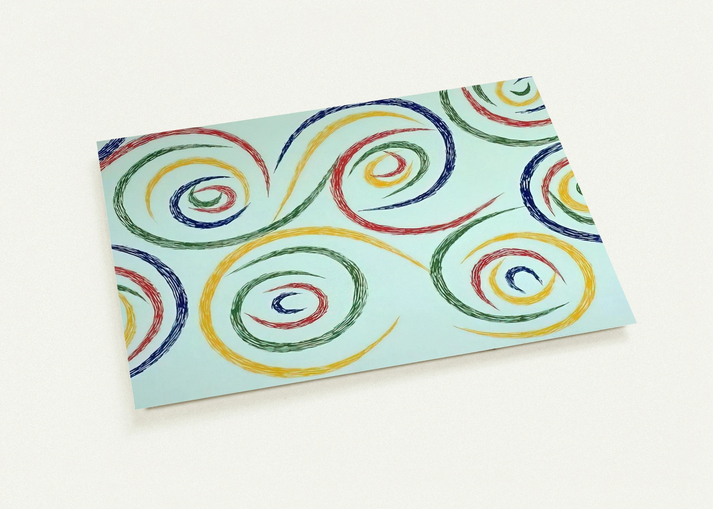
Cercles du Matin - 1992 By Piero Dorazio Pack of 10 Post Cards | Piero Dorazio Post Cards | A6 (10.5 x 14.8 cm) - 4.1 x 5.8 inches
Cercles du Matin - 1992 By Piero Dorazio Pack of 10 Post Cards | Piero Dorazio Post Cards | A6 (10.5 x 14.8 cm) - 4.1 x 5.8 inches
Couldn't load pickup availability
Elevate Your Correspondence with Piero Dorazio’s Lyrical Abstraction
Piero Dorazio’s Cercles du Matin (1992) is a masterclass in the rhythmic interplay of light and geometry. A founding father of the Forma 1 movement, Dorazio dedicated his career to exploring how color creates space and vibration. In this late-period masterpiece, the overlapping circular motifs evoke the quiet energy of morning light, transformed into a sophisticated visual melody. This pack of 10 flat postcards allows you to share a piece of Italian abstract history with the world.
Museum-Quality Reproductions for the Discerning Collector
At RedKalion, we believe fine art should be experienced with the same intensity as the original. Unlike standard commercial stationery, our Piero Dorazio postcards are crafted using professional 12-color fine art printing technology. This ensures that every nuance of Dorazio’s vibrant palette is rendered with exceptional depth and accuracy, far surpassing the limitations of standard 4-color inkjet processes.
Premium Material Specifications
Each card in this 10-pack set is a tactile experience in itself. We utilize high-grade, 200 gsm (80 lb) paper with a thickness of 0.26 mm (10.3 mils) to provide a substantial, premium feel. The smooth matte finish ensures a clean, glare-free display, making these A6 (10.5 x 14.8 cm) cards equally suitable for personal messages or as framed miniature art prints for your home or office.
- Sustainable Craftsmanship: Printed on FSC-certified paper, supporting responsible forest management.
- Archival Integrity: Our 12-color process ensures longevity and color stability for years to come.
- Bespoke Production: Printed on demand specifically for you, maintaining the highest quality control standards.
Transform a simple note into an enduring gesture of taste with these archival-grade reproductions from the RedKalion gallery.

Discover Unlimited Art Possibilities
At RedKalion, you can find virtually any artwork from any artist, available in a wide range of sizes to perfectly match your space.
If you didn’t find what you’re looking for, contact us at support@redkalion.com . We will source any artwork and produce it in any size and format you need, including art prints, posters, canvas, framed pieces, framed canvas, and more.
For dedicated art enthusiasts, we also offer handcrafted replicas of any artwork, carefully painted by highly skilled artists using traditional techniques.
For custom requests, contact us at support@redkalion.com .
What printing technology is used for these Piero Dorazio postcards?
We use 12-color fine art printing technology, ensuring the vibrant, overlapping tones of Dorazio's Cercles du Matin are captured with stunning depth and accuracy, far exceeding standard commercial prints.
What is the weight and finish of the paper?
Each card is printed on 200 gsm (80 lb) paper with a thickness of 0.26 mm, featuring a smooth matte finish for a sophisticated, glare-free aesthetic.
How are these postcards produced and shipped?
RedKalion prints every order on demand to ensure museum-quality standards. This process eliminates waste and ensures your archival-grade reproductions arrive in pristine condition.
Are these postcards environmentally friendly?
Yes. We utilize FSC-certified paper and eco-friendly materials, aligning our curation of fine art with sustainable, responsible production practices.
How many cards are included in a single order?
This set includes 10 flat postcards (A6 size), perfect for personal correspondence or as a curated set of miniature art prints for your collection.
What inspired Piero Dorazio’s Cercles du Matin?
Created in 1992, Cercles du Matin reflects Dorazio’s fascination with the texture of light and rhythmic, lyrical abstraction through the repetition of circular geometries.
How does the matte finish affect the appearance of Dorazio’s colors?
The smooth matte finish eliminates glare and reflections, allowing the complex color interactions and subtle gradients of Dorazio’s 1992 masterpiece to remain the focal point.