RedKalion
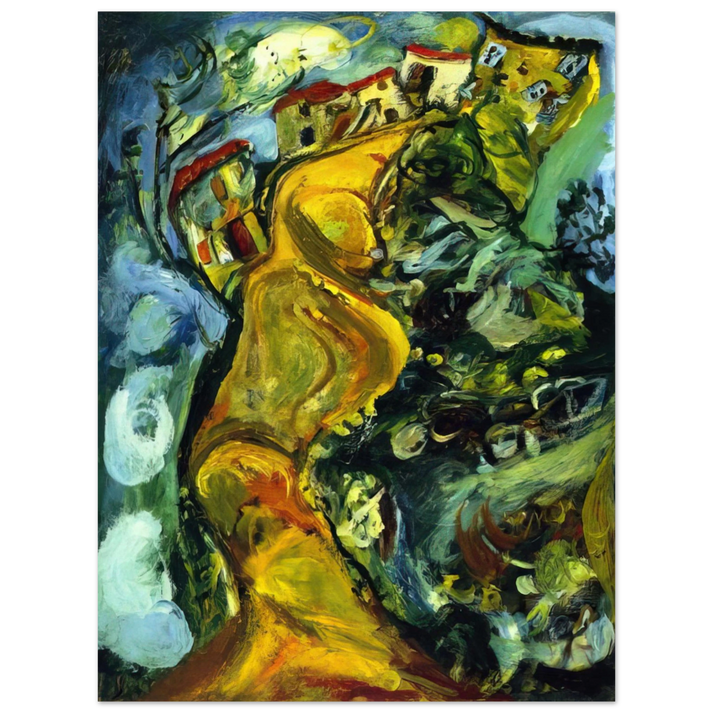
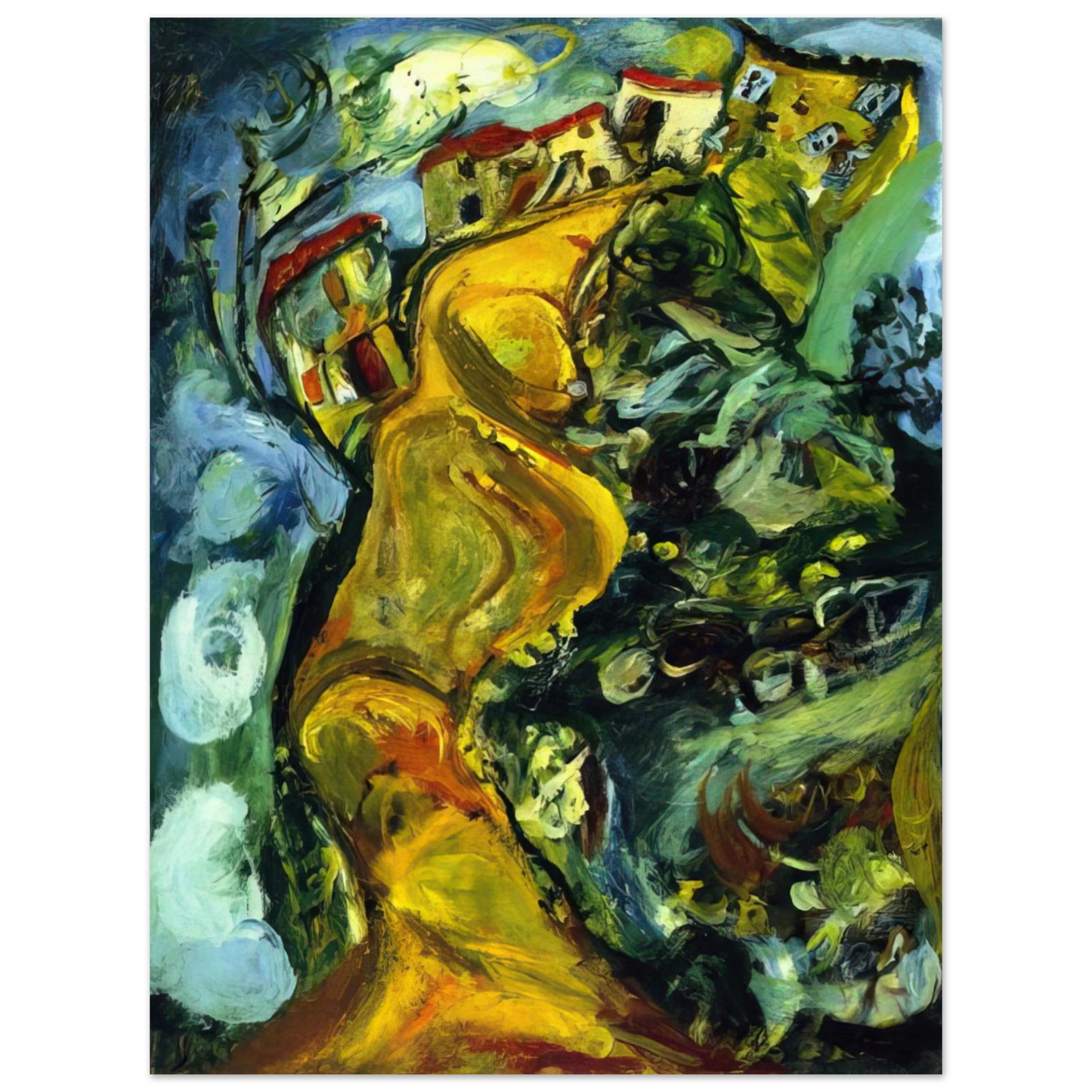
Chaim Soutine - STREET AT CAGNES 1923 75x100 cm / 30x40inches Fine Art Poster
Chaim Soutine - STREET AT CAGNES 1923 75x100 cm / 30x40inches Fine Art Poster
Couldn't load pickup availability
Street at Cagnes (1923) by Chaim Soutine: An Expressionist Masterpiece
Experience the raw, visceral energy of the School of Paris with Chaim Soutine’s Street at Cagnes (1923). This museum-quality fine art print captures a pivotal moment in Soutine’s career, following his transition from the chaotic landscapes of Céret to the more rhythmic, yet still intensely distorted, architecture of Cagnes-sur-Mer. The work is a hallmark of Expressionism, where buildings appear to sway and breathe with a life of their own, rendered through Soutine's uniquely turbulent lens.
At RedKalion, we honor the emotional gravity of the original work by utilizing a reproduction process that preserves every undulating line and saturated hue. This is not a standard poster; it is a meticulously crafted archival masterpiece designed for the discerning collector who seeks to elevate their space with art that endures.
Premium Archival Specifications
- Master’s Edition Paper: We use museum-quality, natural white (off-white) paper that provides a luxurious, uncoated matte finish.
- Substantial Weight: Printed on heavy 250 gsm (110 lb) paper with a thickness of 0.29 mm, ensuring a premium tactile feel and durability.
- Archival Longevity: Our acid-free paper (pH above 7) is engineered to prevent yellowing or degradation, ensuring your Soutine print remains vibrant for generations.
- Sustainable Excellence: This print is produced on FSC-certified paper, reflecting our commitment to environmental responsibility.
By choosing a RedKalion reproduction, you are acquiring a piece that bridges the gap between historical significance and modern craftsmanship. Whether displayed in a private study or a contemporary living room, this 30x40 inch (75x100 cm) print serves as a profound testament to Soutine’s genius.
Discover Unlimited Art Possibilities
At RedKalion, you can find virtually any artwork from any artist, available in a wide range of sizes to perfectly match your space.
If you didn’t find what you’re looking for, contact us at support@redkalion.com . We will source any artwork and produce it in any size and format you need, including art prints, posters, canvas, framed pieces, framed canvas, and more.
For dedicated art enthusiasts, we also offer handcrafted replicas of any artwork, carefully painted by highly skilled artists using traditional techniques.
For custom requests, contact us at support@redkalion.com .
What are the paper specifications for this Soutine print?
This print utilizes Master's Edition archival paper. It is a museum-quality, 250 gsm (110 lb) natural white paper with a thickness of 0.29 mm and a luxurious matte finish.
How is the Street at Cagnes print shipped?
Our prints are printed and shipped on demand with no minimum orders. We use protective, high-durability packaging to ensure your artwork arrives in gallery condition.
Will the colors of this Chaim Soutine reproduction fade over time?
No. We use acid-free paper with a pH above 7, which prevents yellowing and ensures archival longevity, preserving the intense color palette of Soutine’s 1923 masterpiece.
Is the paper used for this fine art poster sustainable?
Yes, RedKalion is committed to sustainability. All our museum-quality reproductions are printed on FSC-certified paper, supporting responsible forest management.
What is the minimum order for RedKalion museum prints?
There is no minimum order requirement. Each Chaim Soutine fine art print is fulfilled on demand, allowing you to order exactly what you need for your collection.
What characterizes Chaim Soutine's style in his Cagnes-sur-Mer period?
During his time in Cagnes, Soutine’s work became slightly more structured than his earlier Céret phase, yet it retained the rhythmic distortion and emotional intensity that define Expressionism.
Why are the buildings in Street at Cagnes depicted with distorted angles?
Soutine used distortion to convey internal psychological states rather than external reality. The leaning buildings reflect his personal agitation and the dynamic, living energy he perceived in the landscape.