RedKalion
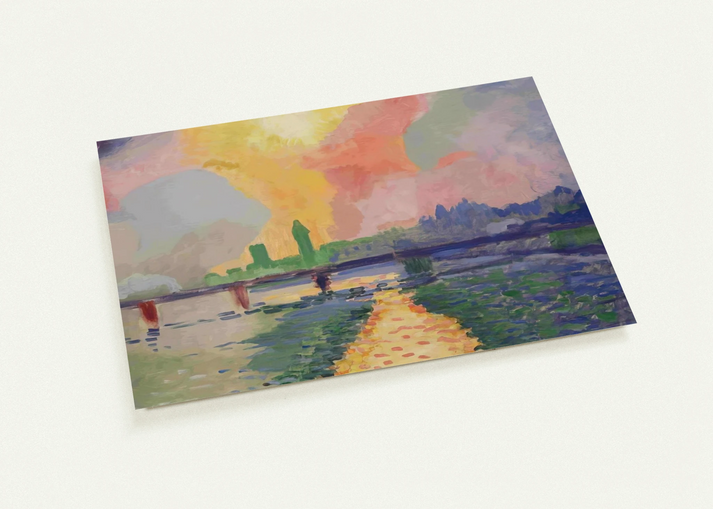
CHARING CROSS BRIDGE LONDON 1906 By Andre Derain Pack of 10 Post Cards | Andre Derain Post Cards | A6 (10.5 x 14.8 cm) - 4.1 x 5.8 inches
CHARING CROSS BRIDGE LONDON 1906 By Andre Derain Pack of 10 Post Cards | Andre Derain Post Cards | A6 (10.5 x 14.8 cm) - 4.1 x 5.8 inches
Couldn't load pickup availability
Infuse Your Correspondence with Fauvist Vibrancy: André Derain’s Charing Cross Bridge
Experience the radical brilliance of 1906 London through the eyes of André Derain. This pack of 10 flat postcards features his iconic masterpiece, Charing Cross Bridge, London, a cornerstone of the Fauvist movement. Commissioned by art dealer Ambroise Vollard to capture the essence of the Thames, Derain moved away from Impressionist subtleties, instead utilizing 'wild' non-naturalistic colors and bold, mosaic-like brushstrokes that revolutionized modern art.
Museum-Quality Reproductions by RedKalion
At RedKalion, we bridge the gap between historic art and contemporary quality. Each postcard is produced using advanced 12-color fine art printing technology. Unlike standard 4-color commercial prints, our process captures the explosive blues, vibrant yellows, and striking pinks of Derain's original palette with stunning depth and chromatic accuracy. The smooth matte finish ensures a glare-free viewing experience, allowing the texture of the brushwork to shine without distraction.
Premium Material Specifications
Constructed for both beauty and durability, these postcards are printed on 200 gsm (80 lb) museum-grade paper with a thickness of 0.26 mm (10.3 mils). We utilize FSC-certified, eco-friendly materials, ensuring that your appreciation for art aligns with environmental responsibility. Whether used for personal notes or as a curated mini-gallery on your wall, these archival-grade reproductions are designed to endure.
- Pack Size: 10 premium flat postcards.
- Dimensions: A6 (10.5 x 14.8 cm / 4.1 x 5.8 inches).
- Print Method: High-fidelity 12-color pigment-based printing.
- Finish: Elegant, non-reflective matte.
Elevate your everyday exchanges with an archival masterpiece that captures the spirit of the avant-garde. RedKalion remains the definitive choice for those who demand gallery-standard quality in every detail.

Discover Unlimited Art Possibilities
At RedKalion, you can find virtually any artwork from any artist, available in a wide range of sizes to perfectly match your space.
If you didn’t find what you’re looking for, contact us at support@redkalion.com . We will source any artwork and produce it in any size and format you need, including art prints, posters, canvas, framed pieces, framed canvas, and more.
For dedicated art enthusiasts, we also offer handcrafted replicas of any artwork, carefully painted by highly skilled artists using traditional techniques.
For custom requests, contact us at support@redkalion.com .
What makes RedKalion’s 12-color printing superior?
Our 12-color technology uses a wider gamut of pigment inks compared to standard 4-color printing, ensuring richer color saturation and smoother gradients that accurately mirror André Derain's original Fauvist palette.
What are the specific dimensions and paper weight of these cards?
These are A6 postcards (10.5 x 14.8 cm / 4.1 x 5.8 inches). They are printed on robust 200 gsm (80 lb) FSC-certified paper with a 0.26 mm thickness.
Is the paper finish glossy or matte?
We use a premium smooth matte finish. This provides a clean, sophisticated look that eliminates glare and fingerprint smudges, perfect for high-end fine art reproductions.
How does RedKalion handle shipping and production?
Each set is printed on demand to ensure maximum quality control and minimize waste. We ship globally using protective packaging to ensure your museum-quality prints arrive in pristine condition.
Are these postcards archival and eco-friendly?
Yes. We use acid-free, FSC-certified paper and archival pigment inks, ensuring the colors remain vibrant for decades while maintaining a low environmental impact.
Why did André Derain paint London’s Charing Cross Bridge in 1906?
Derain was sent to London by dealer Ambroise Vollard to create a modern response to Claude Monet’s Impressionist series, resulting in these revolutionary, high-contrast Fauvist interpretations.
What artistic movement does this piece represent?
This work is a definitive example of Fauvism, characterized by 'wild' colors, expressive brushwork, and a rejection of realistic representation in favor of emotional and decorative impact.