RedKalion
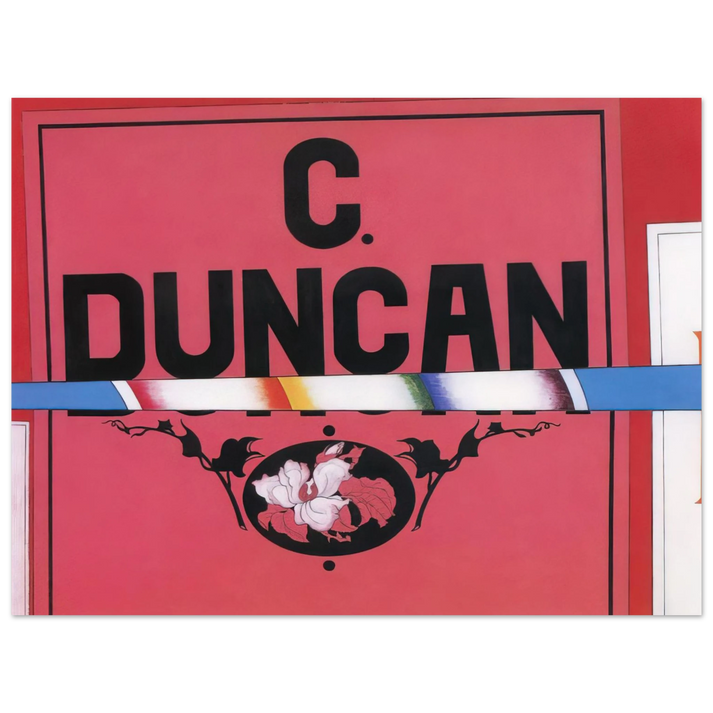
Charles Demuth - Duncan Charles Duncan - 1925 75x100 cm / 30x40inches Fine Art Poster
Charles Demuth - Duncan Charles Duncan - 1925 75x100 cm / 30x40inches Fine Art Poster
Couldn't load pickup availability
Elevate Your Collection with Charles Demuth’s Precisionist Masterpiece
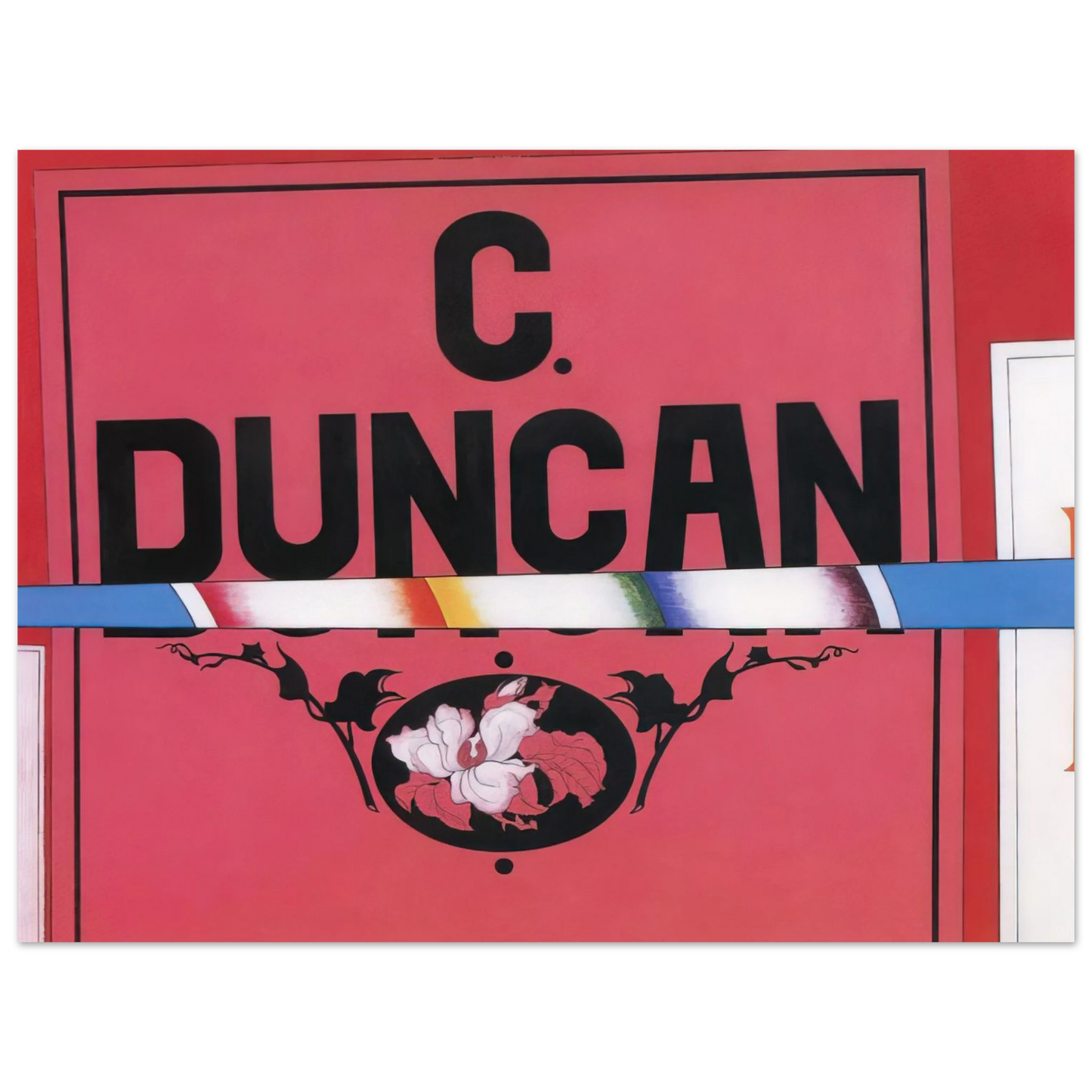
Experience the intersection of industrial modernism and personal tribute with this museum-quality reproduction of Charles Demuth's "Duncan" (1925). A definitive example of the American Precisionist movement, this work belongs to Demuth’s celebrated series of "poster portraits"—symbolic representations of his contemporaries that eschewed physical likeness for intellectual and stylistic essences. In this 1925 piece, Demuth honors his friend and fellow artist Charles Duncan through a sophisticated interplay of geometric forms, bold typography, and architectural precision.
The RedKalion Archival Standard
At RedKalion, we believe that historic art deserves to be preserved with modern excellence. This fine art print is meticulously crafted on our Master's Edition archival paper. With a substantial weight of 250 gsm (110 lb) and a thickness of 0.29 mm, this paper provides a luxurious, heavy-duty feel that commands attention in any setting. The matte, uncoated finish eliminates glare, allowing the subtle shifts in Demuth’s palette and the crisp lines of his composition to shine with a natural, sophisticated texture.
A Legacy Designed to Last
Sustainability and longevity are core to the RedKalion ethos. This print utilizes FSC-certified paper, ensuring that your appreciation for art aligns with environmental responsibility. Our acid-free (pH above 7) composition prevents the yellowing and degradation common in standard prints, ensuring that the ivory-white brilliance of this 1925 masterpiece remains vibrant for generations. Whether you are an avid collector of American Modernism or looking to add a touch of industrial elegance to a contemporary interior, this reproduction offers the perfect balance of historical depth and archival permanence.
Discover Unlimited Art Possibilities
At RedKalion, you can find virtually any artwork from any artist, available in a wide range of sizes to perfectly match your space.
If you didn’t find what you’re looking for, contact us at support@redkalion.com . We will source any artwork and produce it in any size and format you need, including art prints, posters, canvas, framed pieces, framed canvas, and more.
For dedicated art enthusiasts, we also offer handcrafted replicas of any artwork, carefully painted by highly skilled artists using traditional techniques.
For custom requests, contact us at support@redkalion.com .
What is the quality of the paper used for this Charles Demuth print?
We use Master's Edition archival paper, which is a 250 gsm (110 lb) premium stock. It features a matte, uncoated, natural white finish that provides a luxurious texture and eliminates reflections.
How long will this fine art reproduction last without fading?
Our prints are acid-free with a pH above 7, preventing yellowing over time. This archival-grade material ensures that the colors and paper integrity remain museum-quality for decades.
Is the paper used for the "Duncan" print environmentally friendly?
Yes, RedKalion uses FSC-certified paper (Forest Stewardship Council), ensuring that the materials are sourced from responsibly managed forests that provide environmental, social, and economic benefits.
What are the shipping and fulfillment details for my order?
We offer on-demand printing with no minimum order requirements. Each piece is carefully packaged and shipped globally to ensure it arrives in pristine, gallery-ready condition.
Does the print come with a frame?
This product is a premium fine art poster. While it does not include a frame, the standard 75x100 cm (30x40 inches) dimensions make it easy to find a high-quality frame to suit your decor.
What is the historical significance of Demuth's "Duncan" (1925)?
This piece is a "poster portrait" where Demuth used symbolic objects and typography instead of a face to represent artist Charles Duncan, a hallmark of the American Precisionist style.
Why is Charles Demuth considered a master of Precisionism?
Demuth combined the geometry of Cubism with the energy of Futurism, focusing on clean lines and industrial subjects to define a uniquely American modern art aesthetic in the early 20th century.