RedKalion
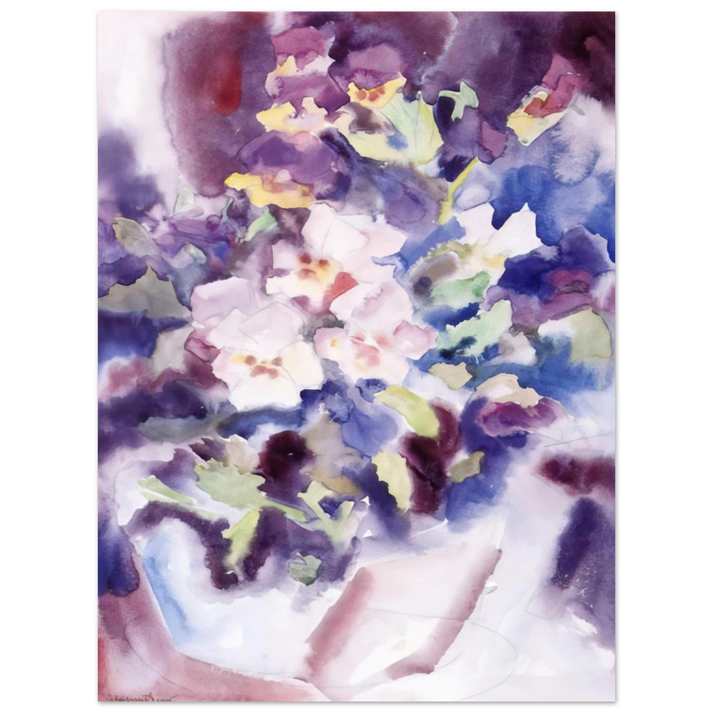
Charles Demuth - Pansies - 1915 75x100 cm / 30x40inches Fine Art Poster
Charles Demuth - Pansies - 1915 75x100 cm / 30x40inches Fine Art Poster
Couldn't load pickup availability
Elevate Your Space with Charles Demuth’s 'Pansies' (1915)
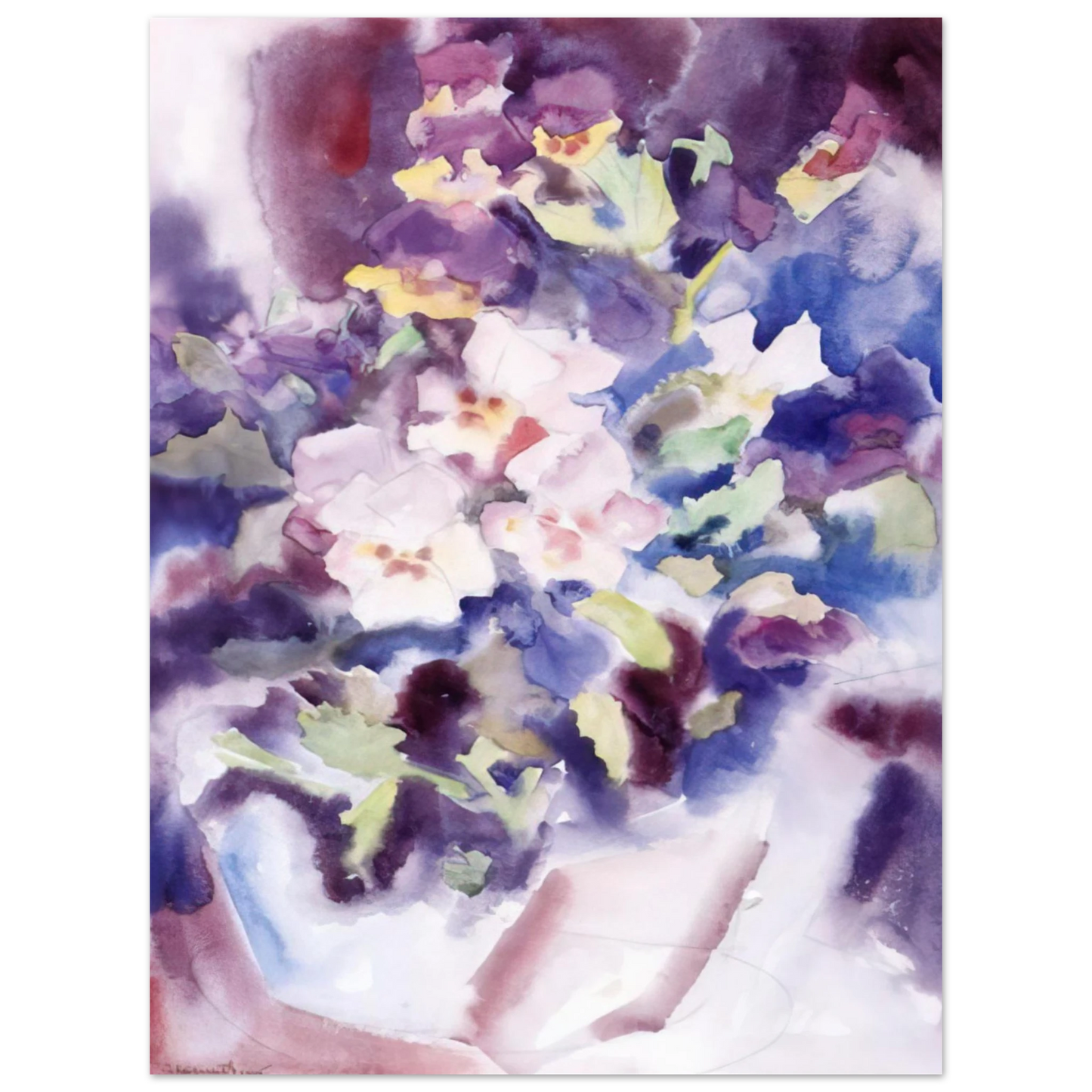
Immerse yourself in the delicate sophistication of American Modernism with this museum-quality reproduction of Charles Demuth’s 'Pansies' (1915). A pioneer of the Precisionist movement, Demuth is celebrated for his ability to blend organic forms with a structured, architectural sensibility. In this exquisite watercolor study, Demuth captures the vibrant yet fragile essence of the pansy, utilizing the white of the paper to define form and light—a hallmark of his early 20th-century technique.
This fine art print is more than a decorative piece; it is a historical artifact that reflects the transition from European Impressionism to a uniquely American aesthetic. At RedKalion, we curate these masterpieces using archival-grade materials to ensure that the subtle shifts in hue and the artist's masterful linework are preserved with absolute fidelity. The 75x100 cm (30x40 inches) format allows the intricate details of the 1915 original to resonate within a contemporary interior, providing a focal point of timeless elegance.
Museum-Grade Specifications for the Discerning Collector
Our commitment to excellence ensures that every RedKalion print meets the rigorous standards of world-class galleries. This Master's Edition fine art poster is crafted with the following premium specifications:
- Paper: Archival-grade Master's Edition paper with a luxurious natural white (off-white) finish.
- Texture: An uncoated, matte surface that provides an authentic artistic feel without distracting glare.
- Durability: Acid-free paper (pH above 7) designed to prevent yellowing or degradation over generations.
- Weight & Substance: A heavy-duty 250 gsm (110 lb) weight with a substantial thickness of 0.29 mm (11.4 mils).
- Sustainability: Printed on FSC-certified paper, supporting responsible forest management.
- Exclusivity: Printed and shipped on demand with no minimum requirements, ensuring your piece is handled with individual care.
Discover Unlimited Art Possibilities
At RedKalion, you can find virtually any artwork from any artist, available in a wide range of sizes to perfectly match your space.
If you didn’t find what you’re looking for, contact us at support@redkalion.com . We will source any artwork and produce it in any size and format you need, including art prints, posters, canvas, framed pieces, framed canvas, and more.
For dedicated art enthusiasts, we also offer handcrafted replicas of any artwork, carefully painted by highly skilled artists using traditional techniques.
For custom requests, contact us at support@redkalion.com .
What makes this Charles Demuth print museum-quality?
Our reproductions use archival 250 gsm Master's Edition paper. The acid-free composition (pH above 7) ensures the vibrant colors and delicate details of 'Pansies' remain preserved without yellowing, meeting the same standards required by art galleries and museums.
Is the paper used for 'Pansies' environmentally friendly?
Yes. We utilize FSC-certified paper for all our fine art prints. This certification guarantees that the materials are sourced from responsibly managed forests that provide environmental, social, and economic benefits.
How long will the colors of this fine art poster last?
Designed for longevity, our archival prints are engineered to last for decades. Because the paper is acid-free and museum-grade, it resists the chemical breakdown that causes fading in standard commercial posters.
What is the texture and finish of the print?
The print features a matte, uncoated finish on a natural white paper. This provides a luxurious, non-reflective texture that emphasizes the watercolor nuances of Demuth’s 1915 masterpiece without the artificial shine of gloss paper.
How is my order shipped and fulfilled?
Every order is printed on demand to ensure maximum quality control. We ship your fine art print in protective packaging to ensure it arrives in pristine condition, ready to be framed for your collection.
What was Demuth's artistic style in 1915?
In 1915, Charles Demuth was refining his unique watercolor technique, blending floral realism with early Cubist influences. This era predates his fully developed Precisionist style, focusing on organic fluidity and the masterful use of negative space.
How does the 75x100 cm format impact the artwork's details?
The large 75x100 cm (30x40 inches) scale allows viewers to appreciate the fine brushstrokes and color gradients that might be lost in smaller reproductions, making it a sophisticated statement piece for high-end interiors.