
RedKalion
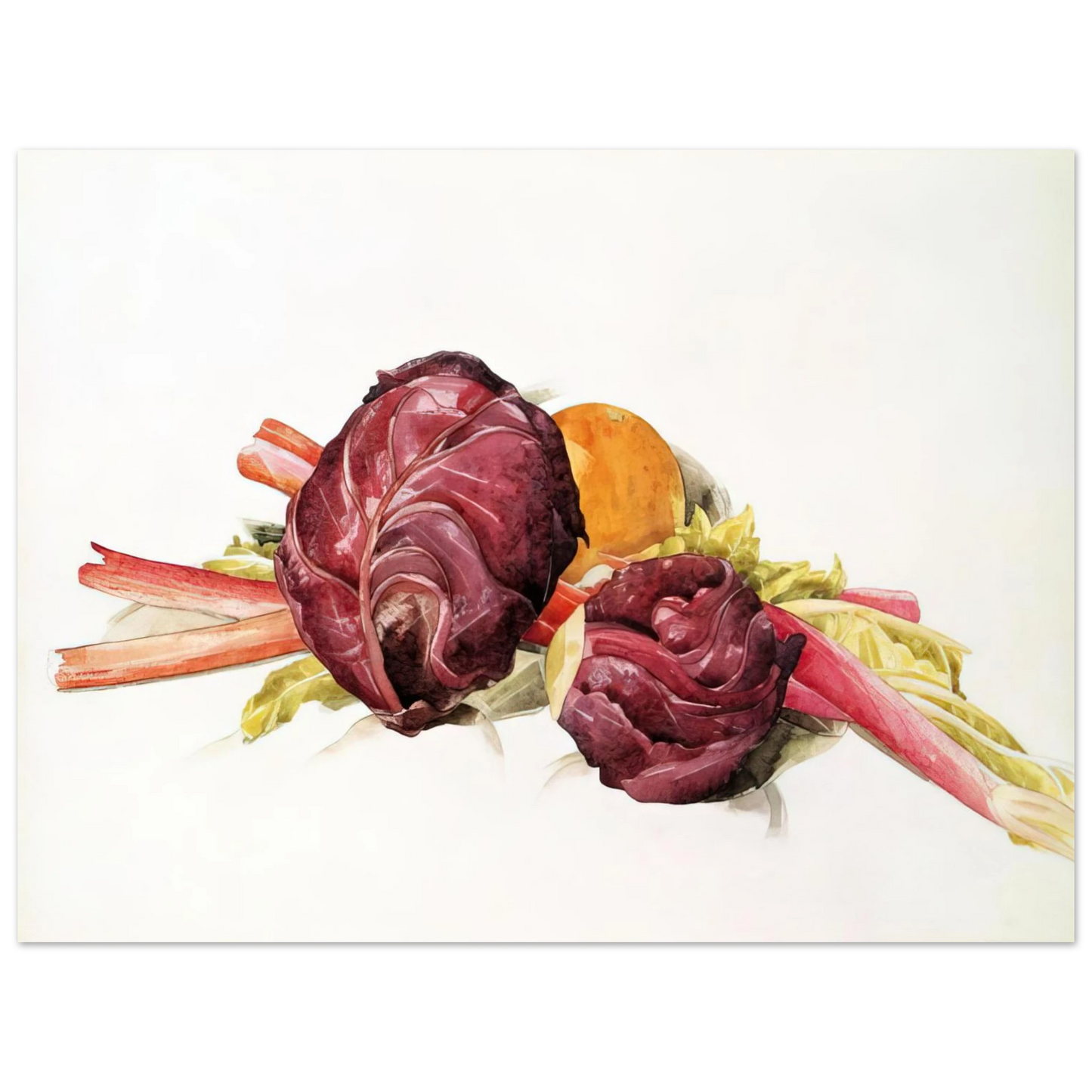
Charles Demuth - Red Cabbages, Rhubarb and Orange - 1929 75x100 cm / 30x40inches Fine Art Poster
Charles Demuth - Red Cabbages, Rhubarb and Orange - 1929 75x100 cm / 30x40inches Fine Art Poster
Couldn't load pickup availability
Embrace Modernist Sophistication with Charles Demuth’s Red Cabbages, Rhubarb and Orange
In 1929, Charles Demuth—a towering figure of the American Precisionist movement—turned his discerning eye toward the rhythmic textures of the natural world. Red Cabbages, Rhubarb and Orange represents a pinnacle of his late watercolor period, where the artist transformed humble garden produce into a sophisticated exploration of geometric grace and color harmony. This museum-quality reproduction captures every delicate wash and structured line of the original masterpiece, offering a refined focal point for your collection.
RedKalion is proud to offer this 75x100 cm (30x40 inches) archival print, curated for the most discerning art enthusiasts. Demuth’s work is celebrated for its "fluid precision," a technique where the transparency of watercolor meets a rigid, almost architectural composition. Our reproduction honors this legacy, ensuring the deep violets of the cabbage and the sharp greens of the rhubarb remain as evocative as the artist intended nearly a century ago.
To ensure the longevity of your investment, this piece is rendered on our Master’s Edition archival paper. With a weight of 250 gsm (110 lb) and a thickness of 0.29 mm, this paper provides a substantial, luxurious feel. The matte, uncoated finish and natural white (off-white) tone perfectly complement Demuth's palette, providing a glare-free viewing experience that emphasizes the tactile quality of the fine art print.
- Artist: Charles Demuth (1929)
- Paper Type: 250 gsm Master's Edition, museum-quality
- Finish: Matte, uncoated, natural white for authentic texture
- Sustainability: FSC-certified paper, printed on demand to reduce waste
- Durability: Acid-free (pH above 7) to prevent yellowing or degradation
Discover Unlimited Art Possibilities
At RedKalion, you can find virtually any artwork from any artist, available in a wide range of sizes to perfectly match your space.
If you didn’t find what you’re looking for, contact us at support@redkalion.com . We will source any artwork and produce it in any size and format you need, including art prints, posters, canvas, framed pieces, framed canvas, and more.
For dedicated art enthusiasts, we also offer handcrafted replicas of any artwork, carefully painted by highly skilled artists using traditional techniques.
For custom requests, contact us at support@redkalion.com .
What makes the paper quality 'Museum-Grade'?
We use Master's Edition 250 gsm archival paper with a thickness of 0.29 mm. Its natural white, matte finish provides a luxurious, glare-free texture suitable for elite galleries.
How long will this Charles Demuth print last without fading?
Our prints are acid-free with a pH above 7. This museum-standard archival quality prevents yellowing and degradation, ensuring your artwork remains vibrant for many decades.
Is the shipping and production process environmentally friendly?
Yes, we use FSC-certified paper and print on demand to minimize environmental impact. We fulfill orders with no minimums to reduce overproduction and waste.
Does this print have a glossy or a matte finish?
This fine art poster features a sophisticated matte, uncoated finish. This prevents reflection and authentically reproduces the soft, organic look of Demuth's watercolor medium.
What are the exact dimensions and weight of the paper?
The print measures 75x100 cm (30x40 inches). It uses heavy-weight 250 gsm (110 lb) paper, providing the thickness and durability expected of premium gallery prints.
What is the historical significance of Demuth's 1929 still life works?
By 1929, Demuth was synthesizing his Precisionist roots with a more fluid, organic Modernism, focusing on the rhythmic and structural possibilities found in everyday fruits and vegetables.
Why is 'Red Cabbages, Rhubarb and Orange' considered a Modernist masterpiece?
It exemplifies the shift toward abstraction in American art, where Demuth used color and shape to create a sense of movement and volume within a two-dimensional plane.