
RedKalion
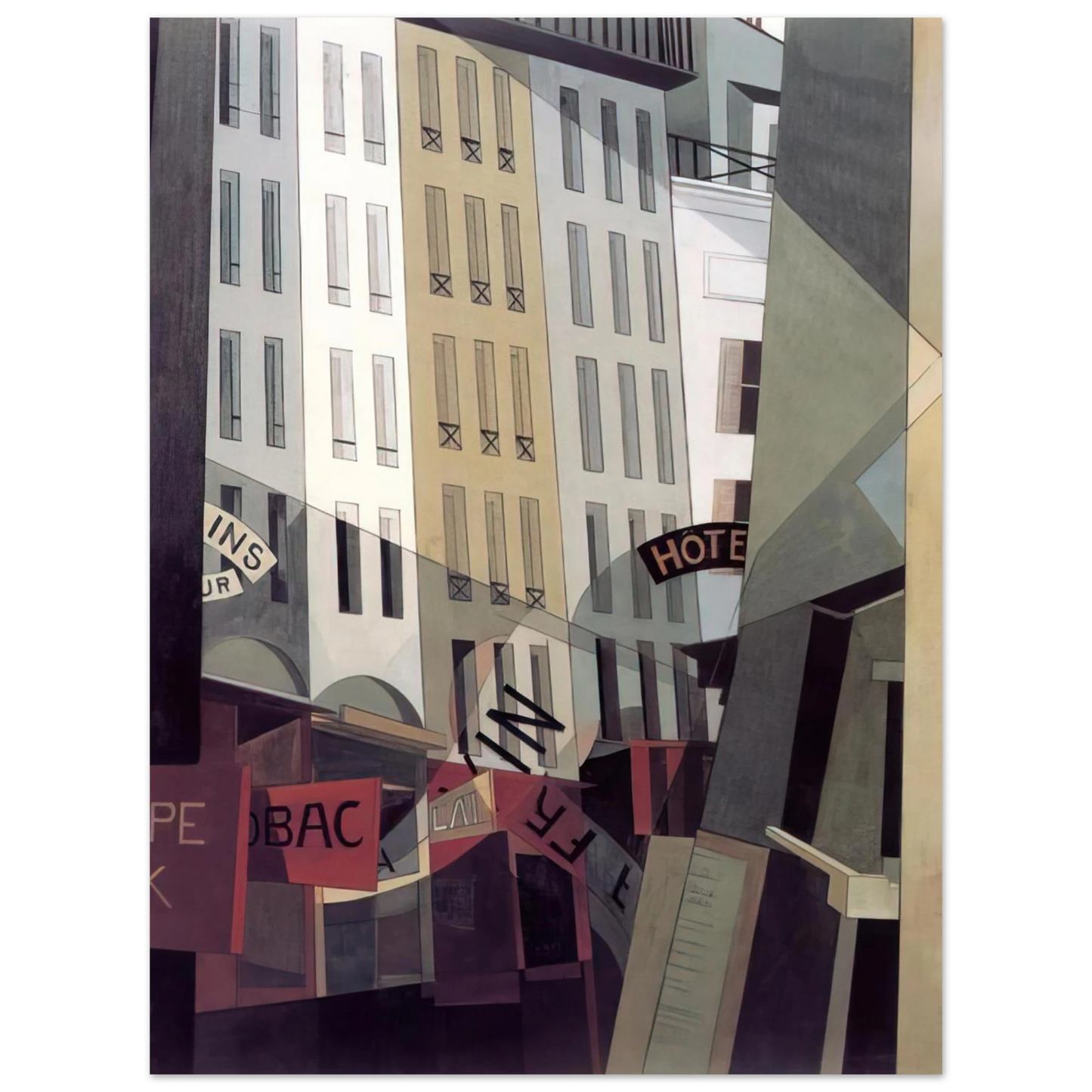
Charles Demuth - Rue du Singe Qui Pêche - 1921 75x100 cm / 30x40inches Fine Art Poster
Charles Demuth - Rue du Singe Qui Pêche - 1921 75x100 cm / 30x40inches Fine Art Poster
Couldn't load pickup availability
Elevate Your Collection with Charles Demuth’s Precisionist Vision
Step into the architectural geometry of 1920s Paris with Charles Demuth’s 'Rue du Singe Qui Pêche' (1921). As a pioneer of the Precisionist movement, Demuth captured the essence of the urban landscape by blending Cubist abstraction with a refined, American sensibility. This piece, created during his influential stay in France, transforms one of the narrowest streets in Paris into a sophisticated study of line, form, and rhythmic color.
Museum-Grade Excellence for the Discerning Curator
At RedKalion, we specialize in high-fidelity reproductions that honor the artist's original intent. Our fine art prints are produced on Master's Edition archival paper, chosen specifically for its ability to render the subtle tonal shifts and precise edges characteristic of Demuth’s technique. This museum-quality poster ensures that the historical significance of this 1921 masterpiece is preserved for generations.
Uncompromising Physical Quality
- Archival Longevity: Our acid-free paper (pH above 7) ensures your investment remains vibrant, preventing the yellowing or degradation common in standard prints.
- Luxurious Texture: The matte, uncoated natural white finish provides a sophisticated, non-reflective surface that enhances the artwork’s depth.
- Substantial Feel: Printed on 250 gsm (110 lb) paper with a thickness of 0.29 mm (11.4 mils), this print offers the tactile weight of a true gallery piece.
- Ethical Craftsmanship: We exclusively use FSC-certified paper, aligning artistic beauty with environmental responsibility.
Each order is printed and shipped on demand with the utmost care, ensuring you receive a pristine, archival-grade reproduction that transforms any interior into a gallery-inspired sanctuary.
Discover Unlimited Art Possibilities
At RedKalion, you can find virtually any artwork from any artist, available in a wide range of sizes to perfectly match your space.
If you didn’t find what you’re looking for, contact us at support@redkalion.com . We will source any artwork and produce it in any size and format you need, including art prints, posters, canvas, framed pieces, framed canvas, and more.
For dedicated art enthusiasts, we also offer handcrafted replicas of any artwork, carefully painted by highly skilled artists using traditional techniques.
For custom requests, contact us at support@redkalion.com .
What makes RedKalion's paper 'museum-quality'?
We use Master's Edition archival paper, which is acid-free and 250 gsm thick. This ensures a luxurious feel and prevents yellowing, meeting the rigorous standards required for long-term art preservation.
How long will this Charles Demuth print last?
Designed for longevity, our archival-grade prints use acid-free materials with a pH above 7. This prevents paper degradation over time, allowing the artwork to remain in pristine condition for decades.
Is the paper environmentally sustainable?
Yes, all our fine art reproductions are printed on FSC-certified paper. This certification ensures that the materials are sourced from responsibly managed forests that provide environmental and social benefits.
How is the artwork shipped to ensure protection?
Each print is produced on demand and packaged using robust materials designed to prevent bending or moisture damage during transit. We ship globally with no minimum order requirements.
Does the print have a glossy or matte finish?
The Rue du Singe Qui Pêche print features a matte, uncoated finish. This natural white (off-white) surface eliminates glare and provides a sophisticated, authentic texture that mimics the original medium.
What does the title 'Rue du Singe Qui Pêche' mean?
The title translates to 'Street of the Fishing Monkey.' It is a historic, narrow street in Paris that Demuth captured in 1921, utilizing his signature Precisionist style to abstract its urban architecture.
How does this print reflect Demuth’s 1921 Parisian period?
In 1921, Demuth’s work reached a pinnacle of structural clarity. This print captures his transition from watercolor fluidity to the sharp, geometric lines of Precisionism that defined his unique contribution to modernism.