
RedKalion
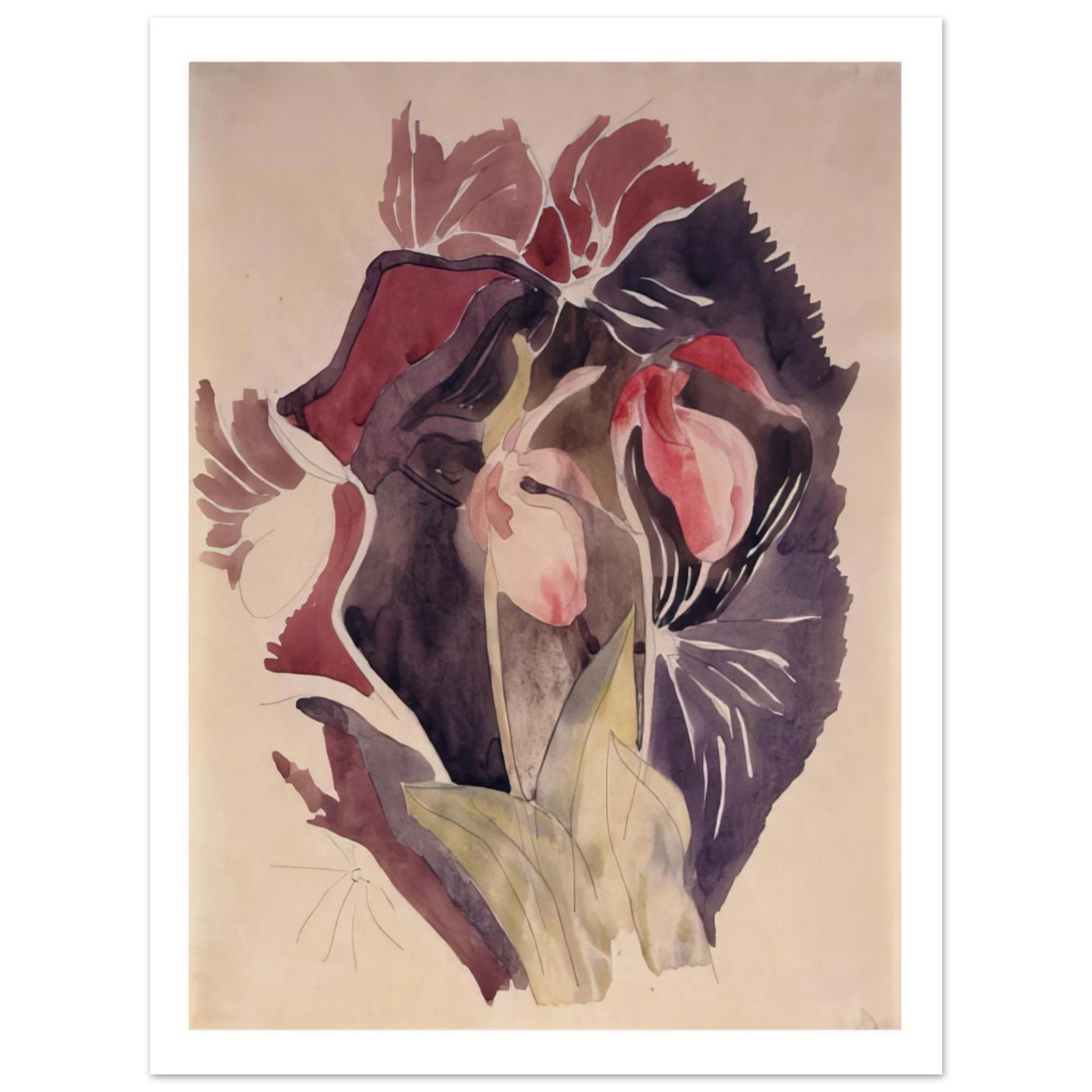
Charles Demuth - Wild Orchids - 1920 75x100 cm / 30x40inches Fine Art Poster
Charles Demuth - Wild Orchids - 1920 75x100 cm / 30x40inches Fine Art Poster
Couldn't load pickup availability
Capturing the Ethereal: Charles Demuth’s Wild Orchids (1920)
Elevate your interior with Charles Demuth’s Wild Orchids (1920), a definitive example of American Modernism. This exquisite fine art print showcases Demuth's transition into Precisionism, where organic botanical forms are treated with the structural clarity and delicate transparency that defined his legendary career. Originally executed with a masterful control of watercolor and graphite, this 1920 masterpiece captures the fragile beauty of orchids through a lens of sophisticated abstraction.
At RedKalion, we curate only the finest museum-quality reproductions. Our commitment to excellence is reflected in the technical precision of our printing process. This piece is rendered on Master's Edition archival paper, chosen specifically for its ability to preserve the subtle tonal gradations and intricate line work of Demuth’s original vision. The natural white, matte finish eliminates glare, allowing the viewer to appreciate the depth of color and the luxurious texture of the medium.
The Artistry of Charles Demuth
Demuth was a pioneer in using negative space to define form. In Wild Orchids, he utilizes the white of the paper as an active participant in the composition, a technique our 250 gsm archival paper replicates with stunning accuracy. By choosing this piece, you are not simply purchasing a poster; you are acquiring a piece of art history that embodies the intellectual rigor and aesthetic sensitivity of the early 20th-century American avant-garde.
Product Specifications & Archival Quality
- Paper: Master's Edition archival paper, FSC-certified for sustainability.
- Weight: Robust 250 gsm (110 lb) for a premium, heavy-weight feel.
- Finish: Matte, uncoated, and natural white (off-white) to ensure a glare-free, luxurious viewing experience.
- Longevity: Acid-free (pH above 7) chemistry prevents yellowing or degradation over decades.
- Thickness: 0.29 mm (11.4 mils) providing exceptional durability and a museum-grade presence.
Each print is fulfilled on demand with meticulous attention to detail, ensuring that your archival masterpiece arrives in pristine condition, ready to transform your space with enduring elegance.
Discover Unlimited Art Possibilities
At RedKalion, you can find virtually any artwork from any artist, available in a wide range of sizes to perfectly match your space.
If you didn’t find what you’re looking for, contact us at support@redkalion.com . We will source any artwork and produce it in any size and format you need, including art prints, posters, canvas, framed pieces, framed canvas, and more.
For dedicated art enthusiasts, we also offer handcrafted replicas of any artwork, carefully painted by highly skilled artists using traditional techniques.
For custom requests, contact us at support@redkalion.com .
What makes this Charles Demuth print museum-quality?
Our prints use Master's Edition archival paper (250 gsm) with a matte finish. This specific weight and acid-free composition ensure that the fine details of Demuth's Wild Orchids are preserved with the same fidelity found in high-end art galleries.
What is the texture and finish of the paper?
We use a natural white, uncoated paper that provides a sophisticated, non-reflective matte finish. This texture is ideal for reproducing Demuth’s watercolor techniques, offering a tactile feel and luxury aesthetic without the glare of glossy alternatives.
How does the archival quality prevent yellowing over time?
The paper is acid-free, meaning the pH is balanced above 7. This prevents the cellulose fibers from breaking down, ensuring your Charles Demuth reproduction remains vibrant and the paper stays white for generations.
How is my order shipped and is there a minimum?
At RedKalion, there are no minimum orders. Each fine art poster is printed on demand and shipped in protective, durable packaging to ensure it reaches you in perfect condition, regardless of your location.
Is the paper used for this print sustainable?
Yes, we prioritize environmental responsibility. All paper used for our museum-quality reproductions is FSC-certified, ensuring it is sourced from sustainably managed forests that provide environmental, social, and economic benefits.
What artistic style does Wild Orchids represent?
Created in 1920, Wild Orchids represents the Precisionist movement. It blends botanical realism with Modernist abstraction, emphasizing clean lines and geometric clarity while maintaining the delicate, ethereal nature of the floral subject matter.
What was the significance of the year 1920 for Demuth?
1920 marked a pivotal era where Demuth refined his watercolor technique. During this time, he moved away from earlier illustrative styles toward a more structured, architectural approach to nature, making Wild Orchids a key transitional work.