RedKalion
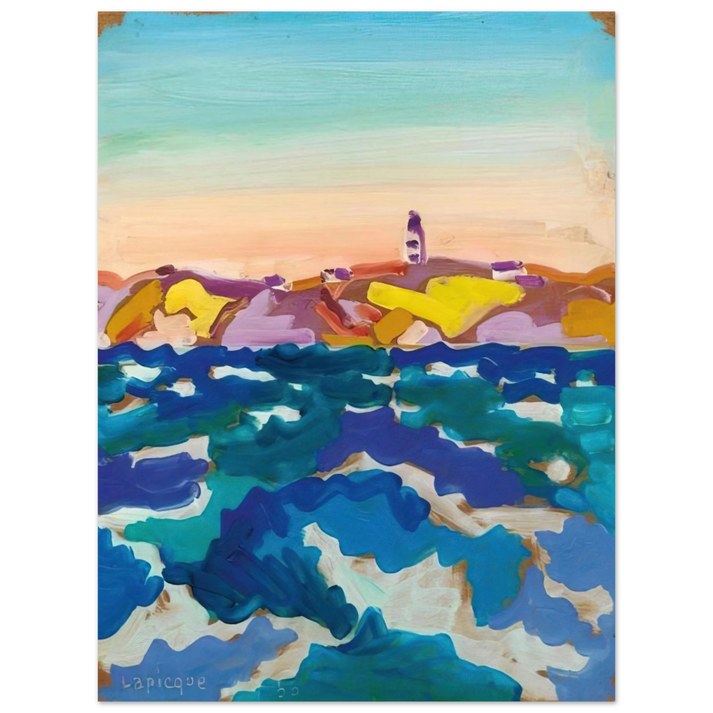
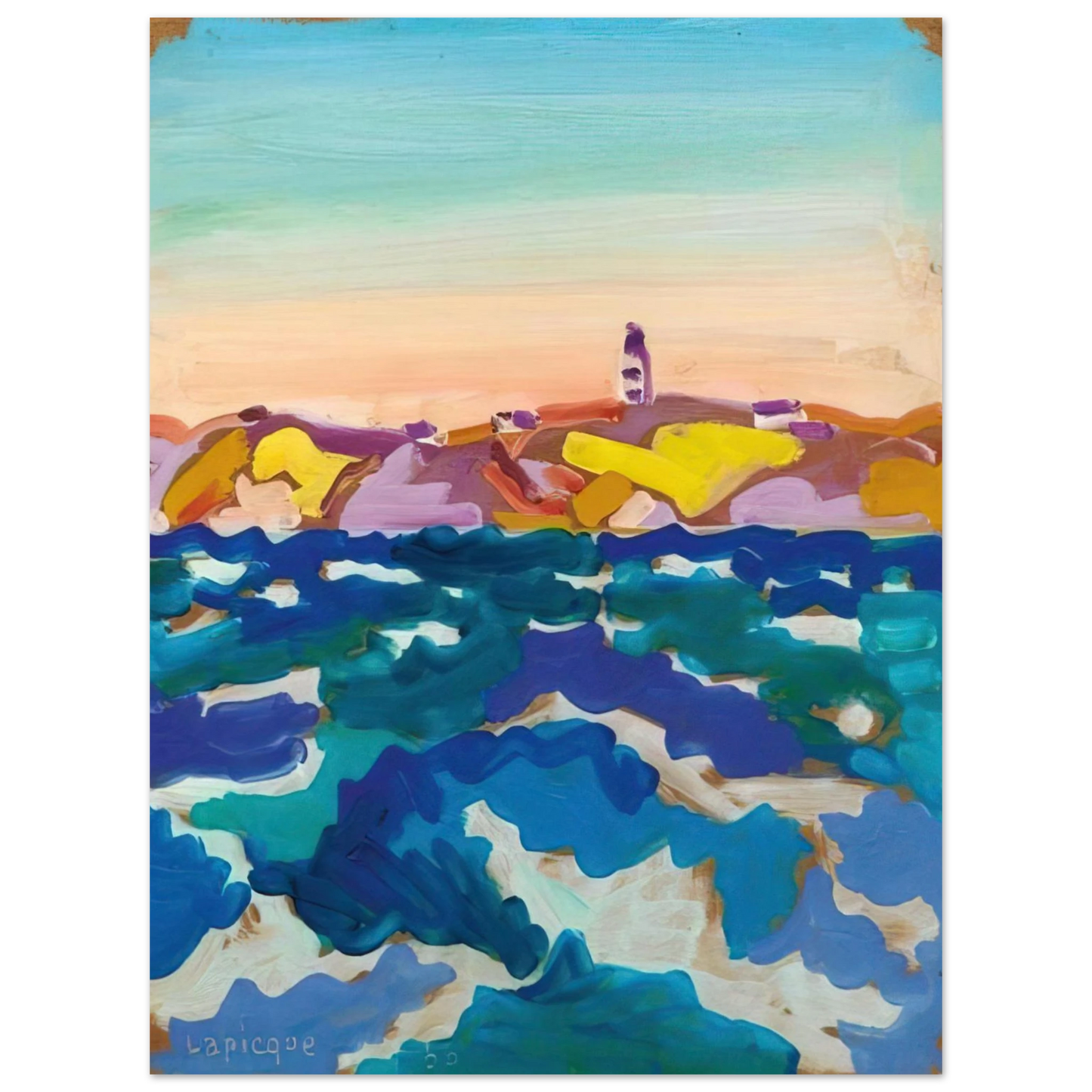
Charles Lapicque - Le Phare - 1958 75x100 cm / 30x40inches Fine Art Poster
Charles Lapicque - Le Phare - 1958 75x100 cm / 30x40inches Fine Art Poster
Couldn't load pickup availability
Charles Lapicque - Le Phare (1958): A Synthesis of Light and Motion
Experience the vibrant energy of mid-century French modernism with this museum-quality reproduction of Charles Lapicque’s 1958 masterpiece, Le Phare (The Lighthouse). Lapicque, a singular figure in the Nouvelle École de Paris, was both a scientist and an artist—a background that allowed him to revolutionize color theory. In Le Phare, he moves beyond traditional perspective, using rhythmic lines and a sophisticated palette to capture the pulsing atmosphere of the maritime landscape.
This fine art print is more than a simple poster; it is a meticulously crafted archival reproduction designed to bring the luminosity of Lapicque’s work into your home. Each print is produced on our Master's Edition archival paper, chosen specifically for its ability to hold the deep, complex hues characteristic of Lapicque's 1950s period. The matte, uncoated finish provides a luxurious, non-reflective surface that emphasizes the tactile quality of the composition.
- Historical Context: Painted at the height of his career, Le Phare represents Lapicque's transition into a more lyrical abstraction, where the lighthouse serves as a beacon of both color and structural innovation.
- Museum-Grade Quality: Printed on 250 gsm (110 lb) acid-free paper, ensuring that the natural white (off-white) base maintains its integrity without yellowing.
- Sophisticated Aesthetic: The 0.29 mm thickness offers a substantial, premium feel, perfect for professional framing and high-end interior design.
- Sustainable Curation: At RedKalion, we prioritize the planet as much as the art, utilizing FSC-certified paper and a print-on-demand model to minimize waste.
Elevate your space with an archival masterpiece that endures. This 75x100 cm (30x40 inches) reproduction of Le Phare serves as a testament to the enduring legacy of French abstraction, curated with the technical precision that defines the RedKalion collection.
Discover Unlimited Art Possibilities
At RedKalion, you can find virtually any artwork from any artist, available in a wide range of sizes to perfectly match your space.
If you didn’t find what you’re looking for, contact us at support@redkalion.com . We will source any artwork and produce it in any size and format you need, including art prints, posters, canvas, framed pieces, framed canvas, and more.
For dedicated art enthusiasts, we also offer handcrafted replicas of any artwork, carefully painted by highly skilled artists using traditional techniques.
For custom requests, contact us at support@redkalion.com .
What makes this Charles Lapicque fine art print museum-quality?
RedKalion uses Master's Edition archival paper, which is 250 gsm and acid-free, ensuring the vibrant colors of Le Phare remain vivid for decades without fading or yellowing.
What is the texture and finish of the paper?
This fine art poster features a premium matte, uncoated finish on natural white paper, providing a luxurious, glare-free texture that enhances Lapicque's complex color palette.
How does RedKalion handle shipping and production?
We utilize a sustainable, on-demand fulfillment model. Your order is printed specifically for you, reducing waste and ensuring your artwork arrives in pristine condition with no minimum order.
Will the paper yellow over time?
No. Our museum-quality paper is acid-free with a pH value above 7, which prevents yellowing and preserves the archival integrity and structural longevity of the print.
Is the paper used for this print environmentally friendly?
Yes, we use FSC-certified paper for all our prints, ensuring that your Charles Lapicque reproduction meets the highest global standards for responsible forest management.
What is the historical significance of Charles Lapicque’s Le Phare (1958)?
Painted during a pivotal era for French abstraction, Le Phare demonstrates Lapicque’s revolutionary use of color theory to create space and light through sophisticated blue and red rhythmic contrasts.
Why did Lapicque often paint maritime subjects like lighthouses?
As an engineer and artist, Lapicque was fascinated by the physics of light. Lighthouses provided the perfect subject for his experiments with chromatic rhythm and the perception of movement.