RedKalion
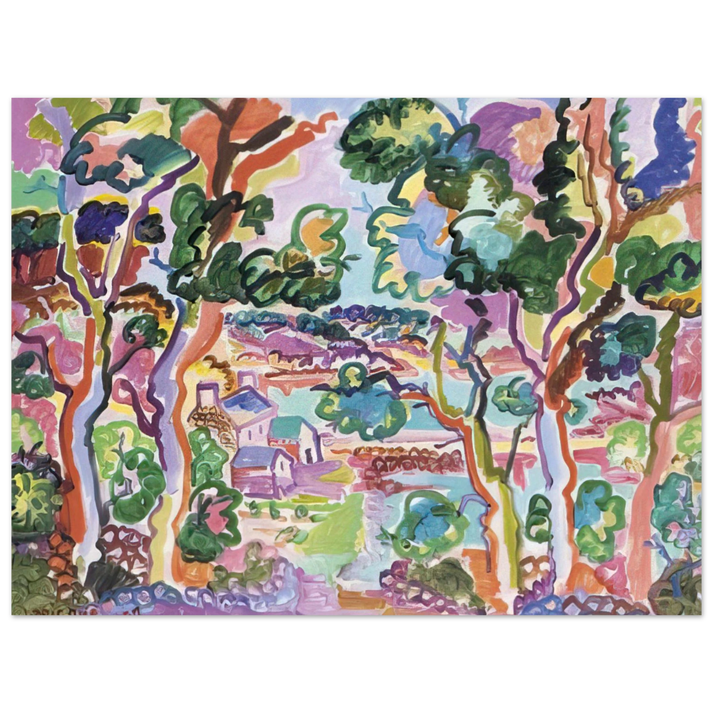
Charles Lapicque - Paysage - Fauvism 75x100 cm / 30x40inches Fine Art Poster
Charles Lapicque - Paysage - Fauvism 75x100 cm / 30x40inches Fine Art Poster
Couldn't load pickup availability
Elevate Your Collection with Charles Lapicque’s 'Paysage'
Immerse yourself in the vibrant energy of 20th-century French modernism with this museum-quality reproduction of Charles Lapicque’s 'Paysage'. Lapicque, a singular figure in the New School of Paris, masterfully bridged the gap between late Fauvism and structural abstraction. This piece captures a landscape transformed by color—moving beyond mere representation to evoke a rhythmic, emotional experience through bold, non-naturalistic palettes.
Artistic Mastery and Historical Context
In 'Paysage', Lapicque utilizes the Fauvist tradition of liberating color from its descriptive function. His brushwork creates a dynamic tension between form and space, a technique he refined through his unique background as both an artist and a scientist. This fine art print allows you to witness his sophisticated use of 'space-color,' where every hue acts as a structural element within the composition.
Premium Archival Quality by RedKalion
RedKalion is dedicated to preserving the integrity of world-class art. This museum-quality reproduction is meticulously crafted on our Master's Edition archival paper. With a weight of 250 gsm (110 lb) and a thickness of 0.29 mm, the paper provides a substantial, premium feel. The matte, uncoated finish ensures a natural white (off-white) aesthetic, eliminating glare and highlighting the subtle textures of Lapicque’s original vision.
- Enduring Beauty: Our paper is acid-free (pH above 7), ensuring your print remains pristine without yellowing for generations.
- Sustainable Elegance: We use FSC-certified paper, supporting responsible forest management.
- Archival Standards: Designed for collectors who demand the highest longevity and color fidelity.
By choosing a RedKalion print, you are not merely purchasing a poster; you are investing in an archival masterpiece that honors the legacy of Charles Lapicque and the transformative power of Fauvist landscape art.
Discover Unlimited Art Possibilities
At RedKalion, you can find virtually any artwork from any artist, available in a wide range of sizes to perfectly match your space.
If you didn’t find what you’re looking for, contact us at support@redkalion.com . We will source any artwork and produce it in any size and format you need, including art prints, posters, canvas, framed pieces, framed canvas, and more.
For dedicated art enthusiasts, we also offer handcrafted replicas of any artwork, carefully painted by highly skilled artists using traditional techniques.
For custom requests, contact us at support@redkalion.com .
What defines the quality of this Charles Lapicque print?
Our prints use Master's Edition 250 gsm archival paper. This museum-quality, heavy-weight paper features a luxurious matte finish that perfectly captures the vibrant Fauvist colors of Charles Lapicque’s work.
How does the paper's acid-free nature benefit the artwork?
The acid-free (pH above 7) property prevents the paper from yellowing or becoming brittle over time. This ensures your fine art print maintains its original brilliance and integrity for decades.
Is the paper used for this Fauvist poster sustainable?
Yes. RedKalion uses FSC-certified paper or equivalent certifications depending on regional availability. This guarantees that your artwork is printed on materials sourced from responsibly managed forests.
How is shipping handled for the 75x100 cm print?
We provide on-demand printing with no minimum orders. Each 75x100 cm poster is carefully packaged in durable materials to ensure it arrives in perfect condition at your doorstep.
Does the print come with a frame?
This product is a standalone fine art print. Its standard 75x100 cm (30x40 inches) dimensions make it easy to find a custom or ready-made frame to suit your interior design.
What is the significance of the "Paysage" title in Lapicque's career?
"Paysage" (Landscape) represents Lapicque's fascination with nature's rhythm. He used these scenes to experiment with the "blue-red" color theory, challenging traditional perspectives in mid-century French art.
Why is this work categorized as Fauvist?
It follows the Fauvist movement's emphasis on strong, expressive colors and simplified forms. Lapicque’s use of vivid, non-naturalistic hues creates an emotional landscape rather than a literal one.