
RedKalion
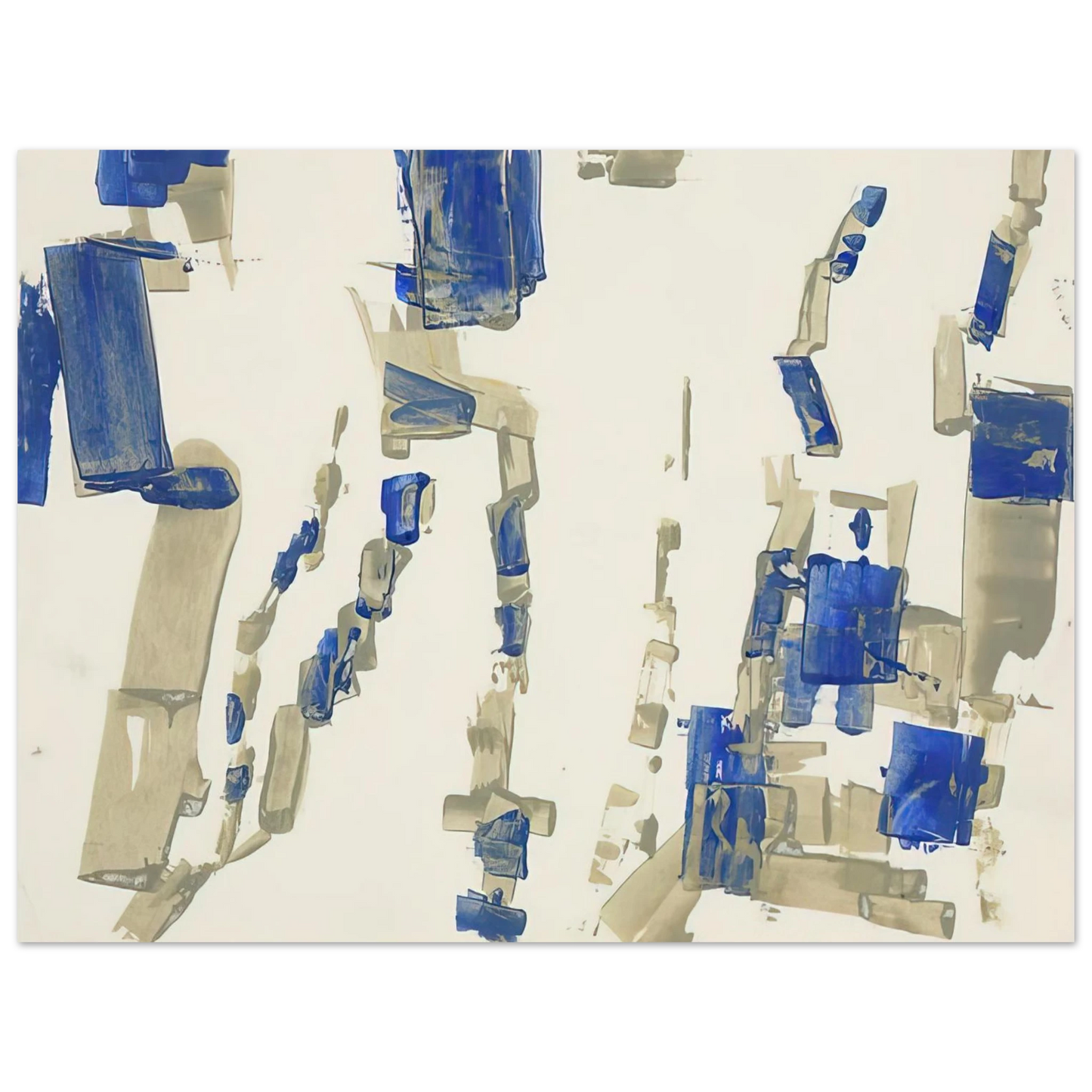
Charlotte Posenenske - Bretagne - 1960 75x100 cm / 30x40inches Fine Art Poster
Charlotte Posenenske - Bretagne - 1960 75x100 cm / 30x40inches Fine Art Poster
Couldn't load pickup availability
Discover 'Bretagne' by Charlotte Posenenske (1960) - A RedKalion Fine Art Print
Experience the foundational elegance of Minimalism and Conceptual Art with Charlotte Posenenske's 'Bretagne,' an iconic 1960 artwork. Posenenske, a visionary German artist, was instrumental in shaping the post-war art landscape, challenging traditional notions of authorship and mass production. This fine art print of 'Bretagne' offers a rare glimpse into her early explorations, predating her renowned modular sculptures yet imbued with the same rigorous geometric sensibility and a profound questioning of art's role.
Posenenske’s radical stance involved disavowing the art market in 1968, declaring art could not solve social problems. Her early works like 'Bretagne' from 1960 subtly prefigure this ethos, focusing on essential forms and questioning traditional artistic hierarchies even before her overt minimalist modules. This piece, with its structured composition, encourages viewers to engage directly with form and space, reflecting a crucial period in her artistic development.
The mood evoked by this Charlotte Posenenske 1960 artwork is one of contemplation, precision, and intellectual engagement. Its geometric purity and implied spatial dynamics make it a compelling focal point, adding a sophisticated layer of art historical depth to any contemporary or minimalist interior. As a museum-quality reproduction, RedKalion ensures that the integrity of Posenenske's vision is meticulously preserved.
RedKalion's Uncompromising Quality: Your Archival Charlotte Posenenske Print
At RedKalion, we are dedicated to curating and reproducing masterpieces like Charlotte Posenenske's 'Bretagne' with unparalleled fidelity. This fine art print is meticulously produced on our exclusive Master's Edition archival paper, renowned for its exceptional surface and longevity. The paper boasts a luxurious matte, uncoated, natural white (off-white) finish, providing a tactile experience that enhances the artwork's subtle tonal shifts and crisp lines, just as Posenenske intended.
We guarantee the lasting beauty of your RedKalion print. Our paper is acid-free (pH above 7), actively preventing yellowing and degradation over time, ensuring your artwork remains vibrant for generations. With a substantial 250 gsm (110 lb) weight and a thickness of 0.29 mm (11.4 mils), this print feels substantial and premium. Furthermore, our commitment to sustainability is reflected in the use of FSC-certified paper, supporting responsible forest management.
Each RedKalion museum-quality reproduction is printed and shipped on demand, with no minimum orders, ensuring efficient delivery of your chosen masterpiece. By acquiring this Charlotte Posenenske Bretagne Fine Art Print, you're not just purchasing a piece of art; you're investing in an authentic, archival representation of a pivotal moment in art history, curated by RedKalion, your trusted source for world-class prints.
Elevate your space with an authentic piece of art history – a stunning, archival reproduction of Charlotte Posenenske's 'Bretagne' from 1960.
Discover Unlimited Art Possibilities
At RedKalion, you can find virtually any artwork from any artist, available in a wide range of sizes to perfectly match your space.
If you didn’t find what you’re looking for, contact us at support@redkalion.com . We will source any artwork and produce it in any size and format you need, including art prints, posters, canvas, framed pieces, framed canvas, and more.
For dedicated art enthusiasts, we also offer handcrafted replicas of any artwork, carefully painted by highly skilled artists using traditional techniques.
For custom requests, contact us at support@redkalion.com .
What makes a RedKalion fine art print museum-quality?
We use Master's Edition archival paper, known for its superior printing surface, exceptional color fidelity, and longevity, ensuring your print meets gallery standards.
What type of paper is used for the "Charlotte Posenenske - Bretagne - 1960" print?
This print is produced on FSC-certified, Master's Edition archival paper. It features a luxurious matte, uncoated, natural white (off-white) finish with a substantial 250 gsm (110 lb) weight.
How does RedKalion ensure the longevity of my art print?
Our prints are on acid-free paper with a pH above 7, preventing yellowing and degradation. This archival quality preserves the artwork's integrity for generations.
Can I expect color accuracy with this "Bretagne" reproduction?
Yes, RedKalion employs advanced printing techniques to capture the original artwork's subtle tones and crisp lines accurately on our premium archival paper.
What is the shipping process for my RedKalion order?
All RedKalion prints are produced and shipped on demand with no minimum order requirements, ensuring efficient and responsible delivery directly to you.
What was Charlotte Posenenske's artistic philosophy?
Posenenske was a minimalist artist who challenged the art market, focusing on reproducible, industrial forms. She explored accessibility and questioned art's commodity status.
What is the significance of the year 1960 for this artwork?
1960 marks a period where Posenenske was transitioning towards her minimalist and conceptual approach, exploring geometric abstraction and fundamental forms that predated her iconic modular sculptures.