
RedKalion
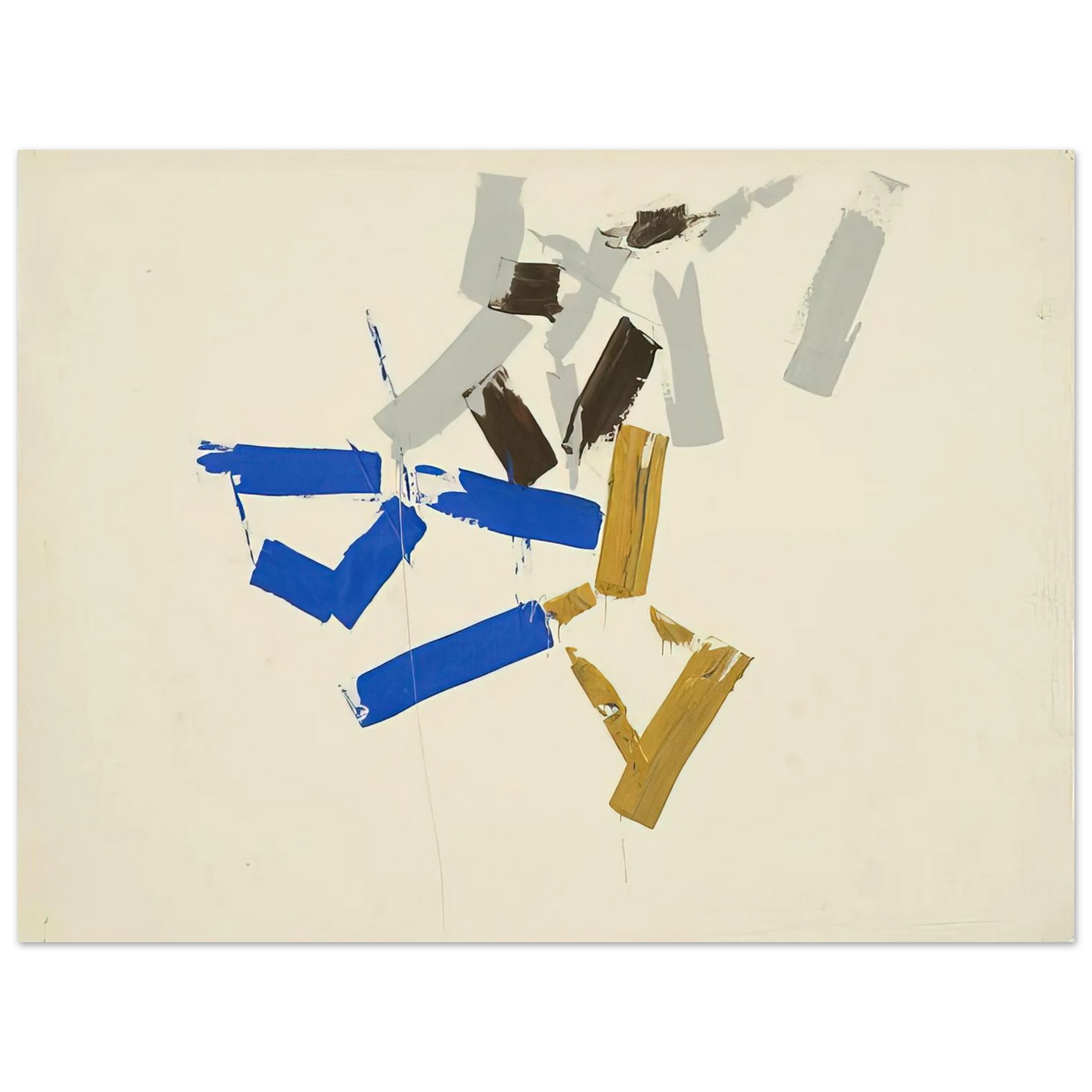
Charlotte Posenenske - Untitled - 1962 75x100 cm / 30x40inches Fine Art Poster
Charlotte Posenenske - Untitled - 1962 75x100 cm / 30x40inches Fine Art Poster
Couldn't load pickup availability
The Radical Geometry of Charlotte Posenenske: Untitled (1962)
In 1962, Charlotte Posenenske was at a critical juncture in her career, moving beyond traditional representation toward the rigorous, modular minimalism that would later define her legacy. This Untitled work captures the tension between the organic and the industrial, a hallmark of her early palette-knife paintings. At RedKalion, we honor Posenenske's vision of democratized art by offering this museum-quality reproduction, meticulously crafted to preserve the raw, structural energy of the original composition.
Archival Integrity & Material Excellence
Every fine art print we produce is a testament to longevity and tactile luxury. To reflect the depth of Posenenske's 1960s aesthetic, we utilize our exclusive Master's Edition archival paper. This off-white, natural white base provides a sophisticated, matte finish that eliminates glare while highlighting the subtle tonal shifts of the work.
- Weight & Thickness: A substantial 250 gsm (110 lb) paper weight with a thickness of 0.29 mm (11.4 mils) ensures a premium, gallery-grade feel.
- Longevity: Our paper is acid-free with a pH value above 7, preventing yellowing or degradation over decades.
- Sustainability: Printed on FSC-certified paper, aligning with modern environmental standards.
- Fidelity: Uncoated texture that invites the viewer to appreciate the archival-grade pigments.
By choosing a RedKalion reproduction, you are not merely purchasing a poster; you are acquiring an archival masterpiece designed to endure. This 75x100 cm (30x40 inches) piece serves as a sophisticated focal point for collectors who value German minimalism and historical significance.
Discover Unlimited Art Possibilities
At RedKalion, you can find virtually any artwork from any artist, available in a wide range of sizes to perfectly match your space.
If you didn’t find what you’re looking for, contact us at support@redkalion.com . We will source any artwork and produce it in any size and format you need, including art prints, posters, canvas, framed pieces, framed canvas, and more.
For dedicated art enthusiasts, we also offer handcrafted replicas of any artwork, carefully painted by highly skilled artists using traditional techniques.
For custom requests, contact us at support@redkalion.com .
What defines the quality of the Master's Edition paper?
The Master's Edition is a 250 gsm (110 lb) archival-grade paper. It features a natural white, matte finish that is acid-free (pH above 7), ensuring your Charlotte Posenenske print remains vibrant without yellowing over time.
How does the 0.29 mm thickness affect the print?
At 11.4 mils (0.29 mm), the paper offers a robust, premium thickness that prevents curling and provides the structural integrity required for large-format fine art displays like this 30x40 inch piece.
Is the paper used for this reproduction sustainable?
Yes, RedKalion utilizes FSC-certified paper (or equivalent certifications depending on regional availability), supporting responsible forest management and sustainable production practices for every museum-quality print.
What is the fulfillment process for my order?
We operate on a print-on-demand basis with no minimum order requirements. Each piece is meticulously printed and shipped to ensure it arrives in pristine condition at your doorstep.
How should I frame this 75x100 cm fine art poster?
Given the archival nature of the 250 gsm paper, we recommend using UV-protective glass and acid-free mounting to maintain the print's longevity and complement its luxurious matte texture.
What was Charlotte Posenenske's artistic focus in 1962?
In 1962, Posenenske was exploring her 'spatula paintings,' utilizing a palette knife to create textured, abstract forms. This period represents her transition from gestural abstraction toward her later, world-renowned industrial minimalism.
Why is this specific Posenenske work historically significant?
Untitled (1962) exemplifies the artist's rejection of subjectivity. By using simplified forms and industrial techniques, Posenenske challenged the art market's obsession with individual 'genius,' paving the way for Conceptualism.