RedKalion
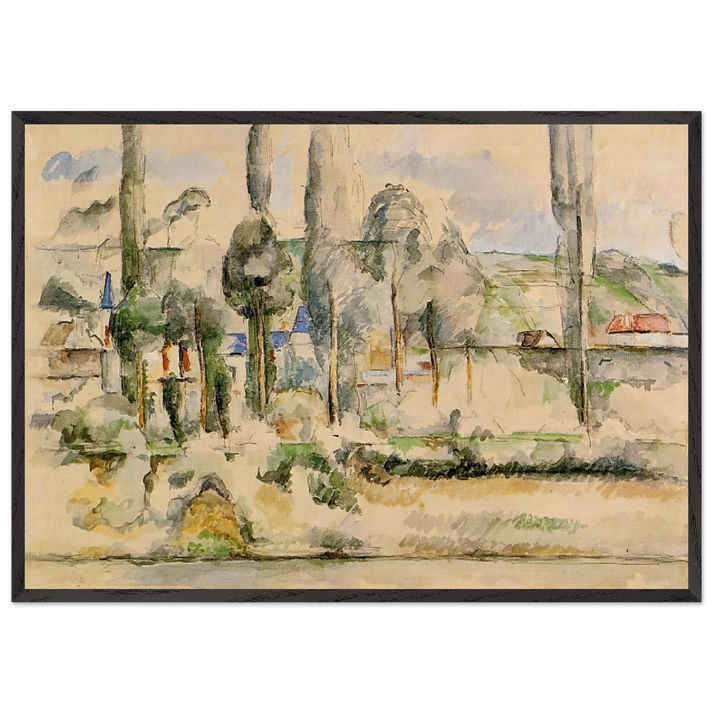
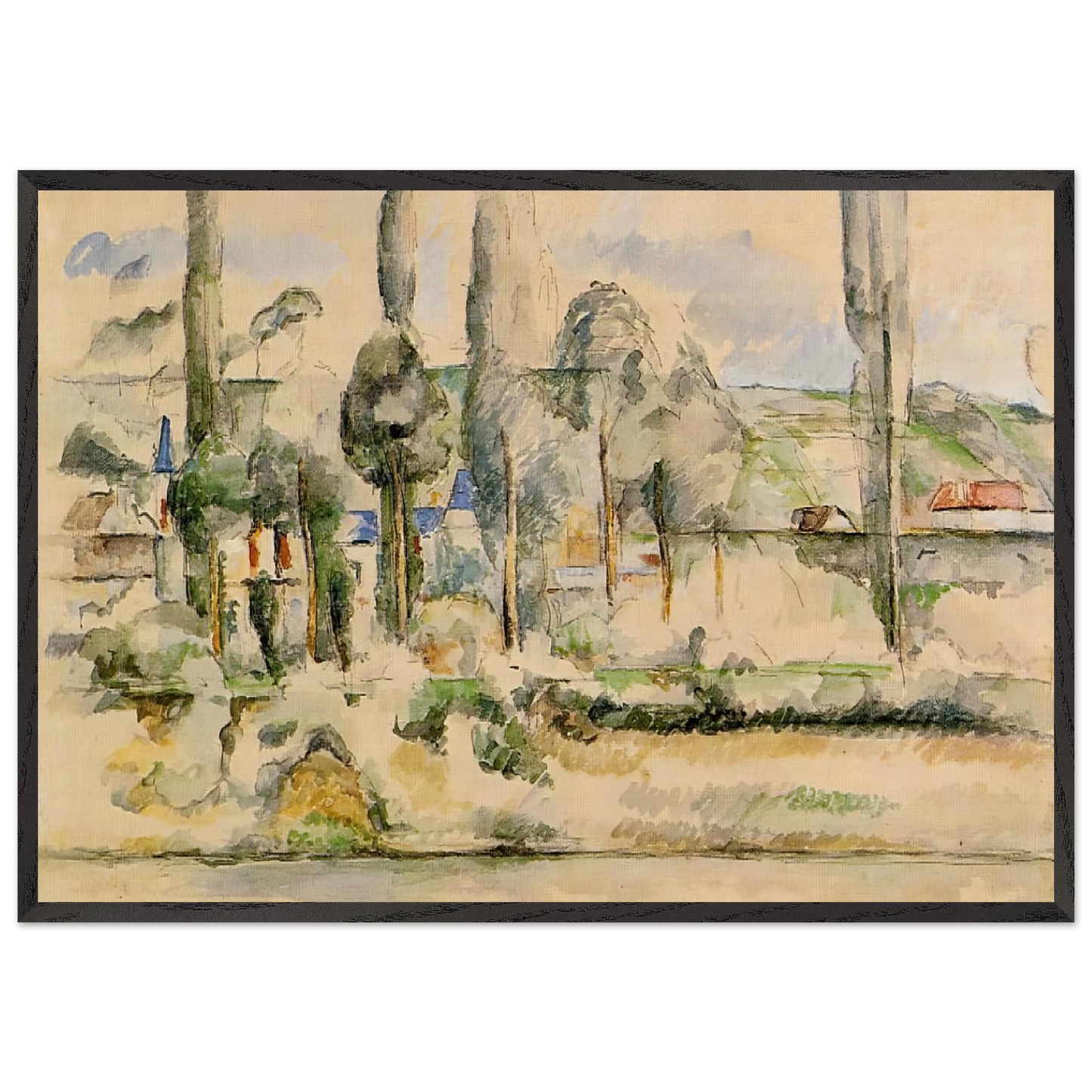
Chateau de Madan - Paul Cezanne 70x100 cm / 28x40 inches Framed Art Print – Black Wooden Frame
Chateau de Madan - Paul Cezanne 70x100 cm / 28x40 inches Framed Art Print – Black Wooden Frame
Couldn't load pickup availability
Experience the Architectural Mastery of Paul Cézanne's 'Chateau de Madan'
Invite the structural brilliance of the Post-Impressionist pioneer into your home with this museum-quality reproduction of Paul Cézanne's 'Chateau de Madan'. This 70x100 cm (28x40 inches) framed art print captures the essence of Cézanne's revolutionary approach to landscape—a style that bridged the gap between 19th-century Impressionism and 20th-century Cubism. Depicting the estate of his close friend, the novelist Émile Zola, at Médan, this work is a testament to the artist's fascination with geometric form and the harmonious interplay of light and volume.
The Artistry of the 'Father of Modern Art'
In 'Chateau de Madan', Cézanne employs his signature 'constructive stroke'—rhythmic, parallel brushstrokes that build the landscape into a solid, tangible reality. Unlike the fleeting light of his Impressionist contemporaries, Cézanne sought to make of Impressionism something 'solid and durable, like the art of the museums.' This fine art print allows you to appreciate his meticulous study of the French countryside, where architecture and nature coexist in a balanced, architectural logic.
Museum-Grade Physical Specifications
At RedKalion, we curate archival-grade reproductions that preserve the integrity of the original masterpiece. Your artwork is printed on 250 gsm (110 lb) natural white museum-quality paper with a matte, uncoated finish to eliminate glare and ensure historical accuracy. The frame is crafted from responsibly sourced black oak and ash wood, featuring a sophisticated 20mm (0.79") thickness—a profile that offers more presence and durability than standard commercial frames.
- Archival Longevity: Acid-free paper ensures the vibrant tones and deep contrasts endure for generations.
- Shatterproof Protection: High-clarity plexiglass protects the print while maintaining a lightweight, safe display.
- Sophisticated Framing: The black wooden frame provides a contemporary contrast that anchors the artwork in any interior setting.
- Sustainable Excellence: All materials are FSC-certified, reflecting our commitment to the environment and craftsmanship.
Elevate your living or workspace with an archival masterpiece from RedKalion—where art history meets premium, sustainable production.
Discover Unlimited Art Possibilities
At RedKalion, you can find virtually any artwork from any artist, available in a wide range of sizes to perfectly match your space.
If you didn’t find what you’re looking for, contact us at support@redkalion.com . We will source any artwork and produce it in any size and format you need, including art prints, posters, canvas, framed pieces, framed canvas, and more.
For dedicated art enthusiasts, we also offer handcrafted replicas of any artwork, carefully painted by highly skilled artists using traditional techniques.
For custom requests, contact us at support@redkalion.com .
What are the paper specifications for this Cézanne print?
We use 250 gsm (110 lb) natural white, archival-grade museum paper. It features a matte, uncoated finish to provide a glare-free viewing experience while preserving the intricate textures of Cézanne’s original brushwork.
How is the 'Chateau de Madan' print framed?
The print arrives in a premium 20mm thick frame made from responsibly sourced black oak and ash wood. It includes a hanging kit and is protected by shatterproof plexiglass, making it ready to hang immediately.
What is the historical significance of 'Chateau de Madan'?
This piece depicts the estate of Émile Zola at Médan. It is a prime example of Cézanne’s transition toward proto-Cubism, using geometric planes and structural color to redefine the landscape genre.
Is the packaging secure for a 70x100 cm framed print?
Yes, RedKalion uses reinforced, specialized packaging designed to protect large-format framed art prints during transit, ensuring your museum-quality reproduction arrives in pristine condition regardless of the destination.
Does this print use sustainable materials?
Absolutely. We use FSC-certified paper and wood or equivalent certifications, ensuring that your Paul Cézanne reproduction is as environmentally responsible as it is aesthetically beautiful.
Will the colors in the print fade over time?
No, our museum-quality archival paper and high-pigment inks are designed to resist yellowing and fading, ensuring the structural depth of the 'Chateau de Madan' remains vibrant for decades.
What technique did Cézanne use in this landscape?
Cézanne utilized his 'constructive stroke' technique, applying paint in organized, directional patches to create a sense of three-dimensional form and volume within a two-dimensional plane.