RedKalion
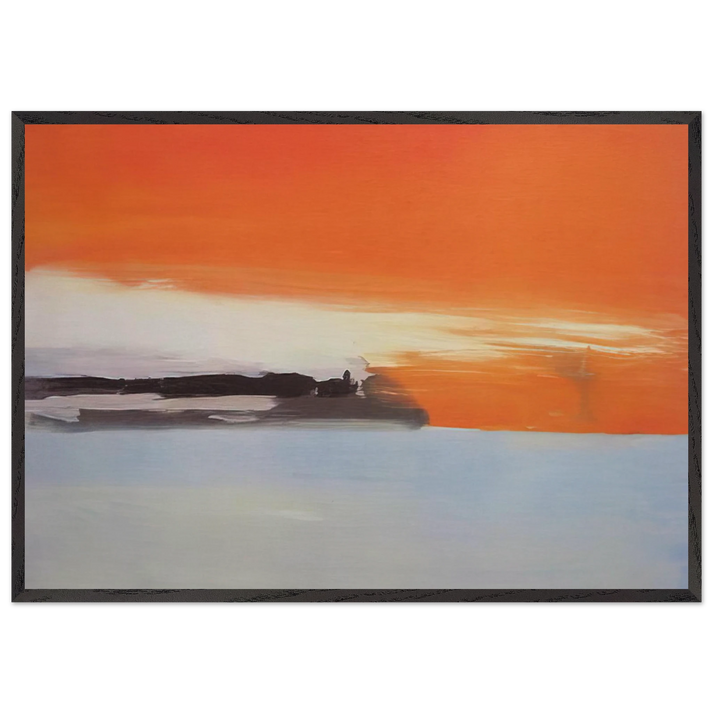
Chemin de fer au bord de la mer soleil couchant - 1955 - Nicolas de Stael 70x100 cm / 28x40 inches Framed Art Print – Black Wooden Frame
Chemin de fer au bord de la mer soleil couchant - 1955 - Nicolas de Stael 70x100 cm / 28x40 inches Framed Art Print – Black Wooden Frame
Couldn't load pickup availability
The Luminous Legacy of Nicolas de Staël: Chemin de fer au bord de la mer soleil couchant
Experience the profound intersection of abstraction and figurative reality with Nicolas de Staël’s "Chemin de fer au bord de la mer soleil couchant" (1955). This late masterpiece captures the fleeting essence of a coastal sunset viewed from a railway, rendered with the emotive power and structural precision that defined de Staël's final year in Antibes. The 70x100 cm scale allows the viewer to become fully immersed in the artist's revolutionary use of space and color.
At RedKalion, we curate museum-quality reproductions that honor the artist's original intent. In this 1955 work, de Staël shifted from heavy impasto to thinner, more fluid layers of paint, allowing light to radiate through the composition. Our fine art print utilizes archival, 250 gsm natural white paper to perfectly replicate the subtle tonal shifts and architectural balance of this iconic piece, ensuring the vibrancy of the setting sun remains preserved.
Exquisite Craftsmanship for Discriminating Collectors:- Premium Frame: Housed in a 20mm (0.79") thick black frame crafted from responsibly sourced oak and ash, providing a bolder profile than standard frames.
- Archival Quality: Printed on 250 gsm (110 lb) acid-free museum-grade paper with a matte, uncoated finish to eliminate glare.
- Shatterproof Protection: High-clarity plexiglass ensures your investment remains protected against damage while maintaining visual clarity.
- Sustainable Elegance: Produced using FSC-certified materials, supporting environmental responsibility and longevity.
Elevate your space with an archival masterpiece that endures. This ready-to-hang framed art print brings a sophisticated atmosphere of Mediterranean light and mid-century modernism into your collection, reflecting the ultimate refinement in curated art.

Discover Unlimited Art Possibilities
At RedKalion, you can find virtually any artwork from any artist, available in a wide range of sizes to perfectly match your space.
If you didn’t find what you’re looking for, contact us at support@redkalion.com . We will source any artwork and produce it in any size and format you need, including art prints, posters, canvas, framed pieces, framed canvas, and more.
For dedicated art enthusiasts, we also offer handcrafted replicas of any artwork, carefully painted by highly skilled artists using traditional techniques.
For custom requests, contact us at support@redkalion.com .
What materials are used for the frame and print?
We use premium 250 gsm archival museum-quality paper and professional 20mm thick black frames crafted from sustainably sourced oak and ash wood for a superior aesthetic finish.
Is the artwork ready to hang upon delivery?
Yes, each framed art print includes a pre-installed hanging kit, ensuring it is ready to hang directly on your wall the moment it arrives.
How does the paper quality ensure archival longevity?
The 250 gsm acid-free, natural white paper is specifically designed for fine art. Its museum-grade composition prevents yellowing and degradation over time, preserving the artwork's integrity.
What type of protection is provided for the print face?
Your print is shielded by premium shatterproof plexiglass, which provides high-transparency protection while being much more durable and safer than traditional glass.
Are the materials used for this print sustainable?
Yes, we prioritize sustainability by using FSC-certified materials or equivalent for both our archival paper and our solid wood frames.
What is the significance of the 1955 date for this de Staël piece?
1955 was the final year of Nicolas de Staël’s life. During this period, his style evolved into a lighter, more fluid technique to capture the intense light of the Mediterranean.
Is this artwork considered abstract or figurative?
This piece represents de Staël's unique bridge between the two; it simplifies the railway and sea into geometric blocks (abstraction) while maintaining a clear, soulful representation of the landscape (figuration).