RedKalion
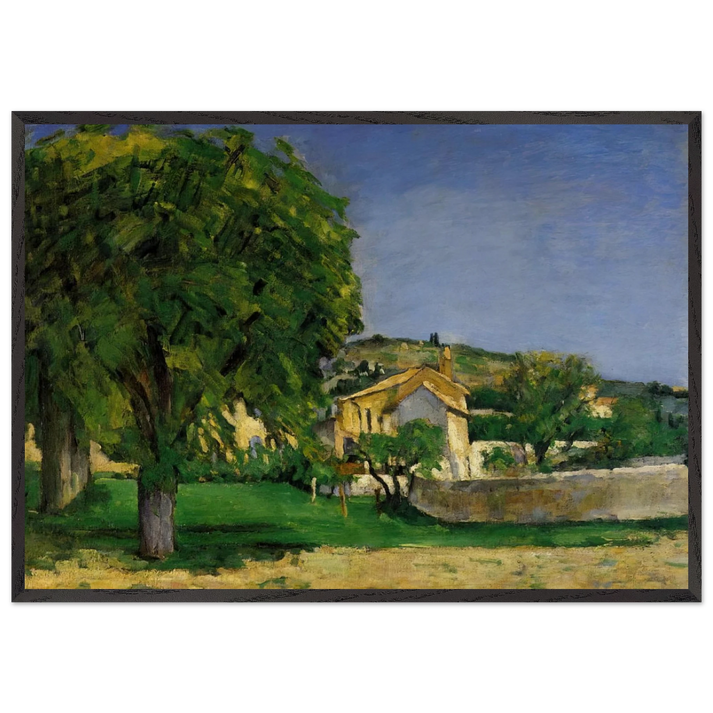
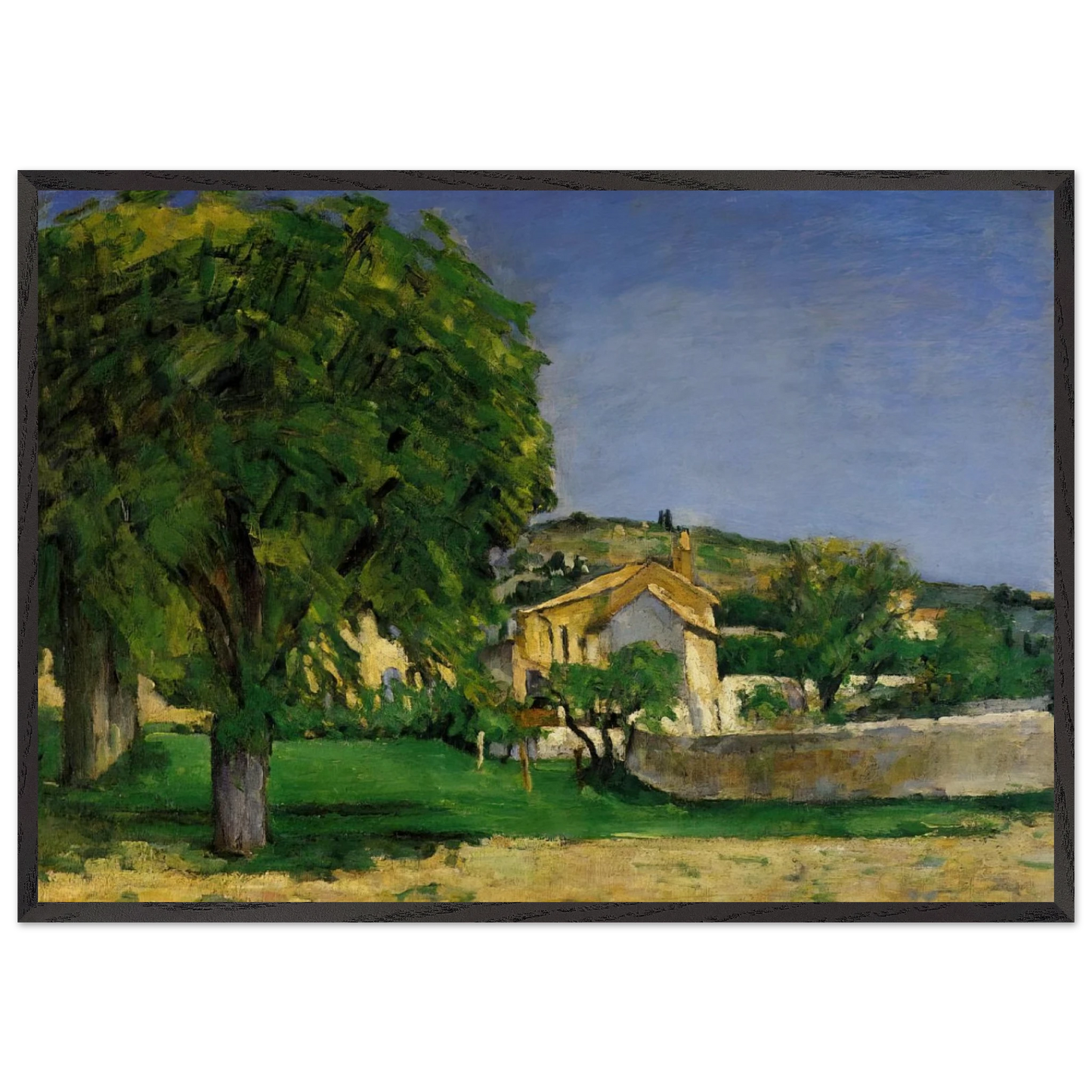
Chestnut Trees and Farmstead of Jas de Bouffin - Paul Cezanne 70x100 cm / 28x40 inches Framed Art Print – Black Wooden Frame
Chestnut Trees and Farmstead of Jas de Bouffin - Paul Cezanne 70x100 cm / 28x40 inches Framed Art Print – Black Wooden Frame
Couldn't load pickup availability
The Architectural Vision of Paul Cézanne: Chestnut Trees and Farmstead of Jas de Bouffin
RedKalion is proud to present a museum-quality reproduction of Paul Cézanne’s Chestnut Trees and Farmstead of Jas de Bouffin. This masterpiece, representing the pinnacle of Post-Impressionist landscape painting, captures the artist's family estate near Aix-en-Provence. Cézanne’s unique ability to find structure in nature is evident here, as he uses the rhythmic verticality of the chestnut trees to frame the geometric stability of the farmstead.
Every fine art print we produce adheres to the highest standards of archival preservation. This 70x100 cm (28x40 inches) print is realized on 250 gsm (110 lb) archival-grade museum paper, known for its uncoated, matte finish and natural white tone. This specific paper thickness (0.29 mm) ensures a luxury feel and prevents the rippling often seen in thinner commercial prints, allowing the subtle nuances of Cézanne's palette to resonate with historical accuracy.
The artwork is professionally mounted in a 20mm (0.79") thick black frame, crafted from responsibly sourced oak and ash. This substantial frame profile offers a more commanding presence than standard 14mm gallery frames. To ensure your masterpiece arrives in pristine condition and remains protected, we use high-clarity shatterproof plexiglass, providing the look of traditional glass with modern durability and UV protection.
- Artisanal Quality: Printed using lightfast inks on acid-free paper to ensure archival longevity for generations.
- Sustainably Sourced: All materials are FSC-certified, reflecting RedKalion's commitment to environmental stewardship.
- Seamless Installation: Your framed print includes a professional-grade hanging kit, making it ready to hang directly on your wall.
Discover Unlimited Art Possibilities
At RedKalion, you can find virtually any artwork from any artist, available in a wide range of sizes to perfectly match your space.
If you didn’t find what you’re looking for, contact us at support@redkalion.com . We will source any artwork and produce it in any size and format you need, including art prints, posters, canvas, framed pieces, framed canvas, and more.
For dedicated art enthusiasts, we also offer handcrafted replicas of any artwork, carefully painted by highly skilled artists using traditional techniques.
For custom requests, contact us at support@redkalion.com .
What is the paper quality of this Cézanne art print?
We use 250 gsm (110 lb) archival-grade museum paper. It features a matte, uncoated finish and a natural white tone, ensuring your fine art print avoids glare and maintains color depth for decades.
What are the specifications of the black wooden frame?
The frame is crafted from solid, responsibly sourced oak and ash. It measures 20mm (0.79") in both thickness and width, providing a premium, sturdy profile that exceeds the quality of standard retail frames.
Is the artwork protected by glass?
We utilize premium shatterproof plexiglass. This material offers the same crystal-clear visibility as museum glass but is significantly more durable and safer for shipping and high-traffic home environments.
Does the print arrive ready to hang?
Yes. Your framed Paul Cézanne print includes a pre-installed hanging kit. It is designed to be ready to hang immediately upon arrival, ensuring a seamless transition from box to wall.
Is the material used in this product sustainable?
Absolutely. RedKalion uses FSC-certified paper and responsibly sourced wood for our frames. This ensures that your museum-quality reproduction is as kind to the planet as it is beautiful in your home.
What is the historical context of "Jas de Bouffan"?
Jas de Bouffan was the Cézanne family estate. It served as the artist's primary residence and studio for 40 years, providing the landscape and architecture that fueled his transition toward modern structural painting.
How does Cézanne's technique in this piece differ from Impressionism?
Unlike Impressionists who focused on fleeting light, Cézanne sought the "bones" of nature. In this piece, he uses deliberate brushstrokes to create a sense of permanent, three-dimensional structure within the Provencal landscape.