RedKalion
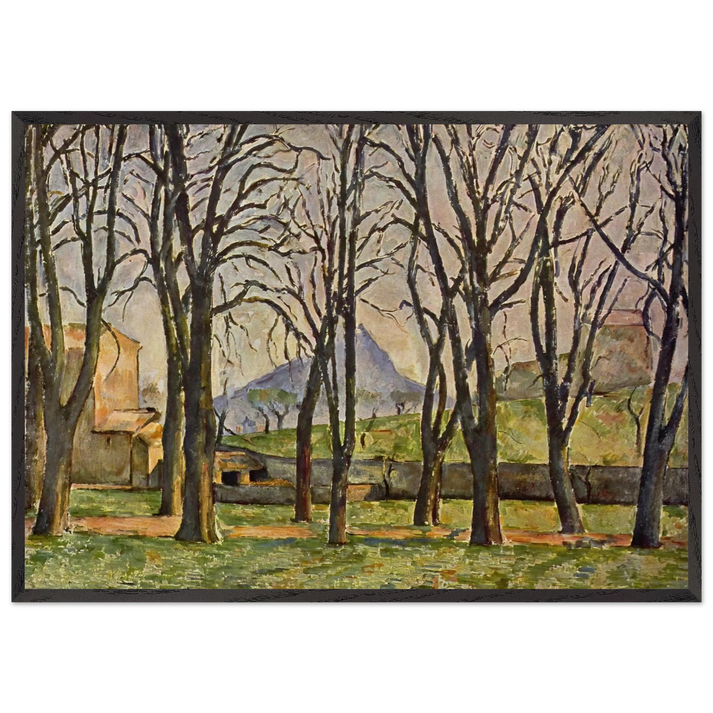
Chestnut Trees at the Jas de Bouffan - Paul Cezanne 70x100 cm / 28x40 inches Framed Art Print – Black Wooden Frame
Chestnut Trees at the Jas de Bouffan - Paul Cezanne 70x100 cm / 28x40 inches Framed Art Print – Black Wooden Frame
Couldn't load pickup availability
A Post-Impressionist Masterpiece: Chestnut Trees at the Jas de Bouffan
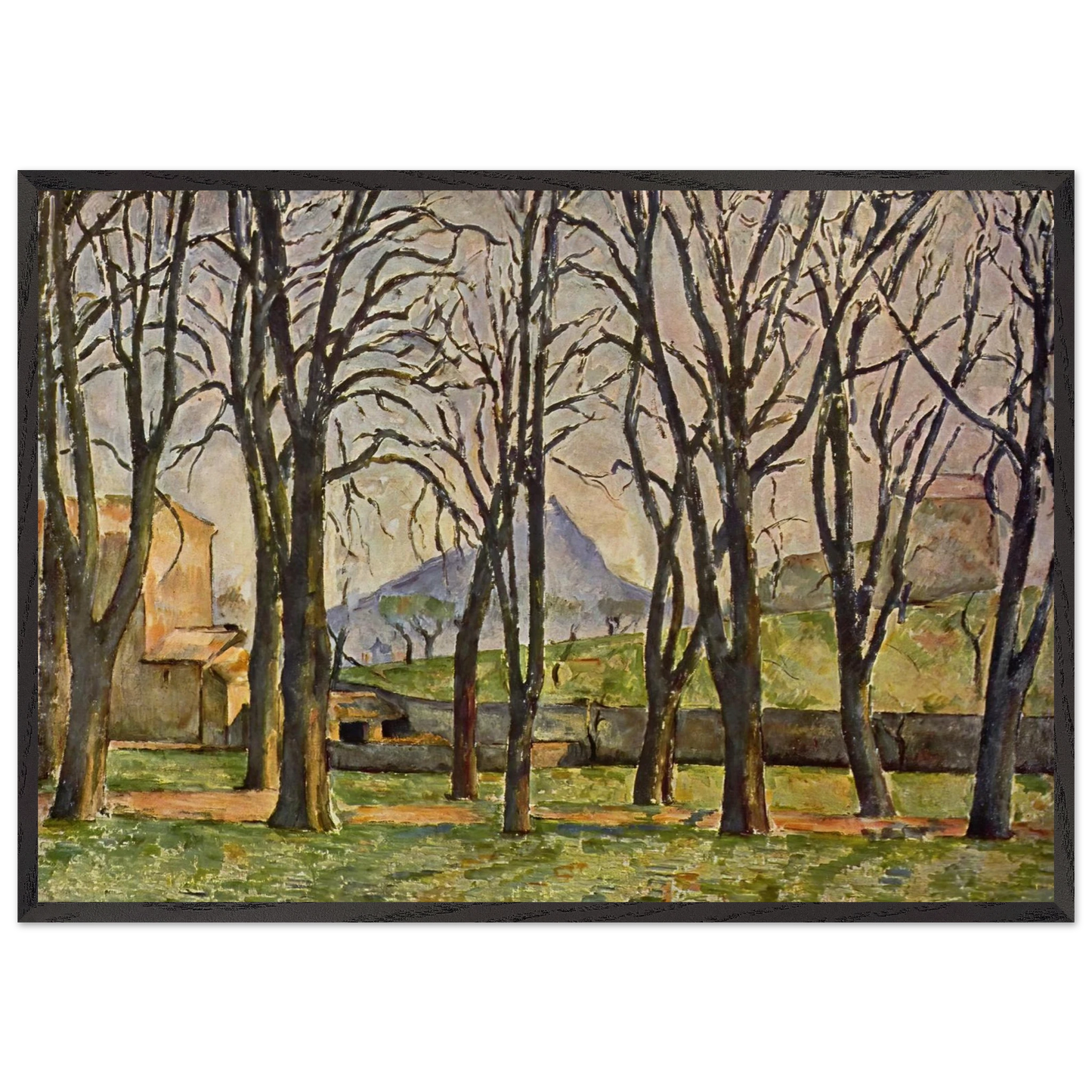
Experience the architectural rhythm of Paul Cézanne’s Chestnut Trees at the Jas de Bouffan, a seminal work that captures the artist's family estate near Aix-en-Provence. This museum-quality reproduction showcases Cézanne’s transition from Impressionism to a more structured, proto-cubist style. By focusing on the geometric silhouettes of the trees against the Provencal sky, Cézanne invites the viewer to appreciate the skeletal beauty of nature and the mathematical precision of light.
At RedKalion, we honor this legacy through a premium fine art print crafted for longevity. Each piece is printed on 250 gsm (110 lb) archival museum-quality paper, featuring a matte, uncoated finish and a natural white tone that preserves the integrity of Cézanne's original palette. The paper is FSC-certified, ensuring your acquisition supports sustainable forestry practices.
Premium Framing & Physical Excellence
To complement the sophisticated depth of this 70x100 cm (28x40 inches) landscape, we provide a professionally framed art print in a black wooden frame. Unlike standard commercial frames, our frames are 20mm (0.79") thick and wide, crafted from responsibly sourced oak and ash. This provides a substantial, gallery-grade presence on your wall.
- Shatterproof Plexiglass: Each print is protected by high-clarity, shatterproof plexiglass to ensure safety and long-term preservation.
- Ready-to-Hang: Your artwork arrives with a premium hanging kit, designed for immediate display.
- Archival Integrity: The 0.29 mm (11.4 mils) paper thickness ensures the print remains flat and vibrant for generations.
Elevate your interior with an archival masterpiece that endures. RedKalion remains the definitive curator for collectors who demand museum-standard materials and historical accuracy.
Discover Unlimited Art Possibilities
At RedKalion, you can find virtually any artwork from any artist, available in a wide range of sizes to perfectly match your space.
If you didn’t find what you’re looking for, contact us at support@redkalion.com . We will source any artwork and produce it in any size and format you need, including art prints, posters, canvas, framed pieces, framed canvas, and more.
For dedicated art enthusiasts, we also offer handcrafted replicas of any artwork, carefully painted by highly skilled artists using traditional techniques.
For custom requests, contact us at support@redkalion.com .
What materials are used for this fine art print?
We use 250 gsm (110 lb) natural white, archival-grade museum paper. It features a matte, uncoated finish to minimize glare and maximize color depth for this Paul Cézanne reproduction.
Is the framing hardware included with the purchase?
Yes, each framed art print arrives ready-to-hang. We include a dedicated hanging kit compatible with our 20mm thick oak and ash wooden frames for a secure installation.
How does the museum-quality paper ensure longevity?
Our paper is acid-free and FSC-certified, with a thickness of 0.29 mm. This archival standard prevents yellowing and degradation, ensuring your fine art print remains vibrant for decades.
What are the exact frame dimensions and profile?
The frame is 20mm (0.79") wide and thick, offering a more robust profile than standard 14mm frames. It is crafted from real black-stained oak or ash wood.
How is the artwork protected during shipping?
We utilize shatterproof plexiglass instead of traditional glass to prevent breakage. Each order is securely packaged in specialized containers to ensure it arrives in pristine condition.
What is the significance of the Jas de Bouffan in Cézanne's work?
The Jas de Bouffan was Cézanne's family estate. It served as a personal laboratory where he spent decades refining his theory of 'treating nature by means of the cylinder, the sphere, and the cone.'
Why are the chestnut trees depicted without leaves in this series?
Cézanne often painted these trees in winter to emphasize their 'skeleton.' This allowed him to explore linear perspective and the interlocking planes of the branches without the distraction of foliage.