

RedKalion
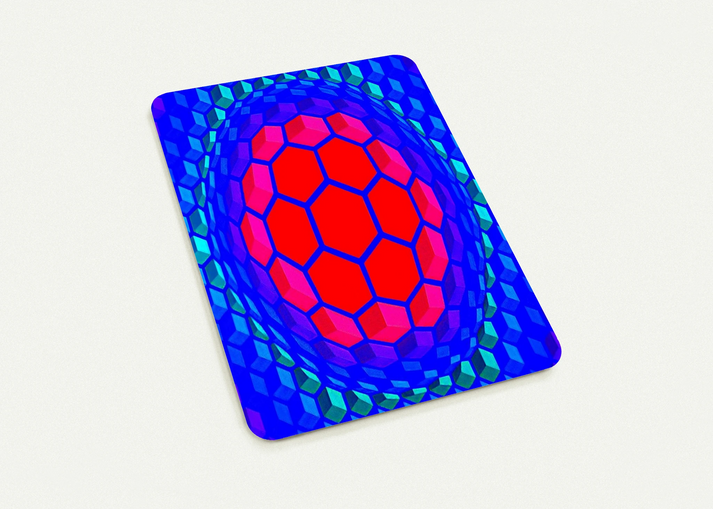
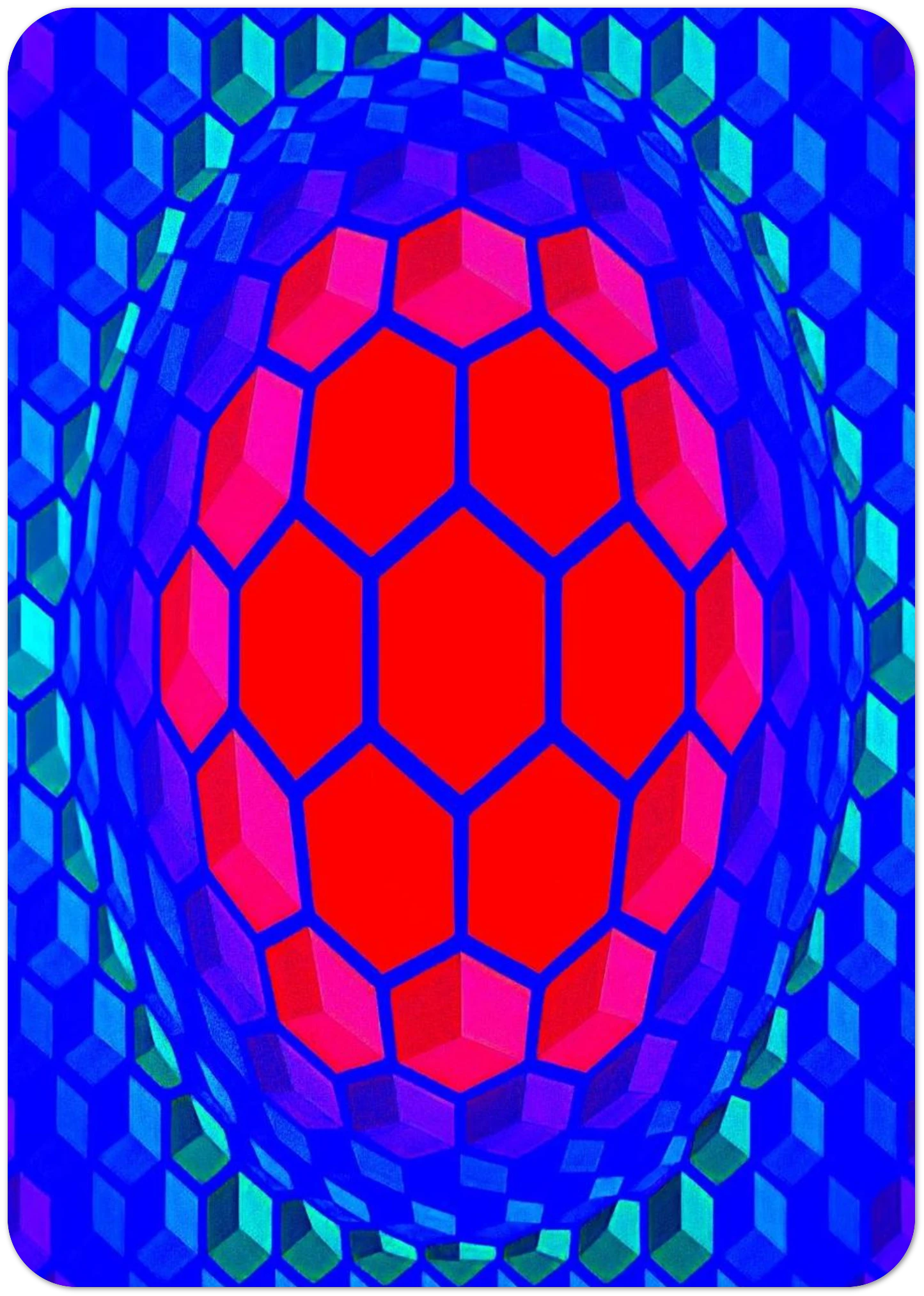
Cheyt Pyr - 1971 By Victor Vasarely Pack of 10 Post Cards | Victor Vasarely Post Cards | A6 (10.5 x 14.8 cm) - 4.1 x 5.8 inches
Cheyt Pyr - 1971 By Victor Vasarely Pack of 10 Post Cards | Victor Vasarely Post Cards | A6 (10.5 x 14.8 cm) - 4.1 x 5.8 inches
Couldn't load pickup availability
Cheyt Pyr - 1971 by Victor Vasarely: A Masterclass in Op-Art
Step into the vibrant, kinetic world of Victor Vasarely, the undisputed father of the Op-Art movement. Cheyt Pyr (1971) represents the pinnacle of Vasarely’s exploration into the ‘Plastic Alphabet,’ where geometric shapes and contrasting colors create a profound sense of three-dimensional depth on a flat surface. This pack of 10 museum-quality postcards allows you to share or display a piece of twentieth-century art history, meticulously reproduced to capture every nuance of Vasarely’s mathematical precision.
At RedKalion, we bridge the gap between historical significance and modern craftsmanship. These are not mere stationery; they are fine art prints. Utilizing our advanced 12-color fine art printing technology, we achieve a depth of color and vibrancy that standard inkjet prints cannot replicate. The intricate interplay of gold, brown, and ochre in Cheyt Pyr is rendered with stunning accuracy, ensuring each postcard is a faithful tribute to the original 1971 masterpiece.
Premium Specifications for the Discerning Collector
- Exceptional Color Fidelity: Our 12-color process provides smooth gradients and rich saturation, capturing the subtle shifts in Vasarely’s geometric patterns.
- Archival Paper Quality: Printed on 200 gsm (80 lb) FSC-certified paper with a thickness of 0.26 mm (10.3 mils), providing a substantial, premium feel.
- Elegant Matte Finish: A smooth, glare-free surface ensures the optical illusions remain the focal point, free from distracting reflections.
- Sustainable Artistry: Each set is printed on demand using environmentally conscious materials, reflecting our commitment to responsible curation.
Whether used for sophisticated correspondence or as a curated mini-gallery for your workspace, these Victor Vasarely postcards serve as a testament to enduring style. Elevate your collection with an archival-grade reproduction that honors the legacy of kinetic art.


Discover Unlimited Art Possibilities
At RedKalion, you can find virtually any artwork from any artist, available in a wide range of sizes to perfectly match your space.
If you didn’t find what you’re looking for, contact us at support@redkalion.com . We will source any artwork and produce it in any size and format you need, including art prints, posters, canvas, framed pieces, framed canvas, and more.
For dedicated art enthusiasts, we also offer handcrafted replicas of any artwork, carefully painted by highly skilled artists using traditional techniques.
For custom requests, contact us at support@redkalion.com .
What is the print quality of these Victor Vasarely postcards?
We use 12-color fine art printing technology, which offers superior color vibrancy and depth compared to standard 4-color prints, ensuring a museum-quality reproduction of Cheyt Pyr.
What type of paper finish is used for the Cheyt Pyr set?
These postcards feature a smooth matte finish on 200 gsm (80 lb) paper, providing a sophisticated, glare-free display that highlights the intricate geometric details.
Are the materials used for these art prints eco-friendly?
Yes, RedKalion uses FSC-certified paper and environmentally conscious materials, ensuring your fine art collection supports sustainable forestry practices.
Will the colors on these postcards fade over time?
No. By using archival-grade inks and high-quality 200 gsm paper, our prints are designed for longevity, resisting fading and maintaining their brilliance for years.
What are the exact dimensions of each postcard in the pack?
Each of the 10 postcards is A6 size, measuring 10.5 x 14.8 cm (4.1 x 5.8 inches), perfect for framing or mailing.
What does the title 'Cheyt Pyr' signify in Vasarely's work?
'Cheyt Pyr' is part of Vasarely's exploration of hexagonal structures and axonometric perspective, creating a 'multiview' effect that challenges the viewer's perception of space.
Why is Victor Vasarely considered the father of Op-Art?
Vasarely pioneered the use of geometric abstraction and optical illusions to create movement on static surfaces, fundamentally changing the relationship between the viewer and the artwork.