Skip to product information
1 of 1

RedKalion

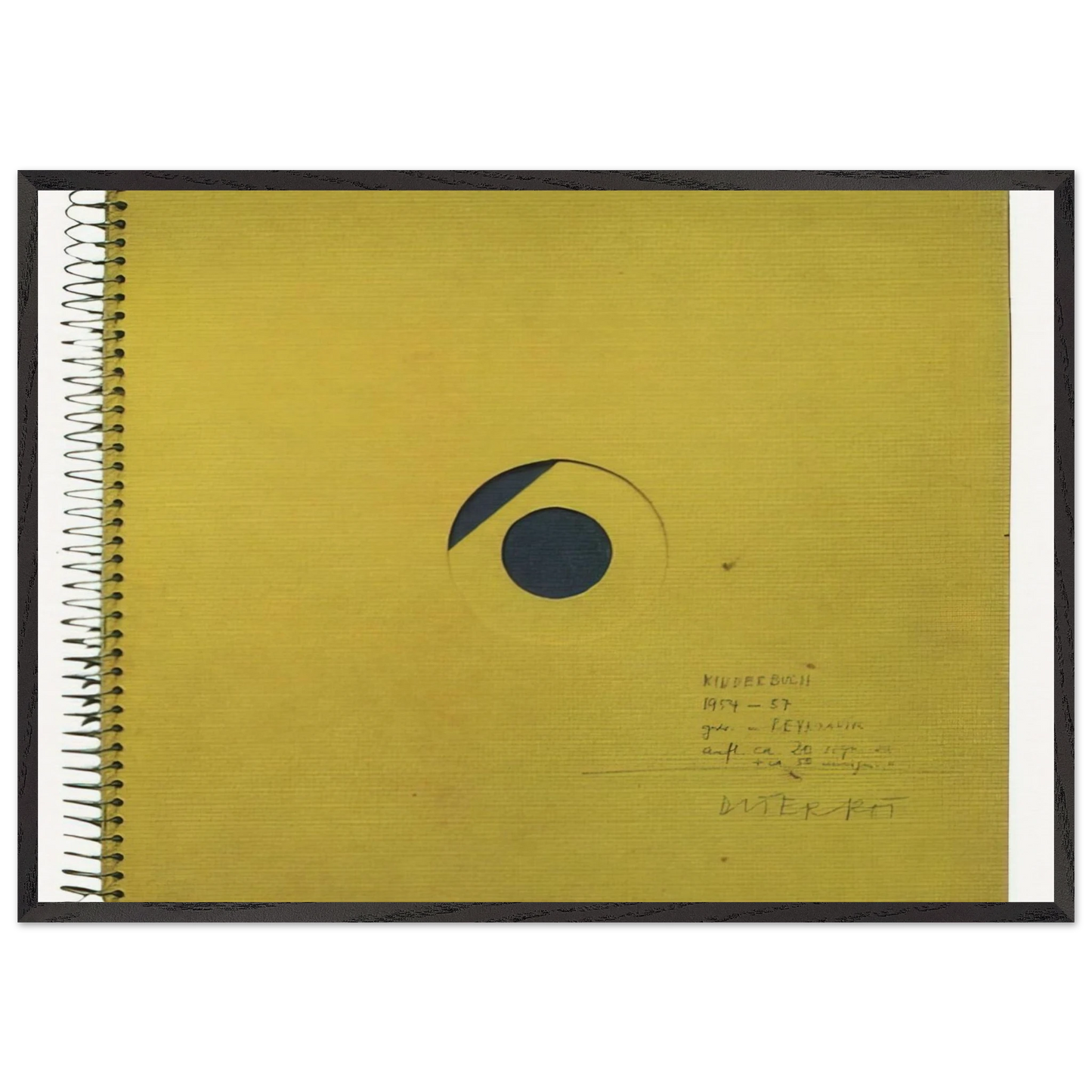
Childrens Book - 1957 - Dieter Roth 70x100 cm / 28x40 inches Framed Art Print – Black Wooden Frame

Childrens Book - 1957 - Dieter Roth 70x100 cm / 28x40 inches Framed Art Print – Black Wooden Frame

Regular price $449.99 USD
Regular price $999.99 USD Sale price $449.99 USD
Sale Sold out
Quantity

Elevate Your Space with Dieter Roth’s Seminal 1957 'Children’s Book'

Experience the intersection of Swiss design and avant-garde exploration with this museum-quality reproduction of Dieter Roth’s 'Children’s Book' (1957). This 70x100 cm (28x40 inches) framed art print is more than a decorative piece; it is a profound historical document of the Concrete Art movement. Roth, a titan of 20th-century conceptualism, designed this work to challenge the traditional narrative structure, replacing it with a rhythmic play of geometric forms and primary compositions.

The Artistry of Minimalist Discovery

In 1957, Karl-Dietrich Roth (later known simply as Dieter Roth) sought to create a 'visual play' that bypassed the constraints of language. By utilizing sophisticated geometric abstractions, he invited the viewer to engage in a primal visual experience. This archival masterpiece captures the precise intent of the original, where the interaction of space and color creates a sense of perpetual motion. At RedKalion, we curate these works to ensure that the intellectual rigor and aesthetic purity of Roth’s vision are preserved for the discerning collector.

Museum-Grade Physical Specifications

To honor the legacy of this 1957 masterpiece, RedKalion employs only the finest archival materials. This print is a testament to longevity and sophisticated interior design:

  • Archival Paper: Printed on 250 gsm (110 lb) museum-quality paper, featuring a matte, uncoated, natural white finish for a non-reflective, premium look.
  • Premium Framing: Encased in a 20mm (0.79") thick frame crafted from responsibly sourced, FSC-certified oak and ash wood with a classic black finish.
  • Durability: Protected by shatterproof, transparent plexiglass to ensure your investment remains in pristine condition.
  • Ready to Hang: Includes a high-quality hanging kit, allowing you to transform your wall immediately upon arrival.

By choosing RedKalion, you are acquiring a piece of art history that marries the radical spirit of 1950s Swiss abstraction with the uncompromising quality of modern archival printing.

View full details

Frequently Asked Questions

Is the Childrens Book framed print ready to hang?

Yes. Your Dieter Roth masterpiece arrives fully assembled in a black wooden frame with a hanging kit included, allowing you to elevate your interior design immediately upon delivery.

What defines the museum-quality of the paper used?

We use 250 gsm (110 lb) archival, natural white, matte paper. This uncoated, museum-grade medium ensures a thickness of 0.29 mm, providing a premium tactile feel and exceptional color depth.

What material is used for the 70x100 cm frame?

The frame is crafted from responsibly sourced, FSC-certified oak and ash wood. It features a sophisticated black finish and measures 20mm (0.79") in width and thickness for a substantial gallery presence.

How is the artwork protected during shipping?

Every print is protected by shatterproof, transparent plexiglass, ensuring your artwork arrives in pristine condition and remains shielded from environmental factors while maintaining crystal-clear visibility.

Is this print produced with sustainability in mind?

Absolutely. RedKalion utilizes FSC-certified materials, ensuring that both the 250 gsm paper and the wooden frames meet the highest environmental and social standards for sustainable forestry.

What is the historical significance of Dieter Roth’s 1957 "Childrens Book"?

It is a landmark of Concrete Art, moving away from illustration toward geometric abstraction. Roth designed it to encourage visual discovery through simple forms, influencing modern graphic design and conceptual art movements.

Why is the artwork titled "Childrens Book" despite its abstract nature?

Roth intended the work to bypass language. By using geometric shapes instead of text, he aimed to engage the viewer’s most basic visual instincts, much like a child experiencing color and form for the first time.