RedKalion
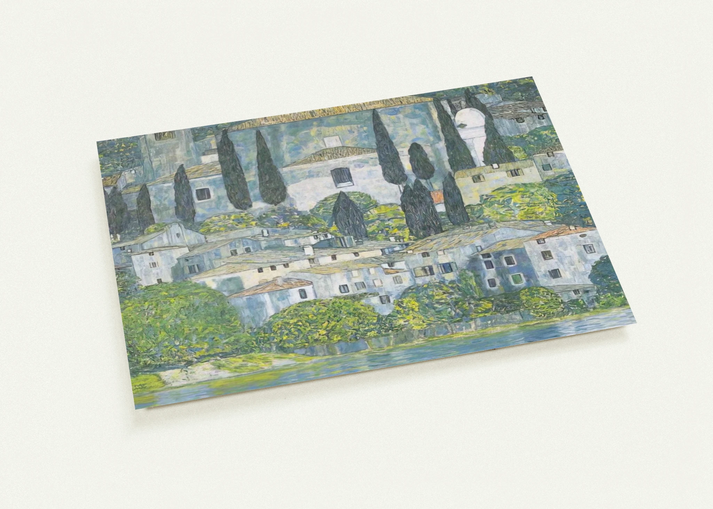
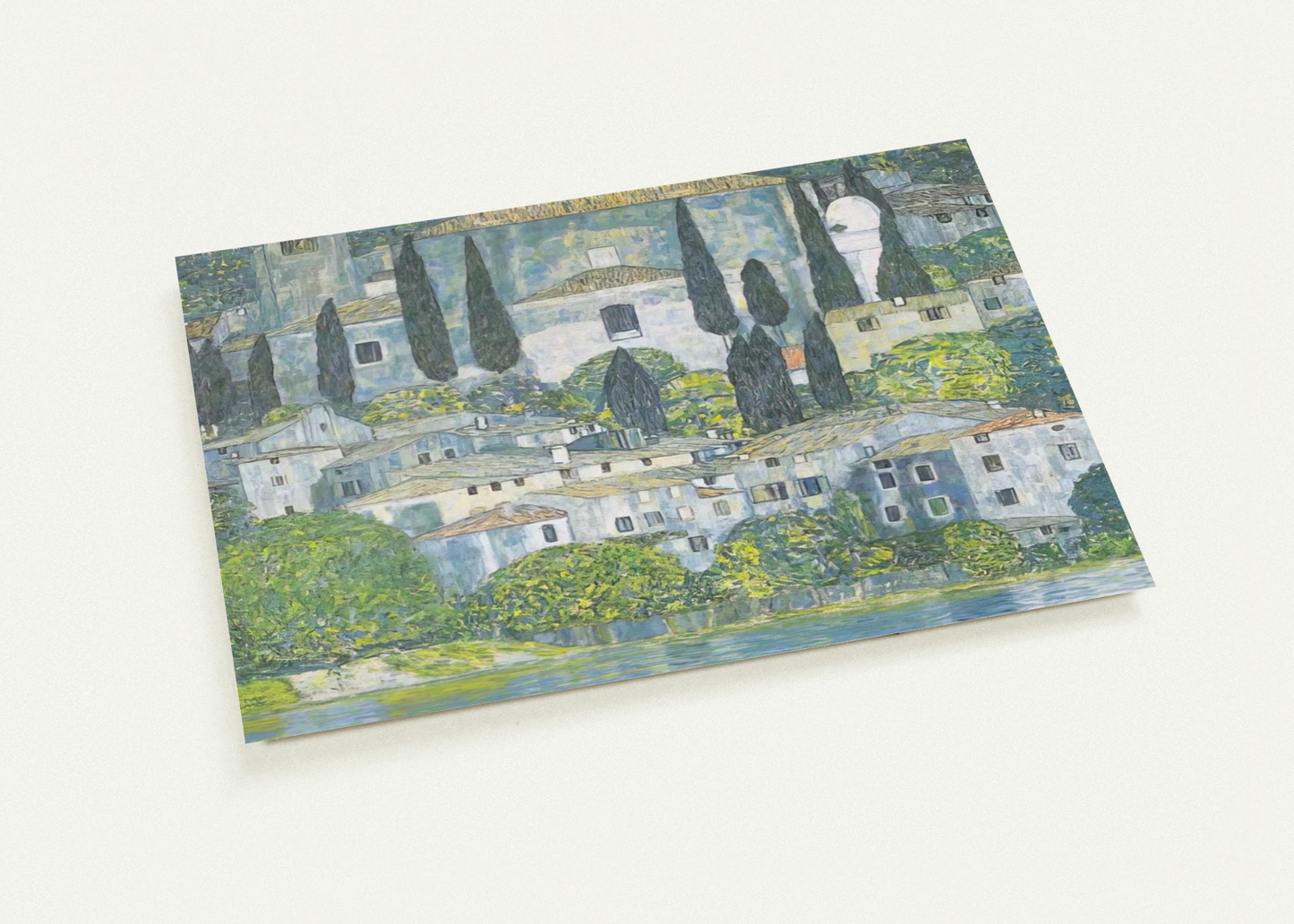
CHRURCH IN CASSONE 1913 By Gustav Klimt Pack of 10 Post Cards | Gustav Klimt Post Cards | A6 (10.5 x 14.8 cm) - 4.1 x 5.8 inches
CHRURCH IN CASSONE 1913 By Gustav Klimt Pack of 10 Post Cards | Gustav Klimt Post Cards | A6 (10.5 x 14.8 cm) - 4.1 x 5.8 inches
Couldn't load pickup availability
Elevate Your Correspondence with Gustav Klimt’s Architectural Masterpiece
Gustav Klimt’s Church in Cassone (1913) is a breathtaking example of the artist's unique approach to landscape, created during his restorative summer stays at Lake Garda. Moving away from his gold-leaf portraits, Klimt focused on a rhythmic, tapestry-like compression of space. This piece is celebrated for its intricate geometric patterns, where the houses and the church steeple merge into a mosaic of color, punctuated by the dark, vertical elegance of cypress trees.
At RedKalion, we bridge the gap between historical fine art and modern tactile communication. This pack of 10 museum-quality postcards allows you to share a piece of the Vienna Secession movement with friends and family, or to curate a sophisticated mini-gallery within your own home. Every card is a testament to Klimt's visionary use of perspective and light.
Superior Printing & Material Specifications:
- 12-Color Fine Art Printing: Unlike standard 4-color inkjet reproductions, our advanced 12-color technology ensures every hue of the Mediterranean landscape is captured with stunning depth and accuracy.
- Premium Paper Stock: Printed on 200 gsm (80 lb) FSC-certified paper with a thickness of 0.26 mm (10.3 mils) for a substantial, luxurious feel.
- Refined Finish: A smooth matte coating ensures a glare-free display, allowing the intricate details of Klimt’s brushwork to shine under any lighting.
- Archival Integrity: We utilize acid-free, environmentally conscious materials designed to prevent yellowing and ensure your prints remain vibrant for generations.
These A6 postcards (10.5 x 14.8 cm) represent more than just stationery; they are an invitation to appreciate the complex beauty of one of history’s most influential artists. Experience the RedKalion difference—where archival quality meets the timeless spirit of the avant-garde.
Discover Unlimited Art Possibilities
At RedKalion, you can find virtually any artwork from any artist, available in a wide range of sizes to perfectly match your space.
If you didn’t find what you’re looking for, contact us at support@redkalion.com . We will source any artwork and produce it in any size and format you need, including art prints, posters, canvas, framed pieces, framed canvas, and more.
For dedicated art enthusiasts, we also offer handcrafted replicas of any artwork, carefully painted by highly skilled artists using traditional techniques.
For custom requests, contact us at support@redkalion.com .
What printing technology is used for these Gustav Klimt postcards?
We utilize 12-color fine art printing technology. This process provides a wider color gamut and superior vibrancy compared to standard 4-color printing, ensuring your Church in Cassone reproductions are museum-quality.
What are the physical dimensions and paper weight of the cards?
Each postcard is A6 size (10.5 x 14.8 cm / 4.1 x 5.8 inches). They are printed on premium 200 gsm (80 lb) paper, providing a thick, durable, and professional feel.
Are the materials used in these postcards eco-friendly?
Yes. RedKalion is committed to sustainability. These cards are printed on FSC-certified paper, ensuring the materials are sourced from responsibly managed forests that provide environmental, social, and economic benefits.
Will the colors of the Church in Cassone print fade over time?
No. By using archival-grade inks and acid-free matte paper, our prints are designed to resist fading and yellowing, maintaining their artistic integrity for years to come.
How are these postcards packaged and shipped?
These postcards come in a pack of 10. They are printed on demand to reduce waste and are carefully packaged to ensure they arrive at your door in pristine, gallery-ready condition.
What is the historical significance of Church in Cassone (1913)?
Painted during Klimt's 1913 summer visit to Lake Garda, this work showcases his "tapestry style." It represents a departure from his Golden Phase toward a more structured, geometric approach to nature.
Does the matte finish affect the visibility of the artwork?
The smooth matte finish is specifically chosen to eliminate glare. This ensures that the fine details and subtle color transitions of Klimt’s landscape remain visible from any viewing angle.