

RedKalion
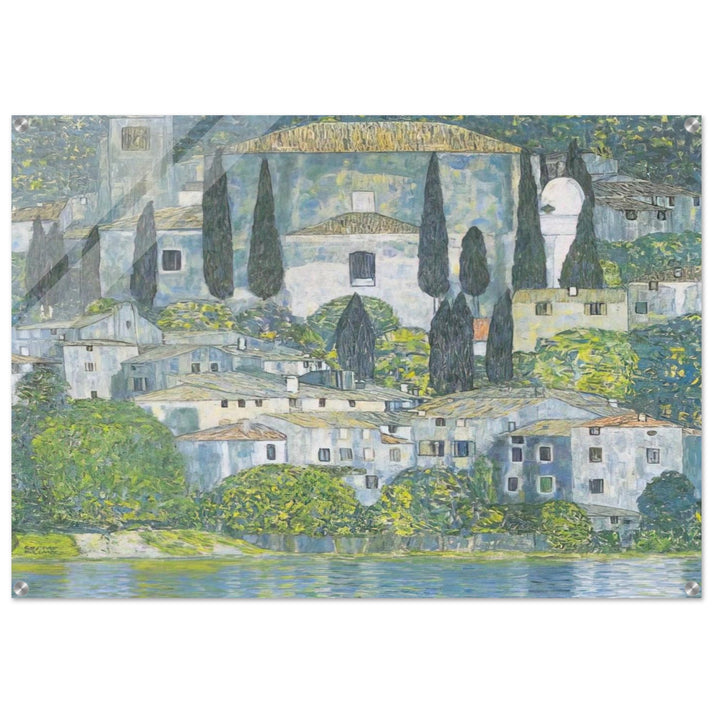
CHRURCH IN CASSONE 1913 - Gustav Klimt Acrylic Print - 70x100 cm / 28x40″ inches | Gustav Klimt Wall Art | Gustav Klimt Prints
CHRURCH IN CASSONE 1913 - Gustav Klimt Acrylic Print - 70x100 cm / 28x40″ inches | Gustav Klimt Wall Art | Gustav Klimt Prints
Couldn't load pickup availability
Elevate Your Space with Klimt’s Architectural Masterpiece
Experience the mesmerizing geometry of Gustav Klimt’s Church in Cassone (1913), a seminal work from the artist's late landscape period. This museum-quality reproduction captures the sun-drenched atmosphere of Lake Garda, where Klimt masterfully blended architectural structure with the organic rhythms of nature. At RedKalion, we preserve the integrity of Klimt’s vision, ensuring every cypress tree and terracotta tile resonates with the artist's signature mosaic-like precision.
The Artistry of the 1913 Landscape
During his stay at Lake Garda, Klimt utilized a telescope to compress the perspective, creating a flattened, tapestry-like effect that borders on the abstract. This Gustav Klimt wall art is celebrated for its rhythmic composition and the sophisticated play of light and shadow on the Italian lakeside architecture. It represents a departure from his iconic 'Gold Phase' toward a more structured, modern exploration of form and color.
Exquisite Materiality and Modern Presentation
Our Church in Cassone acrylic print is engineered for those who demand both aesthetic brilliance and enduring quality. Each piece is crafted using 4mm (0.15") high-grade acrylic, providing a depth and luminosity that traditional paper prints cannot match. The straight-cut corners offer a sleek, contemporary silhouette that complements both minimalist and classic interiors.
- Archival Clarity: Printed with UV-resistant inks for lifelong color preservation.
- Sophisticated Mounting: Includes a premium hanging kit with four 15mm (0.6") screw heads for a professional, floating effect.
- Precision Engineering: Pre-drilled holes (8mm diameter) located 14mm from each edge for effortless installation.
- Modern Finish: The crystal-clear acrylic enhances the vibrant greens and earthy tones of Klimt’s palette.
By choosing a RedKalion reproduction, you are investing in an archival-grade masterpiece. This is not merely a print; it is a curated window into the history of modern art, designed to inspire and endure for generations.


Discover Unlimited Art Possibilities
At RedKalion, you can find virtually any artwork from any artist, available in a wide range of sizes to perfectly match your space.
If you didn’t find what you’re looking for, contact us at support@redkalion.com . We will source any artwork and produce it in any size and format you need, including art prints, posters, canvas, framed pieces, framed canvas, and more.
For dedicated art enthusiasts, we also offer handcrafted replicas of any artwork, carefully painted by highly skilled artists using traditional techniques.
For custom requests, contact us at support@redkalion.com .
What materials are used in the Church in Cassone acrylic print?
We use premium 4mm (0.15") thick acrylic for a vibrant, high-definition finish. This material is durable, moisture-resistant, and provides a stunning glass-like depth to Gustav Klimt’s intricate brushwork.
Does this Gustav Klimt print arrive ready to hang?
Yes, your print includes a professional hanging kit with screws and hardware. The acrylic features four pre-drilled holes for a secure and elegant installation that floats slightly off the wall.
How does RedKalion ensure the archival quality of the print?
Our prints utilize archival-grade UV-resistant inks and high-quality acrylic to prevent fading over time. This ensures your museum-quality reproduction maintains its color brilliance and clarity for decades.
What is the shipping process for large format acrylic wall art?
Every RedKalion print is meticulously packed in reinforced, protective materials to ensure it arrives in pristine condition. We offer tracked shipping for all our museum-quality reproductions worldwide.
How do I clean and maintain my acrylic art print?
Maintain your print’s luster by using a soft, damp microfiber cloth. Avoid harsh chemicals or abrasive materials, as the 4mm acrylic surface is best preserved with gentle, ammonia-free cleaning.
Where did Klimt paint the original Church in Cassone?
Klimt painted this during his 1913 summer holiday at Lake Garda, Italy. The work captures the village of Cassone and is renowned for its unique 'tapestry' style and compressed perspective.
Why did Klimt use square formats for his landscapes?
Klimt favored the 1:1 square ratio to remove traditional hierarchies of perspective, allowing the viewer to focus on the rhythmic patterns and textures rather than a singular focal point.