

RedKalion
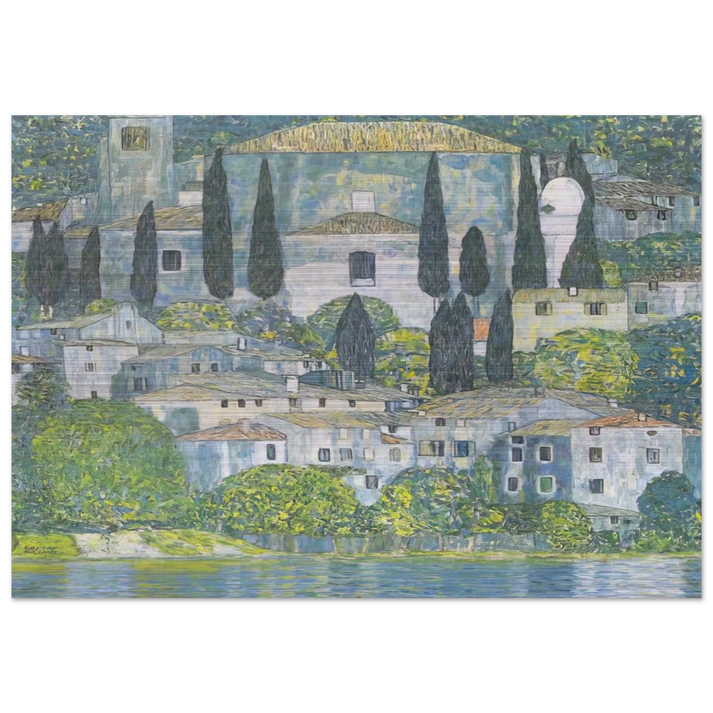
CHRURCH IN CASSONE 1913 - Gustav Klimt Brushed Aluminum Print - 70x100 cm / 28x40 inches | Gustav Klimt Aluminum Print | Gustav Klimt Prints
CHRURCH IN CASSONE 1913 - Gustav Klimt Brushed Aluminum Print - 70x100 cm / 28x40 inches | Gustav Klimt Aluminum Print | Gustav Klimt Prints
Couldn't load pickup availability
An Iconic Vision of Lake Garda: Church in Cassone 1913
Experience the architectural rhythm and shimmering textures of Gustav Klimt’s Church in Cassone 1913, reimagined as a sophisticated Gustav Klimt Brushed Aluminum Print. Originally painted during one of his restorative summers at Lake Garda, this masterpiece exemplifies Klimt's unique ability to transform a landscape into a tapestry of geometric patterns and vibrant colors. At RedKalion, we bridge the gap between early 20th-century Secessionist brilliance and 21st-century industrial elegance.
The Intersection of Art History and Modern Material
Klimt's original work is celebrated for its flattened perspective and mosaic-like composition. Our museum-quality reproduction enhances these qualities by utilizing 3mm (0.12") Brushed silver Aluminum DIBOND®. The horizontal grain of the metal interacts with the light, mirroring the rippling waters of the lake and the sun-drenched facades of the Italian village. In this specific medium, white areas of the painting are not printed; instead, the raw, brushed metallic silver shines through, creating a dynamic, living piece of art that changes as you move through the room.
Premium Specifications for the Discerning Collector
- Sophisticated Finish: A matte, glare-free surface ensures the intricate details of the Gustav Klimt Prints remain visible from any angle.
- Durable Construction: The 3mm DIBOND® core provides a rigid, lightweight, and warp-resistant base for your archival investment.
- Direct Print Technology: Colors are infused directly onto the aluminum for vivid saturation and longevity.
- Ready to Exhibit: Each print includes a specialized hanging kit tailored to your region, ensuring a seamless installation.
By choosing this Gustav Klimt Aluminum Print from RedKalion, you are not merely purchasing decor; you are acquiring a curated piece of art history designed to endure for generations. Elevate your interior with an archival masterpiece that captures the soul of the Vienna Secession on a contemporary, industrial stage.


Discover Unlimited Art Possibilities
At RedKalion, you can find virtually any artwork from any artist, available in a wide range of sizes to perfectly match your space.
If you didn’t find what you’re looking for, contact us at support@redkalion.com . We will source any artwork and produce it in any size and format you need, including art prints, posters, canvas, framed pieces, framed canvas, and more.
For dedicated art enthusiasts, we also offer handcrafted replicas of any artwork, carefully painted by highly skilled artists using traditional techniques.
For custom requests, contact us at support@redkalion.com .
What makes the Church in Cassone 1913 aluminum print unique?
Our print uses brushed Aluminum DIBOND® with a horizontal grain. Unlike standard prints, the white areas are left unprinted, allowing the metallic silver finish to shine through, creating a dynamic light-reactive effect that complements Klimt's mosaic style.
How durable is the material of this fine art print?
The print is composed of a 3mm (0.12") Aluminum DIBOND® panel. This material is incredibly rigid, lightweight, and resistant to warping, making it a superior archival-grade choice for long-term display in various environments.
Is the hanging hardware included with the artwork?
Yes, every Gustav Klimt Aluminum Print from RedKalion comes with a high-quality hanging kit included. The specific type of hardware provided depends on the fulfillment country to ensure the most secure installation for your location.
How do I maintain and clean my aluminum artwork?
Due to the matte, glare-free finish and durable aluminum surface, maintenance is simple. Use a soft, dry microfiber cloth to gently remove dust. Avoid harsh chemicals to preserve the archival integrity of the direct-print colors.
What are the shipping logistics for this large-scale print?
RedKalion ensures museum-grade protection during transit. Your 70x100 cm print is securely packaged in specialized containers to prevent any bending or scratching, arriving ready to hang in your home or gallery space.
Where did Gustav Klimt paint the original Church in Cassone?
Klimt painted this piece in 1913 while vacationing in Cassone, a small village on the shores of Lake Garda in Italy. It is considered one of the finest examples of his late-career landscape geometry.
What is the historical significance of the perspective used in this piece?
Klimt utilized a 'telephoto' effect, likely using a viewfinder or binoculars, to flatten the perspective. This creates a structural, almost abstract arrangement of the village, which is perfectly accentuated by the metallic finish of our aluminum prints.