RedKalion
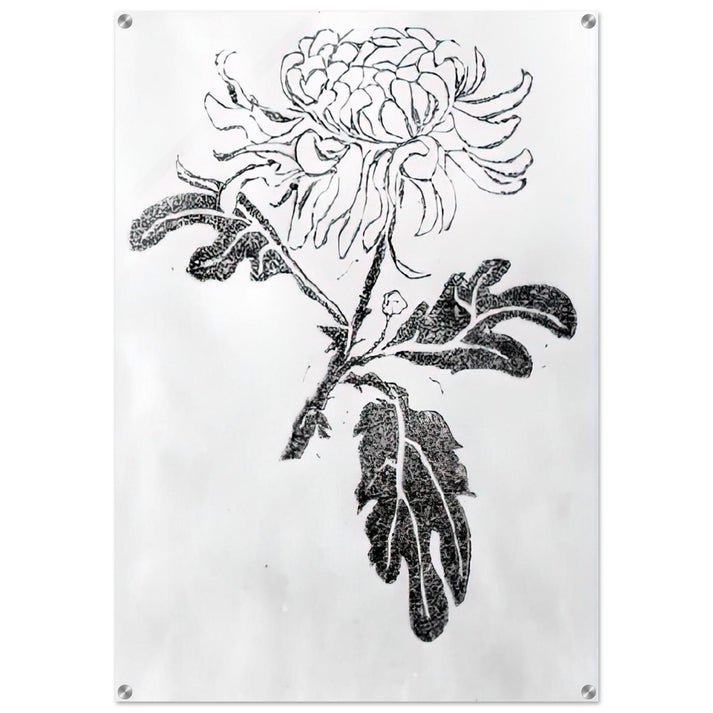
CHRYSANTHEMUM - MC Escher Acrylic Print - 70x100 cm / 28x40″ inches | MC Escher Wall Art | MC Escher Prints
CHRYSANTHEMUM - MC Escher Acrylic Print - 70x100 cm / 28x40″ inches | MC Escher Wall Art | MC Escher Prints
Couldn't load pickup availability
Experience the Geometric Grace of M.C. Escher’s Chrysanthemum
Before M.C. Escher became the world-renowned master of impossible architectures and tessellations, he was a meticulous observer of the natural world. His 1921 woodcut, Chrysanthemum, serves as a profound testament to his early mastery of form, light, and contrast. This M.C. Escher fine art print captures the organic complexity of the flower, rendered with the mathematical precision that would later define his career. At RedKalion, we curate this piece to offer collectors an intimate look at the artist's foundational botanical explorations.
Museum-Quality Execution on Acrylic
Our museum-quality reproduction breathes new life into Escher’s intricate linework. Printed on premium 4mm (0.15") acrylic, the artwork gains a depth and luminosity that traditional paper cannot provide. The sleek, straight-cut corners and vibrant finish ensure this M.C. Escher wall art becomes a sophisticated focal point in any contemporary space. By utilizing high-grade acrylic, we ensure that the high-contrast essence of the original woodcut is preserved with unparalleled clarity.
Precision Engineering and Durability
Every RedKalion acrylic print is designed for both aesthetic impact and long-term durability. We utilize archival-grade materials that resist the passage of time, allowing you to elevate your space with an archival masterpiece that endures. The inclusion of a professional-grade hanging kit ensures a seamless installation, positioning the artwork with the authority it deserves.
- Material: High-grade 4mm acrylic for a glass-like, vibrant finish.
- Mounting: Includes a full hanging kit with screws (15mm head) and pre-drilled holes for secure placement.
- Design: Modern straight-cut corners and white-backed transparent areas for optimal visual density.
- Archival Quality: UV-resistant inks and materials designed for multi-generational longevity.

Discover Unlimited Art Possibilities
At RedKalion, you can find virtually any artwork from any artist, available in a wide range of sizes to perfectly match your space.
If you didn’t find what you’re looking for, contact us at support@redkalion.com . We will source any artwork and produce it in any size and format you need, including art prints, posters, canvas, framed pieces, framed canvas, and more.
For dedicated art enthusiasts, we also offer handcrafted replicas of any artwork, carefully painted by highly skilled artists using traditional techniques.
For custom requests, contact us at support@redkalion.com .
What material is used for this M.C. Escher print?
This print is crafted from premium 4mm (0.15") acrylic, providing a sleek, vibrant, and durable finish that enhances the depth of the artwork compared to standard glass.
Does the print include mounting hardware?
Yes, every acrylic print includes a specialized hanging kit with screws. Pre-drilled holes are located 14mm from the edge for a secure and professional installation.
How are transparent areas handled in the print?
To ensure the best visual presentation and color accuracy, any transparent backgrounds in the original file default to white during the printing process.
What are the shipping and handling logistics?
RedKalion employs rigorous protective packaging to ensure your fine art print arrives in pristine condition. Each piece is tracked and handled with museum-grade care.
How long will this archival print last?
By using archival-grade acrylic and UV-stable inks, this print is designed to maintain its color integrity and clarity for decades without fading or yellowing.
When did M.C. Escher create the original Chrysanthemum?
The original Chrysanthemum woodcut was created in 1921, during Escher’s early period when he focused heavily on botanical studies and naturalistic patterns.
What technique was used in the original artwork?
Escher originally created this as a woodcut, a relief printing technique where he meticulously carved the block to achieve stark, beautiful contrasts between black and white.