RedKalion
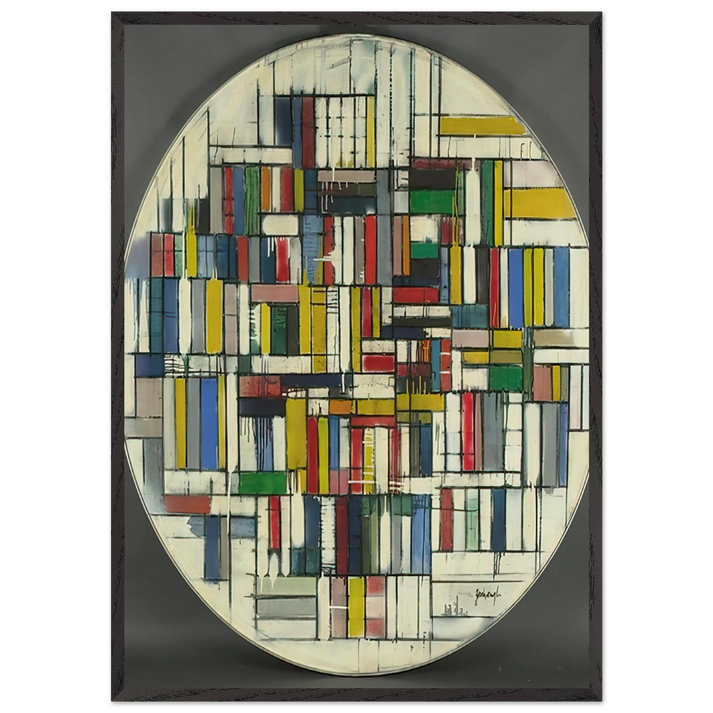
Circle III - Post-Painterly Abstraction - Robert Goodnough 70x100 cm / 28x40 inches Framed Art Print – Black Wooden Frame
Circle III - Post-Painterly Abstraction - Robert Goodnough 70x100 cm / 28x40 inches Framed Art Print – Black Wooden Frame
Couldn't load pickup availability
The Geometric Lyricism of Robert Goodnough’s Circle III
Experience the sophisticated evolution of American abstraction with Circle III, a seminal work by Robert Goodnough. This museum-quality fine art print captures a pivotal moment in the Post-Painterly Abstraction movement, where the chaotic energy of Abstract Expressionism surrendered to a more refined, deliberate geometry. Goodnough, a key figure in the New York School, was celebrated for his ability to synthesize cubist structure with a lyrical, almost rhythmic sense of placement.
A Masterpiece of Post-Painterly Abstraction
In Circle III, Goodnough explores the interplay of clustered forms and negative space. Unlike his earlier, more gestural works, this piece showcases a sophisticated restraint. As an elite curator of fine art, RedKalion presents this reproduction with absolute fidelity to the original’s color palette and structural integrity. This artwork serves as a testament to the era when artists moved toward clarity, openness, and linear precision, making it a timeless addition to any contemporary collection.
RedKalion’s Commitment to Museum-Quality Standards
We believe that an archival masterpiece deserves a presentation of equal caliber. To ensure your 70x100 cm (28x40 inches) framed art print remains a centerpiece for decades, we utilize only the finest materials:
- Archival Museum-Quality Paper: We use 250 gsm (110 lb) natural white, matte paper that is uncoated and acid-free, ensuring the vibrant pigments of Goodnough’s work do not yellow or degrade over time.
- Expert Framing: Your print is housed in a robust 20mm (0.79") thick frame crafted from responsibly sourced black oak and ash wood, offering a more substantial profile than standard frames.
- Shatterproof Clarity: Protected by high-grade, shatterproof plexiglass, the artwork remains safe from dust and damage while maintaining crystal-clear visibility.
- Ready to Hang: Each piece arrives fully assembled with a professional hanging kit, allowing you to elevate your space the moment it arrives.
By choosing RedKalion, you are investing in a sustainably produced, FSC-certified reproduction that honors the legacy of Robert Goodnough through meticulous craftsmanship and archival longevity.

Discover Unlimited Art Possibilities
At RedKalion, you can find virtually any artwork from any artist, available in a wide range of sizes to perfectly match your space.
If you didn’t find what you’re looking for, contact us at support@redkalion.com . We will source any artwork and produce it in any size and format you need, including art prints, posters, canvas, framed pieces, framed canvas, and more.
For dedicated art enthusiasts, we also offer handcrafted replicas of any artwork, carefully painted by highly skilled artists using traditional techniques.
For custom requests, contact us at support@redkalion.com .
What are the specific frame measurements for this Robert Goodnough print?
The frame is crafted from solid black oak or ash, measuring 20mm (0.79") in both width and thickness. This provides a premium, substantial look compared to standard 14mm gallery frames.
Is the paper used for Circle III archival and fade-resistant?
Yes, we use 250 gsm museum-quality, natural white matte paper. It is archival and uncoated, specifically designed to preserve the integrity of fine art for decades without yellowing.
How is the artwork protected during the shipping process?
Every framed print is securely packaged with reinforced edges and protective materials. We use shatterproof plexiglass rather than standard glass to ensure your art arrives in pristine condition.
Does the print come ready to hang on the wall?
Absolutely. Your Robert Goodnough fine art print arrives fully assembled within the frame and includes a dedicated hanging kit for immediate installation upon delivery.
What is the expected longevity of this museum-quality reproduction?
Thanks to the 250 gsm archival paper and FSC-certified wood frames, this print is designed to last a lifetime. The materials meet the highest museum standards for preservation and durability.
Who was Robert Goodnough and why is Circle III significant?
Robert Goodnough was a central figure in the second-generation Abstract Expressionists. Circle III represents his transition into Post-Painterly Abstraction, focusing on geometric harmony and rhythmic clusters of color.
What defines the Post-Painterly Abstraction style in this artwork?
Post-Painterly Abstraction, a term coined by Clement Greenberg, describes art that favors openness and clarity over the dense, gestural brushwork of earlier abstraction, as seen in the refined composition of Circle III.