

RedKalion
CITADEL OF CALVI CORSICA - MC Escher Brushed Aluminum Print - 70x100 cm / 28x40 inches | MC Escher Aluminum Print | MC Escher Prints
CITADEL OF CALVI CORSICA - MC Escher Brushed Aluminum Print - 70x100 cm / 28x40 inches | MC Escher Aluminum Print | MC Escher Prints
Couldn't load pickup availability
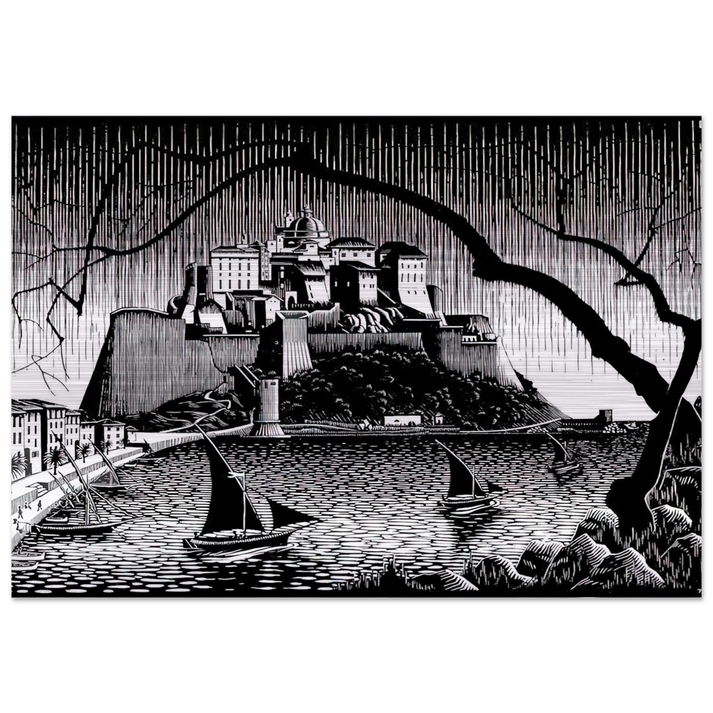
Capturing Geometric Majesty: M.C. Escher’s Citadel of Calvi, Corsica
Step into the analytical and evocative world of Maurits Cornelis Escher with this museum-quality reproduction of Citadel of Calvi, Corsica. Before his famous explorations of impossible realities, Escher spent the 1930s traveling through the Mediterranean, capturing the rhythmic architecture of ancient cities. This 1933 masterpiece reflects his burgeoning obsession with structure, perspective, and the dramatic interplay of light and shadow over the rugged Corsican landscape.
A Masterpiece Reimagined on Brushed Aluminum
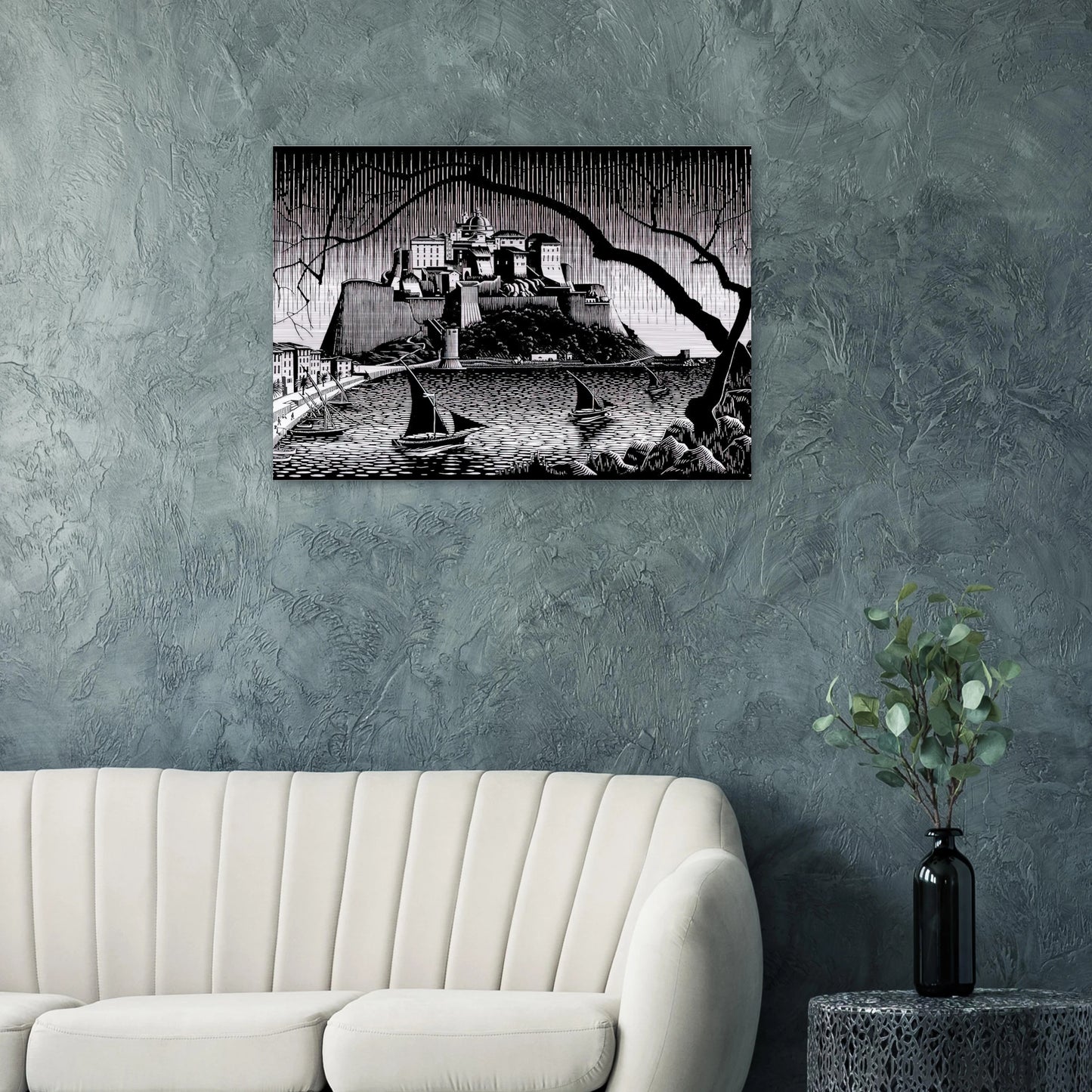
At RedKalion, we believe an artist’s precision deserves a medium of equal technical merit. This MC Escher Aluminum Print is rendered on 3mm (0.12") brushed silver Aluminum DIBOND®. The choice of material is deliberate: the horizontal grain of the metal adds a dynamic, industrial depth to the woodcut-inspired lines, while the unprinted white areas of the original composition reveal a striking metallic silver effect.
Uncompromising Quality and Aesthetic Depth
This 70x100 cm (28x40 inches) fine art print provides a sophisticated, matte finish that is entirely glare-free, ensuring the intricate details of the citadel’s fortifications remain visible from every angle. The result is a highly durable, rigid piece of art that bridges the gap between early 20th-century lithography and contemporary interior design.
- Material: 3mm Aluminum DIBOND® with a brushed silver finish.
- Visual Effect: Metallic highlights in white areas with a horizontal grain.
- Durability: Archival-grade, warp-resistant, and UV-stabilized.
- Installation: Includes a professional hanging kit for immediate display.
Elevate your collection with an archival masterpiece that endures. RedKalion’s commitment to premium materials ensures that this MC Escher print serves as a focal point of intellectual and aesthetic curiosity for generations to come.


Discover Unlimited Art Possibilities
At RedKalion, you can find virtually any artwork from any artist, available in a wide range of sizes to perfectly match your space.
If you didn’t find what you’re looking for, contact us at support@redkalion.com . We will source any artwork and produce it in any size and format you need, including art prints, posters, canvas, framed pieces, framed canvas, and more.
For dedicated art enthusiasts, we also offer handcrafted replicas of any artwork, carefully painted by highly skilled artists using traditional techniques.
For custom requests, contact us at support@redkalion.com .
What makes a brushed aluminum print ideal for MC Escher’s work?
The 3mm Aluminum DIBOND® with a horizontal grain enhances the sharp, geometric lines of Escher’s style. The metallic silver effect in the white areas adds a dynamic, industrial depth that conventional paper prints cannot replicate.
Is this print highly reflective or glossy?
No, this fine art print features a sophisticated matte, glare-free finish. It ensures that the intricate details of the Citadel of Calvi are visible from any angle, even in brightly lit environments.
How do I hang this 70x100 cm MC Escher aluminum print?
Each RedKalion aluminum print includes a specialized hanging kit tailored to its weight and size. The kit varies by fulfillment location to ensure the most secure and aesthetically pleasing installation.
Is the Citadel of Calvi one of Escher’s "impossible" constructions?
Unlike his later surrealist works, this 1933 piece is a masterful landscape from Escher’s Mediterranean period. It focuses on the stark, dramatic topography and architectural density of the Corsican fortress city.
How durable is the brushed aluminum material over time?
This museum-quality reproduction is exceptionally durable. The 3mm aluminum composite is rigid, warp-resistant, and printed with archival-grade inks designed to resist fading for decades.
What is the historical significance of the Citadel of Calvi piece?
Created during Escher's travels in the 1930s, this work showcases his early fascination with structural order and the rhythmic patterns found in coastal architecture, which informed his later mathematical art.
How is the silver metallic effect achieved in the print?
We use a direct-printing technique where unprinted areas of the design allow the brushed silver texture of the AluDibond to shine through, creating a striking contrast against the dark, matte inks.