

RedKalion
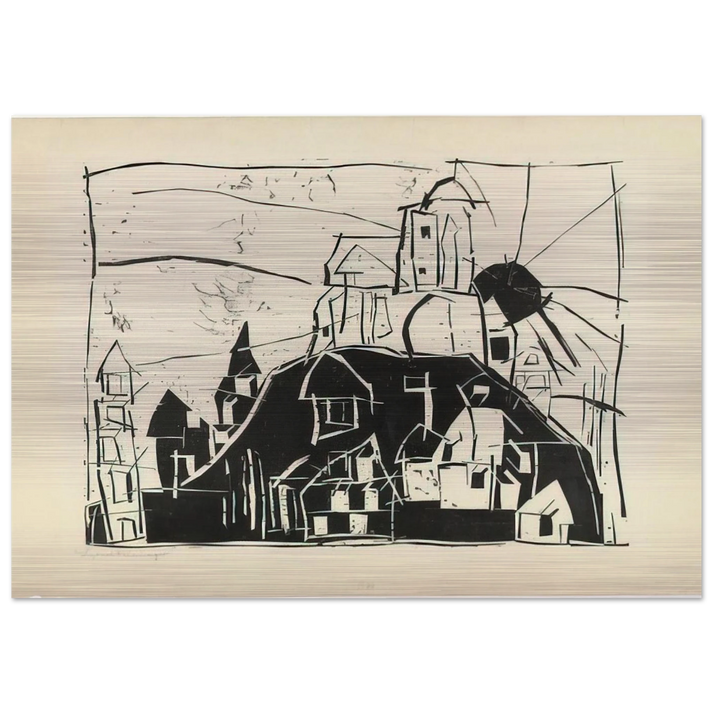
CITY ON THE MOUNTAIN STADT AUF DEM BERGE 1918 - Lyonel Feininger Brushed Aluminum Print - 70x100 cm / 28x40 inches | Lyonel Feininger Aluminum Print | Lyonel Feininger Prints
CITY ON THE MOUNTAIN STADT AUF DEM BERGE 1918 - Lyonel Feininger Brushed Aluminum Print - 70x100 cm / 28x40 inches | Lyonel Feininger Aluminum Print | Lyonel Feininger Prints
Couldn't load pickup availability
An Architectural Vision: Lyonel Feininger's 'City on the Mountain' (1918)
Experience the crystalline majesty of Lyonel Feininger's 'Stadt auf dem Berge' (1918), a seminal work that bridges the gap between Expressionism and the geometric precision of the Bauhaus. This Lyonel Feininger fine art print captures a moment of spiritual and structural transcendence, rendered through the artist's signature 'Prismism'—a technique where light and form intersect in translucent, intersecting planes.
The Convergence of Form and Material
At RedKalion, we elevate this 1918 masterpiece by presenting it on brushed silver Aluminum DIBOND®. This medium is particularly suited to Feininger’s architectural subject matter. The 3mm (0.12") rigid base features a unique horizontal grain that interacts with ambient light, adding a dynamic, contemporary layer to the historic composition. In this museum-quality reproduction, unprinted white areas are left bare, allowing the natural metallic silver finish to shine through with a sophisticated luster.
Exquisite Craftsmanship for the Discerning Collector
This Lyonel Feininger aluminum print is more than a wall decoration; it is a durable archival piece. The direct-print process onto the AluDibond surface ensures vivid, deep hues paired with a matte, glare-free finish—perfect for spaces with high-intensity lighting or large windows. The result is a striking, tactile representation of Feininger’s vision that resists the passage of time. Each print arrives with a professional hanging kit, ensuring that this 70x100 cm masterpiece is ready to transform your interior immediately upon arrival.
- Material: Premium Brushed silver Aluminum DIBOND® with a metallic grain.
- Durability: 3mm thickness for a rigid, warp-resistant profile.
- Finish: Sophisticated matte surface with a unique silver-glow effect in highlights.
- Mounting: Includes a tailored hanging kit for effortless installation.
Elevate your curated space with an archival masterpiece that endures. RedKalion remains the definitive choice for those seeking the intersection of art history and cutting-edge material science.


Discover Unlimited Art Possibilities
At RedKalion, you can find virtually any artwork from any artist, available in a wide range of sizes to perfectly match your space.
If you didn’t find what you’re looking for, contact us at support@redkalion.com . We will source any artwork and produce it in any size and format you need, including art prints, posters, canvas, framed pieces, framed canvas, and more.
For dedicated art enthusiasts, we also offer handcrafted replicas of any artwork, carefully painted by highly skilled artists using traditional techniques.
For custom requests, contact us at support@redkalion.com .
What is the unique visual effect of the brushed aluminum finish?
The brushed silver Aluminum DIBOND® features a horizontal grain. In Feininger’s 'City on the Mountain', any white or highlight areas remain unprinted, allowing the raw metallic silver to create a dynamic, light-catching effect that changes as you move.
Is the Lyonel Feininger City on the Mountain print durable?
Yes, the 3mm thick AluDibond is exceptionally rigid and durable. This material is designed to last for decades, resisting warping and environmental stressors better than traditional paper prints.
How is the artwork shipped and prepared for hanging?
Each print is securely packaged for global transit. We include a professional hanging kit tailored to the fulfillment country, ensuring your Lyonel Feininger aluminum print is ready for immediate display.
What makes this print museum-quality?
RedKalion utilizes state-of-the-art direct-print technology on archival-grade materials. The matte finish eliminates glare, while the precision of the brushed aluminum provides a modern, sophisticated aesthetic found in high-end galleries.
Will the colors fade over time?
No. Our direct-to-substrate printing process uses UV-resistant inks that bond with the aluminum, ensuring the vibrant tones and deep blacks of Feininger’s work remain consistent for generations.
What is the significance of 'Stadt auf dem Berge' (1918) in Feininger's career?
Created in 1918, this piece marks Feininger's transition toward his influential role at the Bauhaus. It represents his fascination with 'Prismism,' turning urban landscapes into spiritual, crystalline structures of light and shadow.
How does the 'Prismism' style manifest in this specific piece?
Feininger breaks the city down into geometric, overlapping planes. By printing this on brushed aluminum, the metallic grain mimics the intersecting rays of light, heightening the 'Prismism' effect of the original composition.