
RedKalion
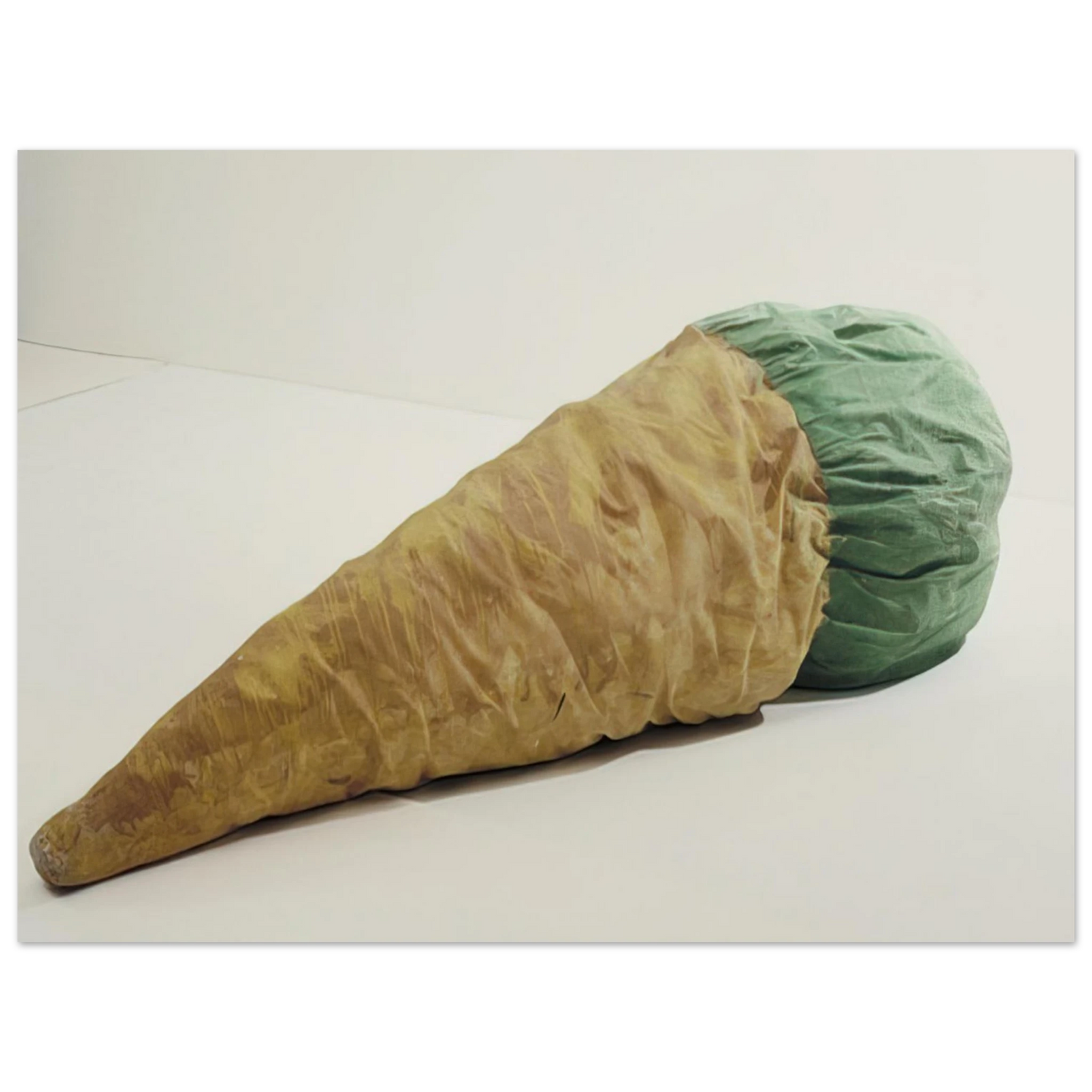
Claes Oldenburg - FLOOR CONE 1962 75x100 cm / 30x40inches Fine Art Poster
Claes Oldenburg - FLOOR CONE 1962 75x100 cm / 30x40inches Fine Art Poster
Couldn't load pickup availability
Elevate Your Space with Claes Oldenburg’s Floor Cone (1962)
Experience a pivotal moment in Pop Art history with this museum-quality fine art print of Claes Oldenburg’s Floor Cone (1962). Originally conceived for his groundbreaking installation, The Store, this work redefined the boundaries of sculpture by transforming a mundane consumer object—a giant ice cream cone—into a soft, sagging monument of modern culture. This 75x100 cm (30x40 inches) reproduction captures the tactile presence and whimsical subversion of Oldenburg’s original vision.
The Art of the Everyday
Claes Oldenburg was a master of challenging the prestige of traditional art. By using materials like canvas and foam to create 'soft sculptures,' he brought art off the pedestal and onto the floor, making it relatable and ironically human. Floor Cone remains an iconic symbol of the 1960s Pop Art movement, critiquing consumerism while celebrating the vibrant forms of urban life. Our reproduction preserves the subtle textures and muted, vintage palette of the original 1962 piece, ensuring a sophisticated addition to any contemporary collection.
RedKalion’s Archival Excellence
At RedKalion, we curate masterpieces with a commitment to longevity and tactile luxury. This print is produced on our Master's Edition archival paper, a 250 gsm (110 lb) natural white, off-white substrate that provides a sophisticated matte finish. This museum-quality paper is acid-free (pH above 7), preventing the yellowing or degradation often associated with lesser prints. Every detail—from the weight (0.29 mm thickness) to the FSC-certified sustainability—is designed to meet the standards of the most discerning collectors.
- Paper: 250 gsm archival-grade, museum-quality.
- Finish: Matte, uncoated for a reflection-free, luxurious feel.
- Sustainability: FSC-certified or equivalent regional certification.
- Durability: Acid-free properties ensure the print endures for generations.
Discover Unlimited Art Possibilities
At RedKalion, you can find virtually any artwork from any artist, available in a wide range of sizes to perfectly match your space.
If you didn’t find what you’re looking for, contact us at support@redkalion.com . We will source any artwork and produce it in any size and format you need, including art prints, posters, canvas, framed pieces, framed canvas, and more.
For dedicated art enthusiasts, we also offer handcrafted replicas of any artwork, carefully painted by highly skilled artists using traditional techniques.
For custom requests, contact us at support@redkalion.com .
What are the specifications of the paper used for this print?
We use 250 gsm (110 lb) Master's Edition archival paper. It is a museum-quality, natural white (off-white) paper with a 0.29 mm thickness, providing a luxurious, uncoated matte finish that avoids glare.
How does this museum-quality reproduction resist aging?
The paper is acid-free with a pH value above 7, which prevents yellowing and maintains the integrity of the ink over time. This ensures your Claes Oldenburg print remains as vibrant as the day it arrived.
How is my fine art poster fulfilled and shipped?
At RedKalion, we print and ship on demand with no minimum orders. Each piece is meticulously packaged in robust materials to ensure it arrives in pristine condition at your doorstep.
Is the paper used for this Oldenburg print environmentally friendly?
Yes, we prioritize sustainability. Our prints utilize FSC-certified paper or equivalent regional certifications, supporting responsible forest management and environmental stewardship.
What are the physical dimensions and weight of the poster?
The print measures 75x100 cm (approximately 30x40 inches). The heavy-duty 250 gsm weight provides a substantial feel, making it ideal for high-end framing or professional gallery display.
What is the significance of Floor Cone (1962) in Pop Art history?
Floor Cone was part of Oldenburg's 'The Store,' where he sold plaster and fabric replicas of common goods. It pioneered 'soft sculpture,' bridging the gap between high art and commercial consumerism.
Why did Claes Oldenburg choose common objects like ice cream cones?
Oldenburg sought to make art accessible by using everyday items. By altering their scale and texture, he invited viewers to see mundane objects with a sense of wonder, humor, and psychological depth.