
RedKalion
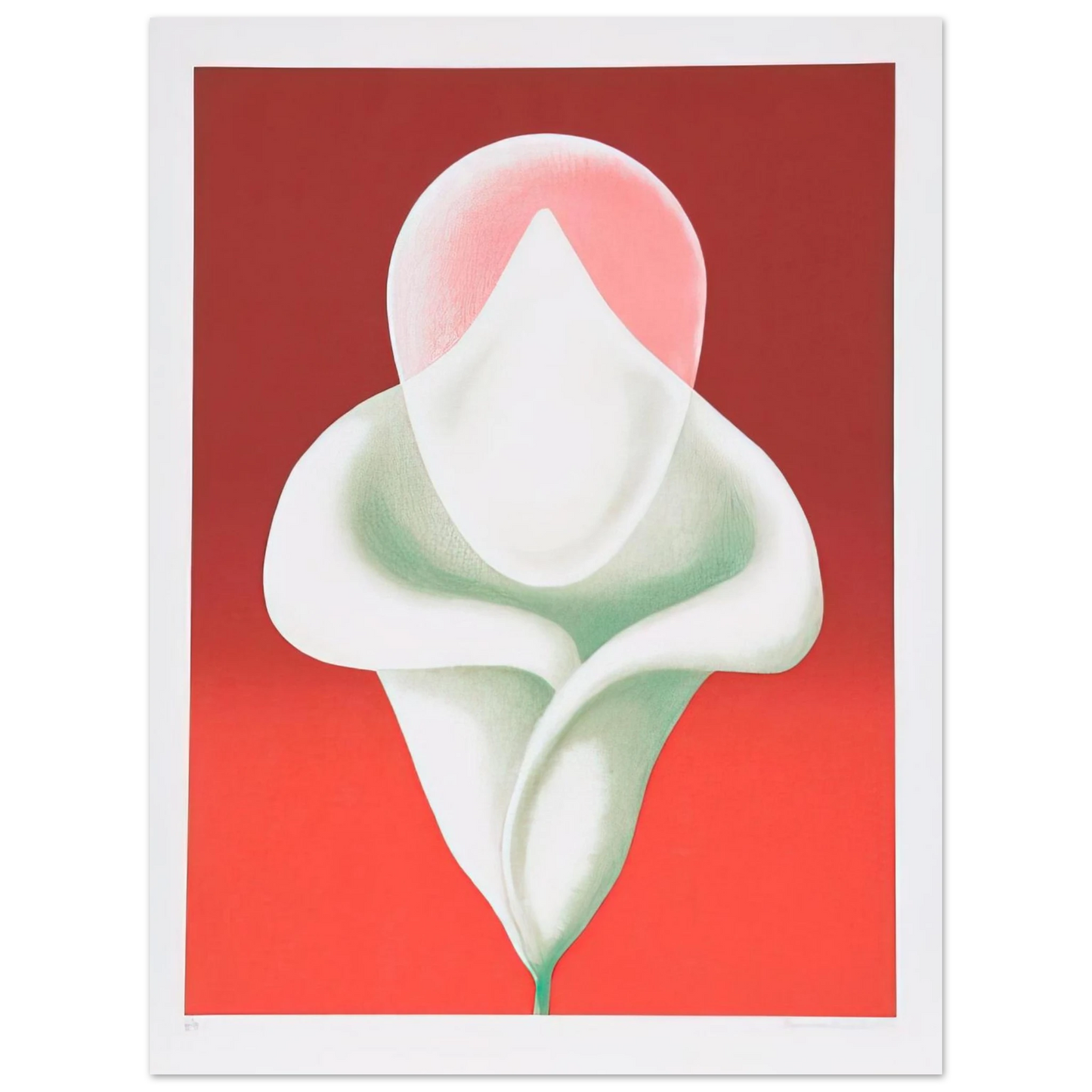
Clarence Holbrook Carter - Abstract Tulip - 1979 75x100 cm / 30x40inches Fine Art Poster
Clarence Holbrook Carter - Abstract Tulip - 1979 75x100 cm / 30x40inches Fine Art Poster
Couldn't load pickup availability
Elevate Your Space with Clarence Holbrook Carter’s Abstract Tulip (1979)
Experience the profound intersection of geometry and nature with this Clarence Holbrook Carter - Abstract Tulip - 1979 fine art print. As a master of American transcendentalism and surrealism, Carter transitioned in his later years toward a precise, hard-edged abstraction that sought to capture the spiritual essence of organic forms. This 1979 masterpiece is a definitive example of his ability to distill the delicate tulip into a powerful, architectural statement of light and symmetry.
Our museum-quality reproduction honors Carter's meticulous technique. Each print is rendered on Master's Edition archival paper, chosen specifically for its ability to hold the deep, nuanced gradients and sharp lines that define Carter’s late-career brilliance. This is not merely a poster; it is a curated piece of art history designed to endure for generations.
The RedKalion Standard: Uncompromising Quality
At RedKalion, we believe fine art deserves a physical medium that matches its creative integrity. This reproduction utilizes 250 gsm (110 lb) natural white paper, providing a luxurious, heavy-weight feel that commands attention on any wall. The matte, uncoated finish ensures that the vibrant 1979 palette is viewed without the distraction of glare, allowing the artwork's depth to shine in any lighting condition.
- Archival Excellence: Acid-free paper (pH above 7) prevents yellowing, preserving the 1979 color profile.
- Substantial Texture: A thickness of 0.29 mm (11.4 mils) ensures a premium, gallery-grade presence.
- Sustainable Artistry: Printed on FSC-certified paper, supporting responsible forest management.
- Precision Fulfillment: Each piece is printed on demand to ensure the highest quality control and zero waste.
Discover Unlimited Art Possibilities
At RedKalion, you can find virtually any artwork from any artist, available in a wide range of sizes to perfectly match your space.
If you didn’t find what you’re looking for, contact us at support@redkalion.com . We will source any artwork and produce it in any size and format you need, including art prints, posters, canvas, framed pieces, framed canvas, and more.
For dedicated art enthusiasts, we also offer handcrafted replicas of any artwork, carefully painted by highly skilled artists using traditional techniques.
For custom requests, contact us at support@redkalion.com .
Why choose a Clarence Holbrook Carter print for my home?
A Clarence Holbrook Carter print offers a sophisticated blend of mid-century modern precision and transcendental abstraction. His 1979 works, like Abstract Tulip, provide a timeless aesthetic that bridges the gap between classic surrealism and contemporary geometric design.
What is the quality of the paper used for this Abstract Tulip reproduction?
We use Master's Edition archival paper, a 250 gsm (110 lb) museum-quality medium. It features a natural white, matte finish that provides a luxurious texture and ensures the artwork remains the focal point without light reflection.
Will the colors of this 1979 print fade over time?
No. Our prints are produced on acid-free paper with a pH above 7. This archival-grade specification prevents yellowing and preserves the integrity of the pigments, ensuring your investment remains vibrant for decades.
Is the paper used for the poster environmentally friendly?
Yes, sustainability is core to RedKalion. This fine art print is produced on FSC-certified paper, ensuring that the materials are sourced from responsibly managed forests that provide environmental, social, and economic benefits.
How is the shipping handled for large-format prints?
Our 75x100 cm (30x40 inches) prints are carefully handled with no minimum order requirements. They are printed and shipped on demand in protective packaging to ensure they arrive in gallery-ready condition.
What movement does Abstract Tulip represent in Carter's career?
Abstract Tulip represents Carter's late-period exploration of transcendentalism. Moving beyond his earlier Regionalist roots, this 1979 piece showcases his mastery of hard-edge abstraction and his fascination with the 'Mandalas' of the natural world.
How does the matte finish affect the viewing experience?
The matte, uncoated finish provides a sophisticated, non-reflective surface. This allows for deeper color saturation and ensures the intricate details of Carter's 1979 composition are visible from any angle in your room.