
RedKalion
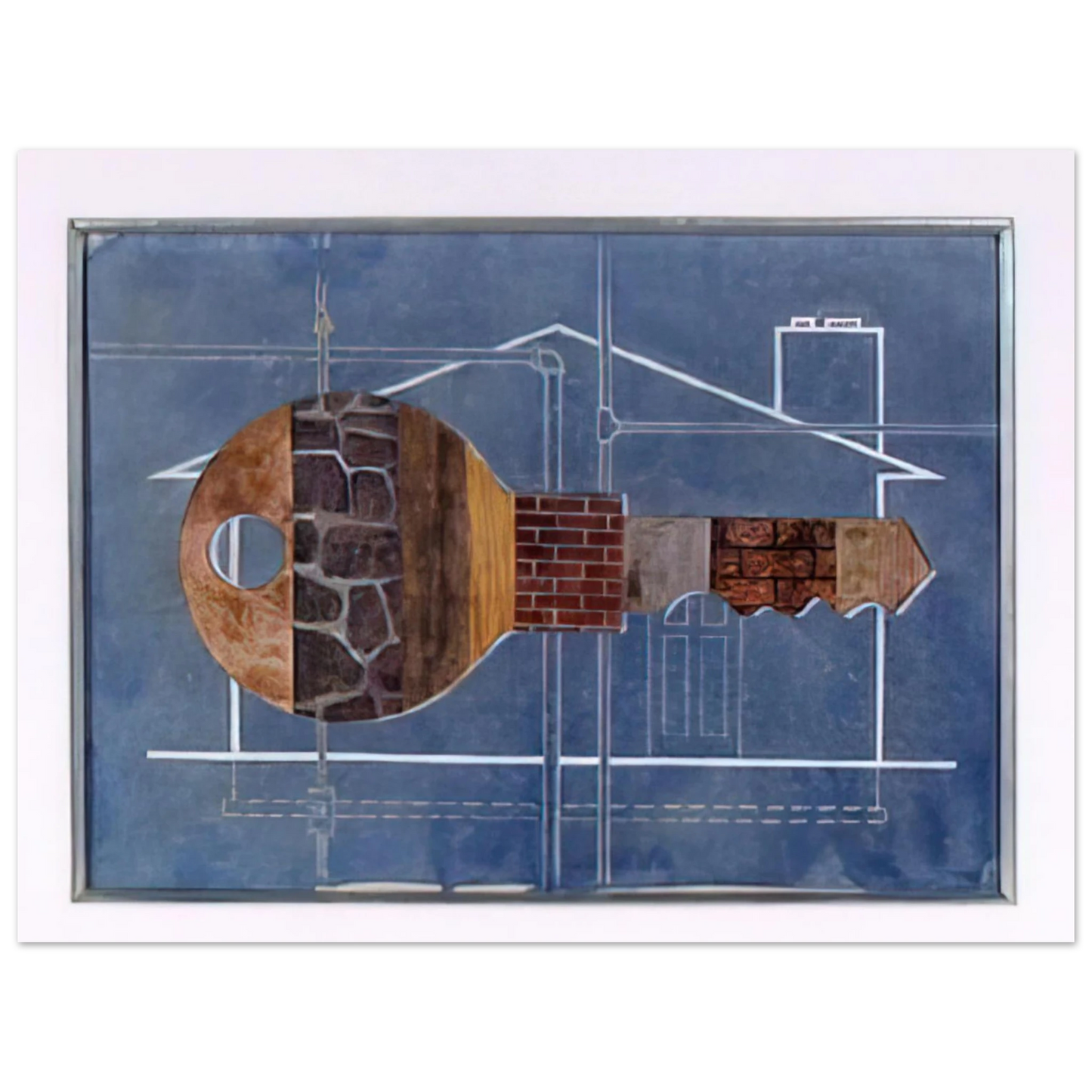
Clarence Holbrook Carter - House Key - 1956 75x100 cm / 30x40inches Fine Art Poster
Clarence Holbrook Carter - House Key - 1956 75x100 cm / 30x40inches Fine Art Poster
Couldn't load pickup availability
A Mid-Century Masterpiece: Clarence Holbrook Carter's "House Key" (1956)
Step into the enigmatic world of American Magic Realism with Clarence Holbrook Carter’s "House Key" (1956). This striking work showcases Carter’s unique ability to transform everyday objects into profound symbols of mystery and solitude. As a central figure in the mid-century art scene, Carter’s precisionist technique and hauntingly still compositions invite viewers to look beyond the surface of the mundane.
This museum-quality reproduction captures every nuanced shade and sharp line of the original 1956 composition. Our fine art print is more than a decoration; it is a piece of history that reflects the sophisticated aesthetic of the post-war era. Whether you are an avid collector of American Surrealism or seeking to elevate your space with architectural precision, this archival masterpiece offers an enduring sense of calm and curiosity.
Uncompromising Material Excellence
At RedKalion, we believe that world-class art deserves world-class materials. To ensure this museum-quality reproduction stands the test of time, we utilize the following specifications:
- Master's Edition Paper: An archival-grade, 250 gsm (110 lb) natural white paper that provides a luxurious feel and substantial weight.
- Matte Finish: An elegant, uncoated texture that eliminates glare, allowing the deep tones and crisp details of Carter's work to shine in any lighting.
- Archival Longevity: Acid-free (pH above 7) construction prevents yellowing and degradation, ensuring your investment remains vibrant for generations.
- Sustainable Quality: We use FSC-certified paper, reflecting our commitment to environmental responsibility alongside artistic excellence.
Each print is meticulously fulfilled on demand, ensuring that your artwork arrives in pristine condition, ready to transform your interior with the quiet authority of a modern master.
Discover Unlimited Art Possibilities
At RedKalion, you can find virtually any artwork from any artist, available in a wide range of sizes to perfectly match your space.
If you didn’t find what you’re looking for, contact us at support@redkalion.com . We will source any artwork and produce it in any size and format you need, including art prints, posters, canvas, framed pieces, framed canvas, and more.
For dedicated art enthusiasts, we also offer handcrafted replicas of any artwork, carefully painted by highly skilled artists using traditional techniques.
For custom requests, contact us at support@redkalion.com .
What defines the quality of this Clarence Holbrook Carter print?
Our reproduction is a museum-quality print using 250 gsm Master's Edition archival paper. The matte, uncoated finish provides a sophisticated, non-reflective surface that perfectly captures the subtle gradients of Carter's 1956 work.
How does the archival paper ensure the longevity of the artwork?
We use acid-free paper with a pH level above 7. This prevents the paper from yellowing or becoming brittle over time, ensuring the colors and integrity of "House Key" remain preserved for decades.
What is the historical significance of "House Key" (1956)?
Created in 1956, "House Key" represents Carter's shift toward more symbolic, surreal imagery. It reflects the post-war American fascination with psychological depth and the intersection of realism and the subconscious.
What are the physical dimensions and weight of the paper?
The print is produced on 250 gsm (110 lb) paper with a thickness of 0.29 mm (11.4 mils). This heavy-weight, premium material ensures the print stays flat and feels substantial when handled.
How is my order fulfilled and shipped?
RedKalion operates on a print-on-demand basis with no minimum orders. Each piece is printed specifically for you and shipped in protective packaging to ensure it arrives in gallery condition.
Is the paper used for this fine art poster sustainable?
Yes, we use FSC-certified paper or equivalent certifications depending on regional availability. This ensures that your archival print is produced in an environmentally and socially responsible manner.
What artistic movement does Clarence Holbrook Carter represent?
Carter is primarily associated with American Magic Realism and Surrealism. His work often blends meticulous, precisionist rendering with dreamlike or symbolic subject matter, as seen in the 1956 piece "House Key."