RedKalion
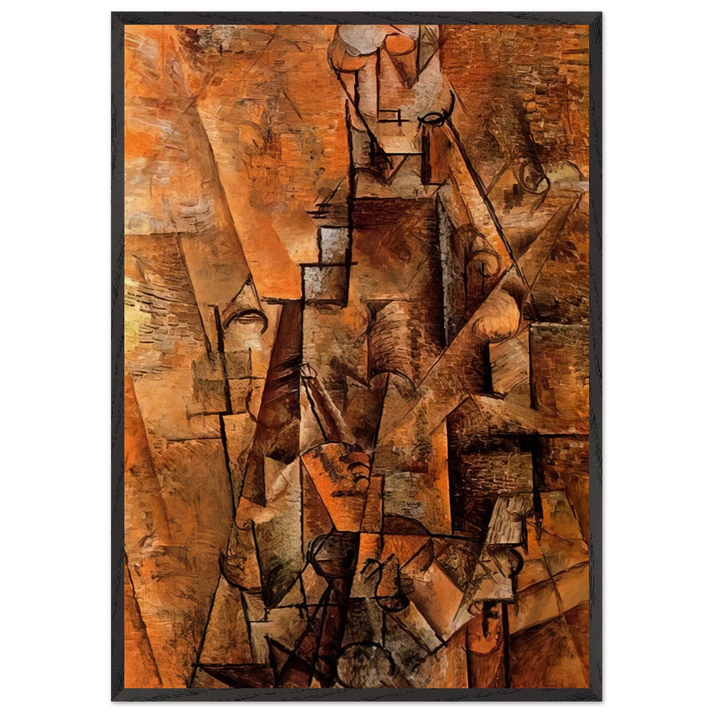
Clarinetist - 1911 - Pablo Picasso 70x100 cm / 28x40 inches Framed Art Print – Black Wooden Frame
Clarinetist - 1911 - Pablo Picasso 70x100 cm / 28x40 inches Framed Art Print – Black Wooden Frame
Couldn't load pickup availability
The Architect of Modernism: Pablo Picasso’s 'Clarinetist' (1911)
Step into the cerebral heart of the 20th-century avant-garde with Pablo Picasso’s 'Clarinetist' (1911). This museum-quality reproduction captures a pivotal moment in Analytical Cubism, where Picasso and Georges Braque dismantled traditional perspective to explore the multi-dimensional essence of reality. In this 70x100 cm masterpiece, the human form and the musical instrument are fractured into a rhythmic scaffolding of ochre, grey, and charcoal tones, inviting the viewer to reconstruct the image through a shared intellectual experience.
At RedKalion, we curate more than just images; we provide archival-grade artifacts that bridge the gap between history and your home. This fine art print is produced on 250 gsm (110 lb) museum-quality paper, featuring a natural white, matte finish that eliminates glare and emphasizes the intricate, layered brushwork characteristic of Picasso’s 1911 Céret period.
Uncompromising Quality and Craftsmanship
To honor the legacy of this work, each print is encased in a premium, responsibly sourced black frame crafted from solid oak and ash. The frame profile measures a sophisticated 20mm (0.79") in width and depth, providing a more robust and elegant presence than standard commercial frames. Our commitment to sustainability and longevity ensures that your investment is protected by shatterproof plexiglass and arrives ready to elevate your interior design.
- Artist: Pablo Picasso (1881–1973)
- Movement: Analytical Cubism
- Paper: 250 gsm archival-grade, natural white, matte finish
- Framing: 20mm thick black oak/ash wood (FSC-certified)
- Protection: Transparent, shatterproof plexiglass
- Installation: Arrives ready-to-hang with a professional kit included

Discover Unlimited Art Possibilities
At RedKalion, you can find virtually any artwork from any artist, available in a wide range of sizes to perfectly match your space.
If you didn’t find what you’re looking for, contact us at support@redkalion.com . We will source any artwork and produce it in any size and format you need, including art prints, posters, canvas, framed pieces, framed canvas, and more.
For dedicated art enthusiasts, we also offer handcrafted replicas of any artwork, carefully painted by highly skilled artists using traditional techniques.
For custom requests, contact us at support@redkalion.com .
What characterizes the paper quality of this Picasso print?
We use 250 gsm (110 lb) archival museum-quality paper. It is uncoated, natural white, and acid-free, ensuring the print resists yellowing and maintains its structural integrity for generations.
How is the artwork protected against damage?
Each framed print is shielded by premium shatterproof plexiglass. This provides the clarity of glass with significantly higher durability, protecting the artwork from UV rays and physical impact.
Is the framing material sustainably sourced?
Yes, RedKalion uses FSC-certified or equivalent responsibly sourced oak and ash wood. The 20mm black frame offers a sturdy, premium aesthetic that supports environmental conservation efforts.
Does the print arrive ready to hang on the wall?
Absolutely. Your framed Picasso art print includes a high-quality hanging kit, allowing you to mount the 70x100 cm piece immediately upon delivery without additional hardware.
What is the significance of the 1911 'Clarinetist' in art history?
This piece represents the peak of Analytical Cubism. Picasso moved away from literal representation, using a monochromatic palette to focus on the geometric structure and volume of the subject.
How long will this archival print last?
Designed to last a lifetime, our archival-grade materials and UV-protective plexiglass ensure that the print remains vibrant and free from degradation for over 100 years in indoor conditions.
Why did Picasso use such a limited color palette in 1911?
During the Analytical phase, Picasso used muted tones to prevent color from distracting the viewer from the complex spatial structure and the fragmentation of the object.