
RedKalion
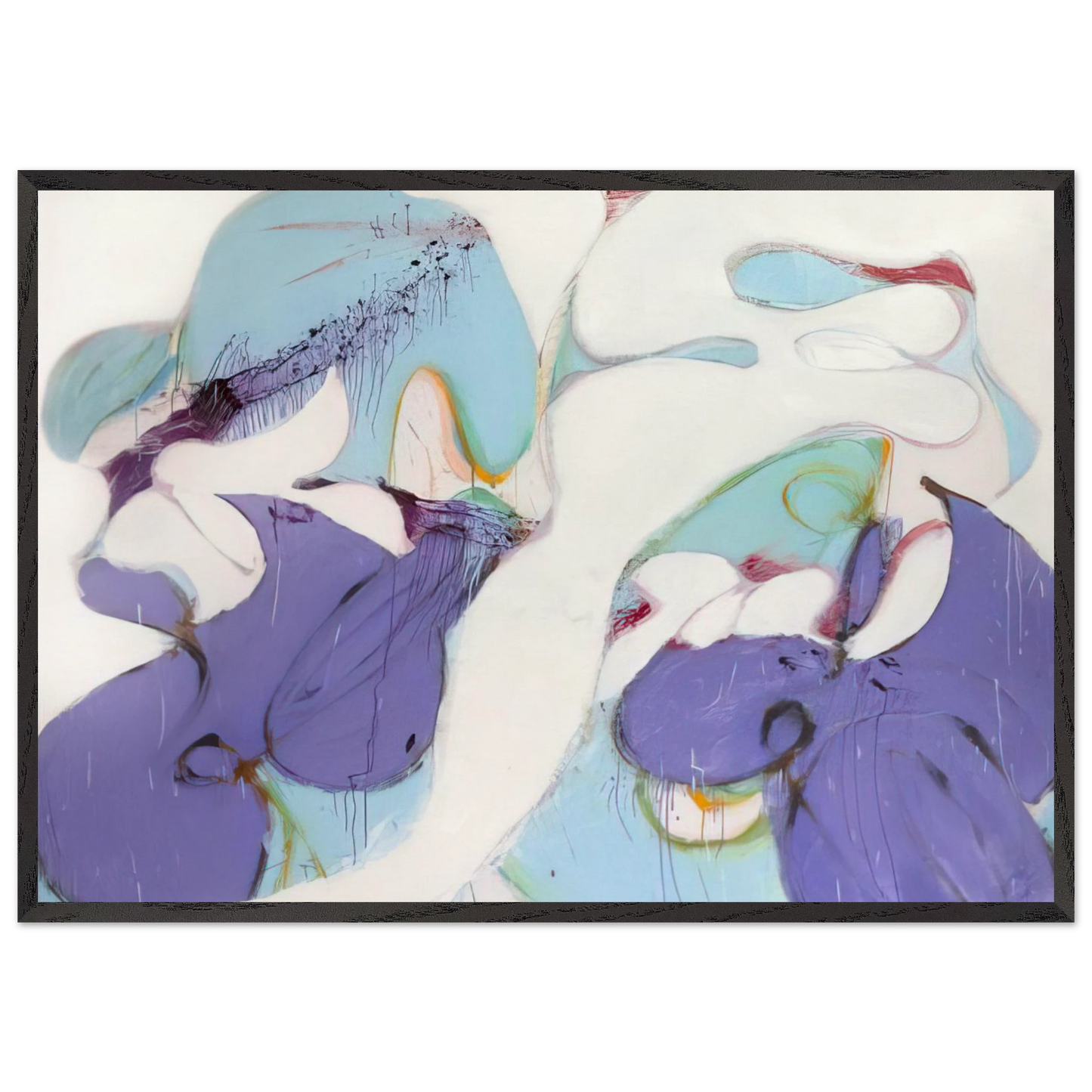
Claudia - 1975 - Norman Bluhm 70x100 cm / 28x40 inches Framed Art Print – Black Wooden Frame
Claudia - 1975 - Norman Bluhm 70x100 cm / 28x40 inches Framed Art Print – Black Wooden Frame
Couldn't load pickup availability
Experience the Architectural Vigor of Norman Bluhm’s Claudia (1975)
RedKalion is proud to present a museum-quality reproduction of Norman Bluhm’s 1975 masterpiece, Claudia. As a second-generation Abstract Expressionist who studied under the legendary architect Mies van der Rohe, Bluhm infused his canvases with a unique synthesis of structural discipline and lyrical spontaneity. By the mid-1970s, his work had evolved into a sophisticated dance of calligraphic gestures and biomorphic forms, and Claudia stands as a quintessential example of this period’s chromatic intensity.
A Legacy of Lyrical Abstraction
In Claudia, Bluhm moves beyond the 'all-over' drip techniques of the 1950s into a more deliberate, rhythmic language. The 1975 period represents a pinnacle of his career where his strokes became larger, more sensual, and deeply evocative of the human form and landscape. This fine art print captures every nuanced layer of his brushwork, allowing the viewer to appreciate the visceral energy that defined Action Painting. At RedKalion, we curate these works to ensure that the artist's original intent—to create an environment rather than just a painting—is fully realized in your space.
Museum-Grade Physical Specifications
Our commitment to excellence extends to the materials used in this archival-grade reproduction:
- Premium Paper: We utilize 250 gsm (110 lb) natural white paper with a matte, uncoated finish. This museum-quality substrate ensures depth of color without distracting glare.
- Handcrafted Framing: The artwork is housed in a professional 20mm (0.79") thick black frame, crafted from responsibly sourced oak and ash. This substantial profile provides a sophisticated, gallery-ready aesthetic.
- Archival Protection: Each print is shielded by shatterproof plexiglass, ensuring your investment remains pristine for decades.
- Sustainability: In alignment with our ethical standards, we use FSC-certified materials, supporting global forest conservation.
Elevate your interior with an archival masterpiece that endures. This framed print arrives ready-to-hang, complete with a professional hanging kit, allowing you to transform your home or office into a private gallery of contemporary art history.
Discover Unlimited Art Possibilities
At RedKalion, you can find virtually any artwork from any artist, available in a wide range of sizes to perfectly match your space.
If you didn’t find what you’re looking for, contact us at support@redkalion.com . We will source any artwork and produce it in any size and format you need, including art prints, posters, canvas, framed pieces, framed canvas, and more.
For dedicated art enthusiasts, we also offer handcrafted replicas of any artwork, carefully painted by highly skilled artists using traditional techniques.
For custom requests, contact us at support@redkalion.com .
What paper quality is used for this Norman Bluhm print?
We use 250 gsm (110 lb) natural white, archival museum-quality paper. The matte, uncoated finish ensures a glare-free viewing experience and highlights the subtle textures of Bluhm’s 1975 brushwork.
What are the frame specifications for 'Claudia'?
This print comes in a 20mm (0.79") thick black frame made from solid oak and ash. It is significantly sturdier than standard frames, providing a premium, gallery-style presence on your wall.
How is the artwork protected from damage?
Each framed print is protected by high-quality, shatterproof plexiglass. This ensures the 1975 Norman Bluhm reproduction is safe during transit and remains shielded from dust and environmental wear over time.
Is this fine art print environmentally friendly?
Yes. RedKalion uses FSC-certified paper and responsibly sourced wood for our frames, ensuring that your acquisition of this Abstract Expressionist work supports sustainable forestry practices.
How do I hang my framed Norman Bluhm print?
Your order includes a professional hanging kit. The 70x100 cm frame is designed to be ready-to-hang immediately, allowing you to display this masterpiece without additional hardware or assembly.
What movement does Norman Bluhm's 'Claudia' represent?
Bluhm is a central figure in Abstract Expressionism and Lyrical Abstraction. 'Claudia' (1975) showcases his transition toward biomorphic forms and architectural gestures, moving beyond traditional Action Painting.
Why is 1975 significant in Norman Bluhm's career?
By 1975, Bluhm had moved away from the chaotic drips of the 1950s toward a more structured, sensual style. This era is prized by collectors for its vibrant color palettes and powerful, calligraphic compositions.