

RedKalion
Cliff at Grainval near Fecamp - claude monet Brushed Aluminum Print - 70x100 cm / 28x40 inches | claude monet Aluminum Print | claude monet Prints
Cliff at Grainval near Fecamp - claude monet Brushed Aluminum Print - 70x100 cm / 28x40 inches | claude monet Aluminum Print | claude monet Prints
Couldn't load pickup availability
Elevate Your Space with Claude Monet’s Impressionist Masterpiece
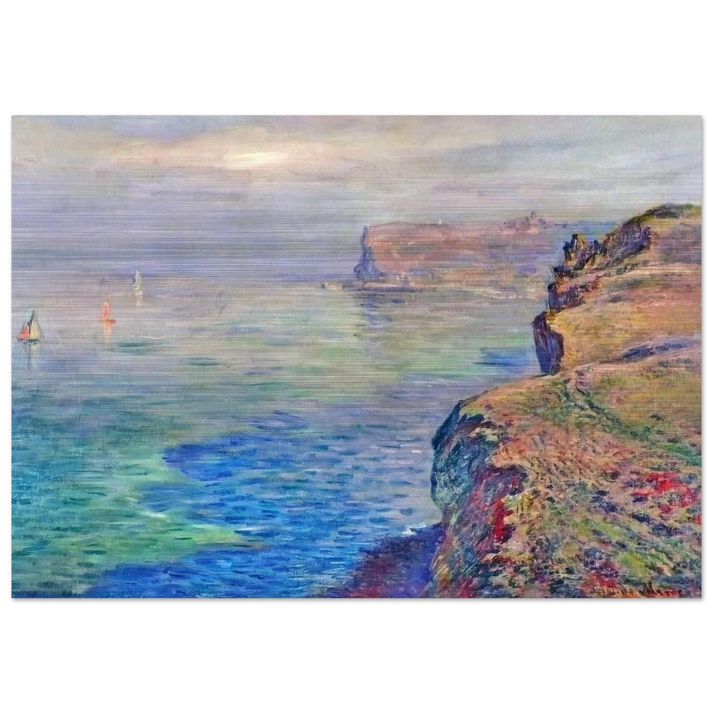
Claude Monet’s Cliff at Grainval near Fecamp is a profound exploration of the intersection between light, stone, and the restless sea. Painted during his prolific stay on the Normandy coast in 1881, this work exemplifies the Impressionist master's ability to capture the fleeting 'envelope' of atmosphere that defines a landscape. Now, RedKalion bridges the 19th-century vision with 21st-century sophistication, presenting this museum-quality reproduction on brushed silver Aluminum DIBOND®.
The Artistry of the Normandy Coast
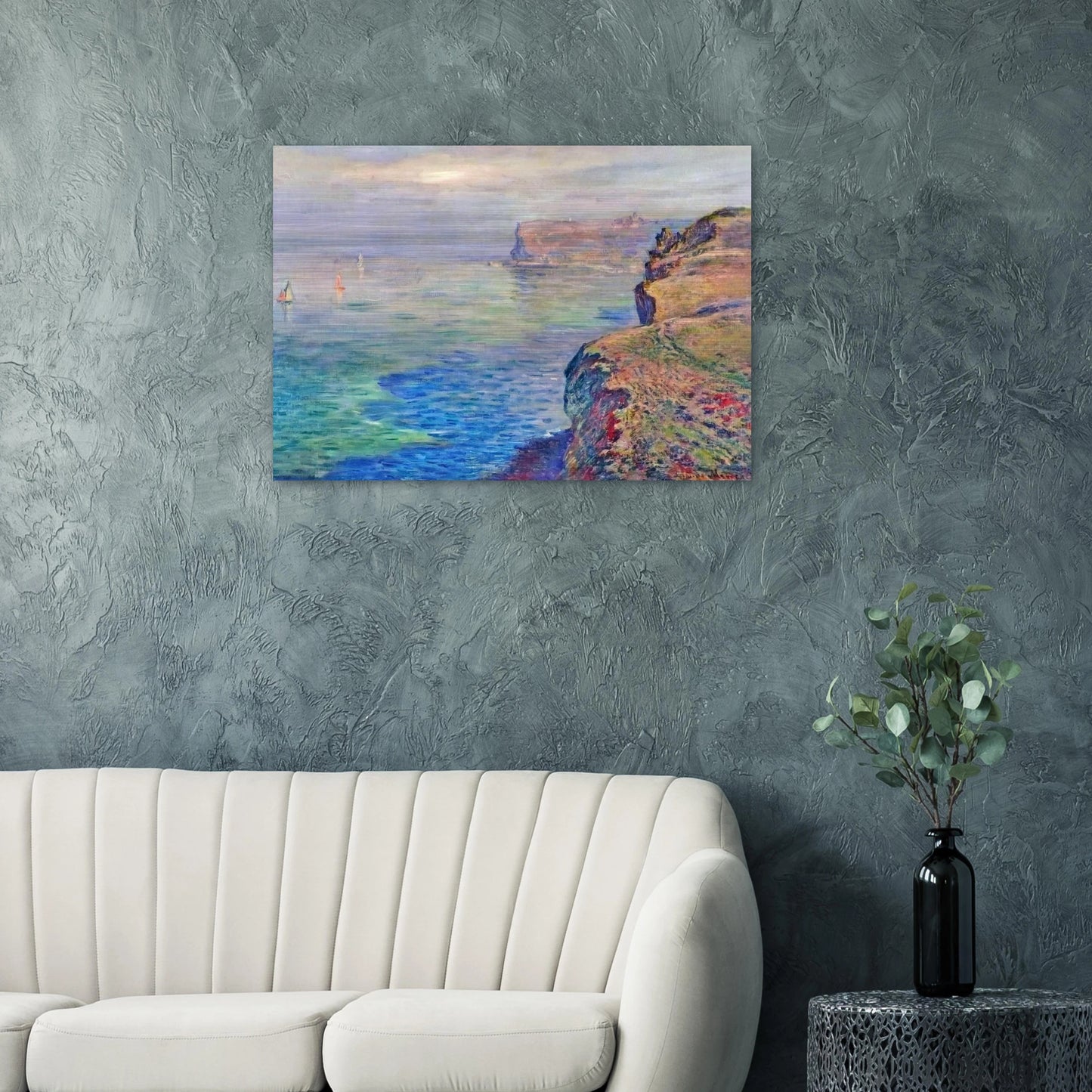
In this composition, Monet focuses on the towering chalk cliffs of Grainval. Unlike his later, more abstract series, this piece retains a powerful sense of structural verticality contrasted against the rhythmic movement of the tide. By utilizing a brushed aluminum print format, the natural horizontal grain of the metal mimics the atmospheric haze and sea spray, breathing new life into Monet’s delicate brushwork. The metallic silver effect shines through the unprinted areas, creating a dynamic piece of wall art that shifts in character as the ambient light in your room changes throughout the day.
Museum-Grade Materials & Technical Excellence
At RedKalion, we believe a fine art print should be as enduring as the history it represents. This 70x100 cm (28x40 inches) reproduction is crafted using state-of-the-art direct printing techniques on a 3mm (0.12") Aluminum DIBOND® panel. The result is a rigid, durable masterpiece with a sophisticated matte finish that eliminates glare, making it the ideal choice for spaces with high-intensity lighting or large windows.
- Brushed Silver Finish: A unique metallic sheen that enhances black-and-white contrasts and mid-tones.
- Durability: 3mm thickness ensures a lightweight yet incredibly rigid base that resists warping.
- Visual Depth: The horizontal grain of the aluminum adds a tactile, three-dimensional quality to the cliffside.
- Ready to Exhibit: Each print comes with a specialized hanging kit included, tailored to your location.
Invest in an archival-grade reproduction that honors the legacy of Claude Monet while offering the modern durability of industrial-grade aluminum. This is more than a print; it is a timeless acquisition for the discerning collector.


Discover Unlimited Art Possibilities
At RedKalion, you can find virtually any artwork from any artist, available in a wide range of sizes to perfectly match your space.
If you didn’t find what you’re looking for, contact us at support@redkalion.com . We will source any artwork and produce it in any size and format you need, including art prints, posters, canvas, framed pieces, framed canvas, and more.
For dedicated art enthusiasts, we also offer handcrafted replicas of any artwork, carefully painted by highly skilled artists using traditional techniques.
For custom requests, contact us at support@redkalion.com .
What makes the brushed aluminum finish unique for this Monet print?
The brushed silver Aluminum DIBOND® features a horizontal grain that interacts with light. Unprinted white areas reveal the metallic surface, adding a shimmering, modern texture to Monet’s Impressionist seascape.
Is the 'Cliff at Grainval near Fecamp' print archival quality?
Yes. RedKalion uses archival-grade inks and direct-to-panel printing on durable aluminum, ensuring your Claude Monet reproduction maintains its color vibrancy and structural integrity for decades without fading.
How does the matte finish handle room glare?
The print features a glare-free matte finish. This is specifically designed to ensure the artwork remains visible and stunning even in brightly lit rooms or galleries with direct overhead lighting.
What mounting hardware is included with the 70x100 cm print?
Every order includes a professional hanging kit. The specific hardware varies based on the fulfillment country to ensure the safest and most efficient installation for your specific wall type.
Is this Claude Monet aluminum print heavy?
Despite its rigid 3mm (0.12") thickness, Aluminum DIBOND® is remarkably lightweight. This 70x100 cm piece is easy to handle and secure on standard wall surfaces without specialized reinforcement.
Where did Claude Monet paint Cliff at Grainval near Fecamp?
Monet painted this scene in Grainval, a small valley near the fishing port of Fécamp in Normandy, France, during his 1881 campaign to capture the region's rugged coastline.
Why did Monet choose the Grainval cliffs as a subject?
Monet was drawn to the Grainval cliffs for their dramatic verticality and the way the chalk surfaces reflected the shifting maritime light, a core theme of his Impressionist research.