
RedKalion
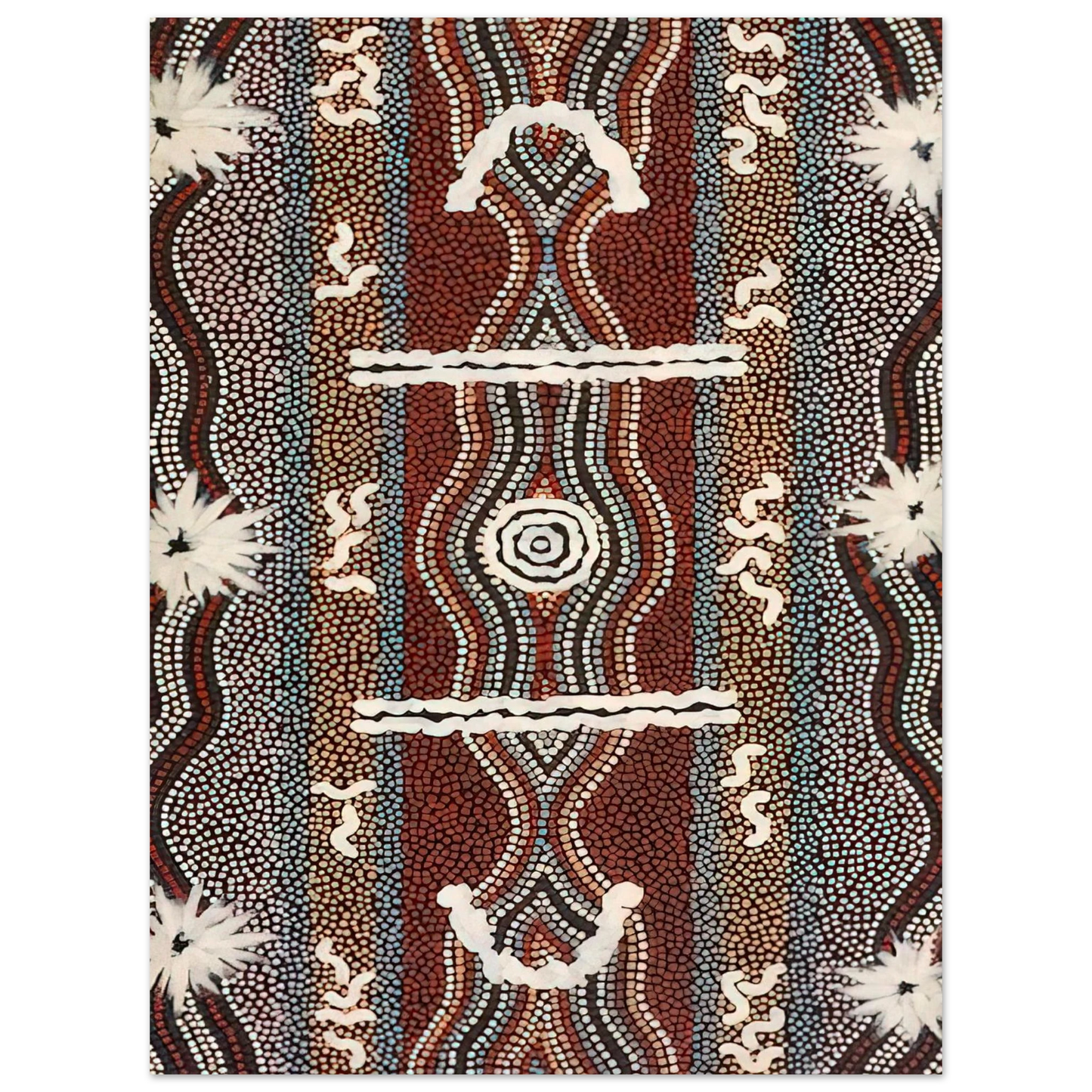
Clifford Possum Tjapaltjarri - Caterpillar Dreaming - 1998 75x100 cm / 30x40inches Fine Art Poster
Clifford Possum Tjapaltjarri - Caterpillar Dreaming - 1998 75x100 cm / 30x40inches Fine Art Poster
Couldn't load pickup availability
An Ancestral Map: Caterpillar Dreaming by Clifford Possum Tjapaltjarri
Experience the profound spiritual depth of Australian Aboriginal art with this museum-quality reproduction of Clifford Possum Tjapaltjarri's 'Caterpillar Dreaming' (1998). As one of the most renowned figures of the Papunya Tula movement, Tjapaltjarri transformed the landscape of contemporary art by translating sacred ancestral stories—the Tjukurpa—into a sophisticated visual language of dots, lines, and symbols.
This particular 1998 masterwork captures the Yiperenye (Caterpillar) Dreaming, a central creation narrative of the Alice Springs region. Tjapaltjarri’s technique involves a complex layering of motifs that function as both a spiritual map and a topographical record. The intricate dotting creates a rhythmic movement across the 75x100 cm canvas, inviting the viewer to explore the ancestral tracks that shaped the Australian desert.
Museum-Grade Excellence for Your Collection
At RedKalion, we honor the legacy of this Indigenous master by offering a fine art print that meets the highest archival standards. This reproduction is meticulously crafted to ensure that the delicate nuances of Tjapaltjarri’s palette and the precision of his dot-work are preserved with absolute fidelity.
- Master's Edition Paper: Printed on 250 gsm (110 lb) archival paper with a natural white, off-white finish that provides a sophisticated, luxurious feel.
- Matte & Uncoated: The matte finish eliminates glare, allowing the vibrant storytelling of the Caterpillar Dreaming to take center stage in any lighting.
- Archival Longevity: Our acid-free paper (pH above 7) is designed to resist yellowing and degradation, ensuring your investment remains a centerpiece for decades.
- Sustainable Craftsmanship: We utilize FSC-certified paper, reflecting a commitment to both cultural heritage and environmental responsibility.
Elevate your space with a piece that is more than mere decoration. This archival masterpiece by Clifford Possum Tjapaltjarri offers a window into one of the world's oldest continuous living cultures, curated with the expertise and authority that defines the RedKalion gallery.
Discover Unlimited Art Possibilities
At RedKalion, you can find virtually any artwork from any artist, available in a wide range of sizes to perfectly match your space.
If you didn’t find what you’re looking for, contact us at support@redkalion.com . We will source any artwork and produce it in any size and format you need, including art prints, posters, canvas, framed pieces, framed canvas, and more.
For dedicated art enthusiasts, we also offer handcrafted replicas of any artwork, carefully painted by highly skilled artists using traditional techniques.
For custom requests, contact us at support@redkalion.com .
What makes Clifford Possum Tjapaltjarri's 'Caterpillar Dreaming' culturally significant?
As a pioneer of the Papunya Tula movement, Tjapaltjarri uses 'Caterpillar Dreaming' to map sacred ancestral journeys. This 1998 work captures the Yiperenye Tjukurpa, serving as a complex cartographic record of spiritual and physical terrain in Central Australia.
How does the artist depict the Dreaming tracks in this specific piece?
Tjapaltjarri utilizes intricate dotting and overlapping motifs to represent the metamorphosis and travel of the caterpillar ancestors. The layers create a sense of topographical depth, characteristic of his late-period mastery in desert landscape representation.
What are the specifications of the museum-quality paper?
This reproduction is printed on Master's Edition archival paper. It is a 250 gsm (110 lb) natural white, matte paper with a thickness of 0.29 mm, providing a luxurious, premium feel for fine art.
How is the longevity of the print ensured?
We use acid-free paper with a pH above 7. This archival quality prevents yellowing and degradation, ensuring that the vibrant intricacies of Tjapaltjarri’s work endure for generations.
Is this fine art print produced sustainably?
Yes, RedKalion uses FSC-certified paper (Forest Stewardship Council), ensuring that the materials meet rigorous environmental and social standards for responsible forestry.
What is the shipping and fulfillment process?
Each Clifford Possum Tjapaltjarri print is produced on demand with no minimum order requirements. This reduces waste and ensures your museum-quality reproduction is freshly printed and securely shipped to your location.
Does the print have a glossy or matte finish?
The artwork features a matte, uncoated finish. This prevents glare and highlights the natural white texture of the paper, mirroring the sophisticated aesthetic of an original gallery piece.