
RedKalion
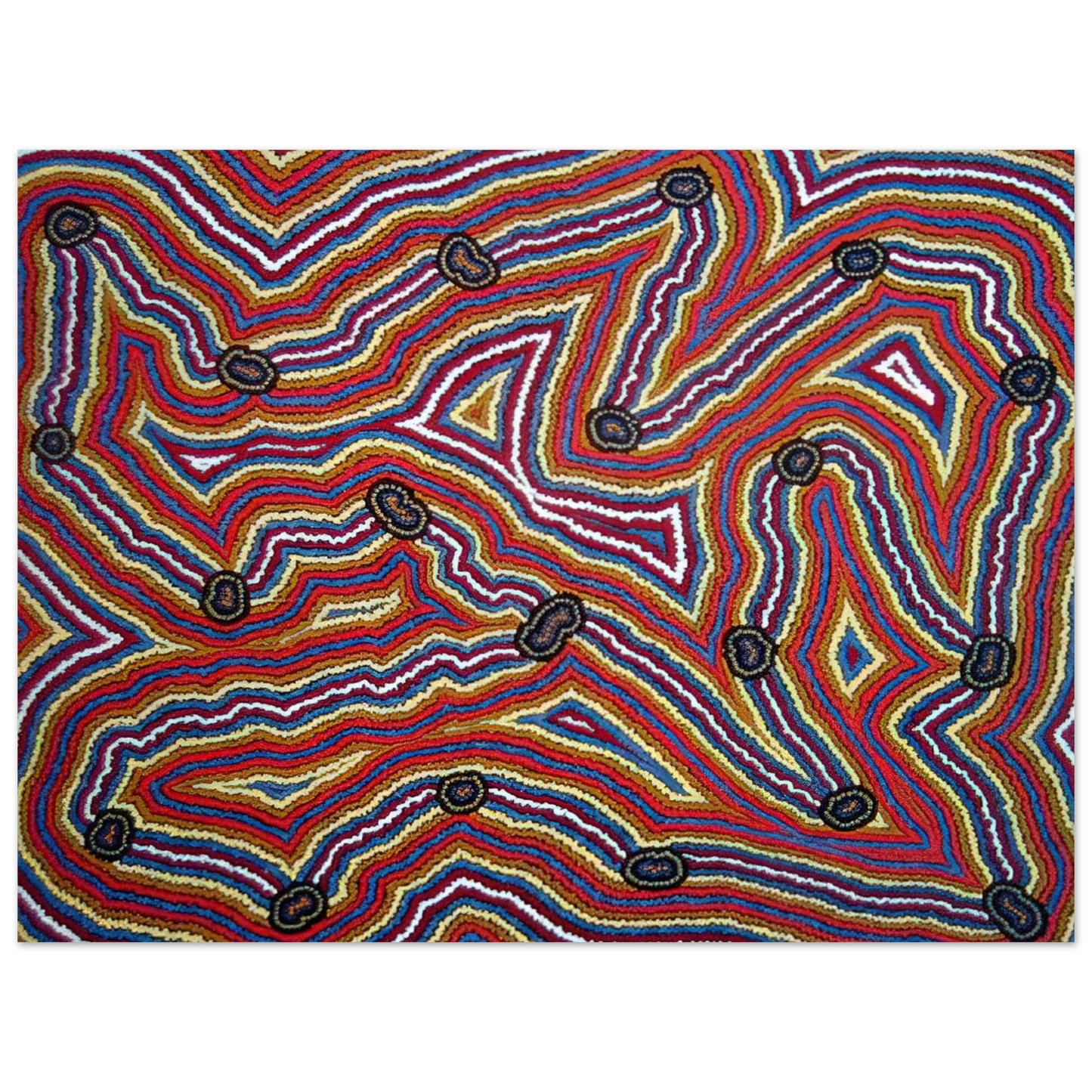
Clifford Possum Tjapaltjarri - Narripi Dreaming - 1992 75x100 cm / 30x40inches Fine Art Poster
Clifford Possum Tjapaltjarri - Narripi Dreaming - 1992 75x100 cm / 30x40inches Fine Art Poster
Couldn't load pickup availability
Clifford Possum Tjapaltjarri - Narripi Dreaming - 1992 (Museum-Quality Fine Art Print)
Elevate your space with a masterful reproduction of Clifford Possum Tjapaltjarri's iconic "Narripi Dreaming," originally created in 1992. This significant Aboriginal artwork, rendered as a museum-quality fine art print, captures the profound spiritual narratives central to Indigenous Australian culture. Clifford Possum Tjapaltjarri, a pivotal figure in the Papunya Tula art movement, is celebrated for his intricate dot paintings that depict ancestral journeys and sacred sites with unparalleled depth and complexity. "Narripi Dreaming" invites contemplation, evoking the vastness of the Australian landscape and the enduring power of ancestral stories.
Our fine art posters are meticulously produced on Master's Edition archival paper, renowned for its museum-quality standards and luxurious, uncoated, natural white finish. This premium paper offers a substantial feel, weighing 250 gsm (110 lb) with a thickness of 0.29 mm (11.4 mils). Its acid-free composition ensures that your "Narripi Dreaming" reproduction remains vibrant and free from discoloration for generations. Printed on demand with a commitment to sustainability, utilizing FSC-certified paper, this piece is an investment in both art and enduring quality. Experience the spirit of the Australian desert through an archival masterpiece that respects its origins and transcends time.
- Artist: Clifford Possum Tjapaltjarri
- Title: Narripi Dreaming
- Year: 1992
- Dimensions: 75x100 cm / 30x40 inches (Approximate print size)
- Paper: Master's Edition Archival Paper, Museum-Quality
- Finish: Matte, Uncoated, Natural White
- Weight: 250 gsm (110 lb)
- Thickness: 0.29 mm (11.4 mils)
- Longevity: Acid-Free (pH > 7)
- Sustainability: FSC-Certified Paper
Discover Unlimited Art Possibilities
At RedKalion, you can find virtually any artwork from any artist, available in a wide range of sizes to perfectly match your space.
If you didn’t find what you’re looking for, contact us at support@redkalion.com . We will source any artwork and produce it in any size and format you need, including art prints, posters, canvas, framed pieces, framed canvas, and more.
For dedicated art enthusiasts, we also offer handcrafted replicas of any artwork, carefully painted by highly skilled artists using traditional techniques.
For custom requests, contact us at support@redkalion.com .
Frequently Asked Questions
What is "Narripi Dreaming" by Clifford Possum Tjapaltjarri?
This is a museum-quality fine art print reproduction of the 1992 masterpiece by renowned Aboriginal artist Clifford Possum Tjapaltjarri, depicting ancestral narratives and sacred country.
What kind of paper is used for this fine art print?
Our prints utilize Master's Edition archival paper, a museum-quality, uncoated, natural white stock with a substantial 250 gsm weight and a luxurious matte finish.
How long will this archival print last?
The acid-free, pH neutral (above 7) paper prevents yellowing and degradation, ensuring your fine art poster maintains its vibrancy for decades.
Is the paper used for these prints sustainable?
Yes, we are committed to sustainability. The Master's Edition paper used for this reproduction is FSC-certified, ensuring responsible forest management.
How are these art prints fulfilled and shipped?
Each museum-quality print is produced on demand, minimizing waste. We print and ship directly to you, ensuring careful handling and quality control.
What is the significance of the Narripi Dreaming story?
The Narripi Dreaming relates to the ancestral journey of the Witchetty Grub and its creation of waterholes, a fundamental theme in Anmatyerre cosmology.
Can you tell me more about Clifford Possum Tjapaltjarri's style?
Clifford Possum was a pioneer of the Papunya Tula movement, known for his intricate dot work, map-like depictions of country, and complex layering of ancestral narratives.