

RedKalion
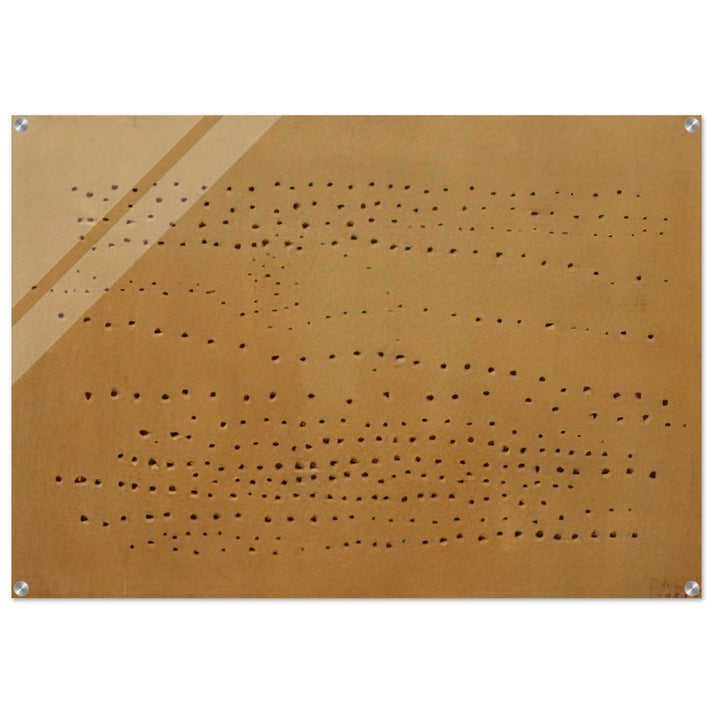
Concept Spatiale - 1950 - Lucio Fontana Acrylic Print - 70x100 cm / 28x40″ inches
Concept Spatiale - 1950 - Lucio Fontana Acrylic Print - 70x100 cm / 28x40″ inches
Couldn't load pickup availability
Concept Spatiale - Lucio Fontana - Museum-Quality Acrylic Print
Immerse yourself in the radical innovation of Italian master Lucio Fontana with this stunning museum-quality acrylic print of his seminal 1950 work, Concept Spatiale. This iconic piece, rendered in a generous 70x100 cm (28x40 inches), captures the essence of Fontana's pioneering exploration of space and materiality in post-war art.
Lucio Fontana, a luminary of the 20th century, is celebrated for his groundbreaking Spatialism movement. His famous 'cuts' and 'holes' were not acts of destruction but rather intentional gestures to create a three-dimensional dimension in art, breaking free from the confines of the canvas. Concept Spatiale embodies this philosophy, inviting viewers to contemplate the void and the infinite possibilities beyond the visible surface. This particular work from 1950 is a foundational example of his spatial concepts, predating many of his more famous slashed canvases.
RedKalion is proud to present this exceptional fine art print, meticulously reproduced on 4mm (0.15") thick acrylic. This contemporary medium enhances Fontana's work, offering a sleek, vibrant, and durable finish that imbues the artwork with a modern luminescence. The straight-cut corners provide a clean, minimalist aesthetic, perfectly complementing the conceptual depth of Concept Spatiale. The default transparent background is presented on a white base for optimal viewing clarity and impact.
Elevate your space with an archival masterpiece that endures. Each acrylic print comes with a discreet and robust hanging kit, ensuring effortless installation. The kit includes the necessary hardware, screws, and pre-drilled holes at each corner (14mm (0.55") from the edge, with an 8mm (0.31" diameter hole and 15mm (0.6" screw head)), allowing you to showcase this significant piece of art history with confidence.
- Artwork: Concept Spatiale
- Artist: Lucio Fontana
- Date: 1950
- Medium: Museum-Quality Acrylic Print
- Dimensions: 70x100 cm / 28x40 inches
- Material: 4mm (0.15") Acrylic
- Finish: Sleek, vibrant, durable with straight-cut corners
- Includes: Hanging kit with hardware and screws


Discover Unlimited Art Possibilities
At RedKalion, you can find virtually any artwork from any artist, available in a wide range of sizes to perfectly match your space.
If you didn’t find what you’re looking for, contact us at support@redkalion.com . We will source any artwork and produce it in any size and format you need, including art prints, posters, canvas, framed pieces, framed canvas, and more.
For dedicated art enthusiasts, we also offer handcrafted replicas of any artwork, carefully painted by highly skilled artists using traditional techniques.
For custom requests, contact us at support@redkalion.com .
What is "Concept Spatiale" by Lucio Fontana?
"Concept Spatiale" is a significant artwork from 1950 by Lucio Fontana, a pioneering work exploring his Spatialist theories. It represents his early experiments with the concept of space in art.
What is the physical specification of this Lucio Fontana print?
This museum-quality print is on 4mm (0.15") acrylic with straight-cut corners, offering a sleek and vibrant finish. It measures 70x100 cm (28x40 inches).
How is the acrylic print finished?
The print features a sleek, vibrant, and durable finish on 4mm acrylic. Transparent backgrounds default to white for enhanced presentation, and it has modern straight-cut corners.
Does the print come with a hanging mechanism?
Yes, a complete hanging kit is included. It contains hardware, screws, and pre-drilled holes in each corner for easy installation.
What is the expected archival longevity of this acrylic print?
Our museum-quality acrylic prints are crafted for exceptional durability and resistance to fading, ensuring long-lasting vibrancy and archival integrity for your fine art reproduction.
Can you tell me more about Lucio Fontana's Spatialism?
Spatialism, founded by Fontana, sought to integrate art with space and the cosmos, moving beyond traditional two-dimensional representation. His 'cuts' and 'holes' were key to achieving this spatial dimension.
What makes this 1950 "Concept Spatiale" significant in Fontana's oeuvre?
This 1950 work is crucial as it exemplifies Fontana's foundational ideas of Spatialism, preceding many of his more famous slashed canvases and clearly articulating his theoretical departure from traditional art.